Tag Archives: holidays

Danube Canal

25 May

In need of a bit of fresh air, I went off to walk along the Donaukanal this evening. My first summer in Vienna, when I was preparing for my audition at the conservatory, I went every evening. I was living in a student residence (katholische Hochschülerinnenheim) on Servitengasse in the 9th and would walk over as a part of my fitness regime.

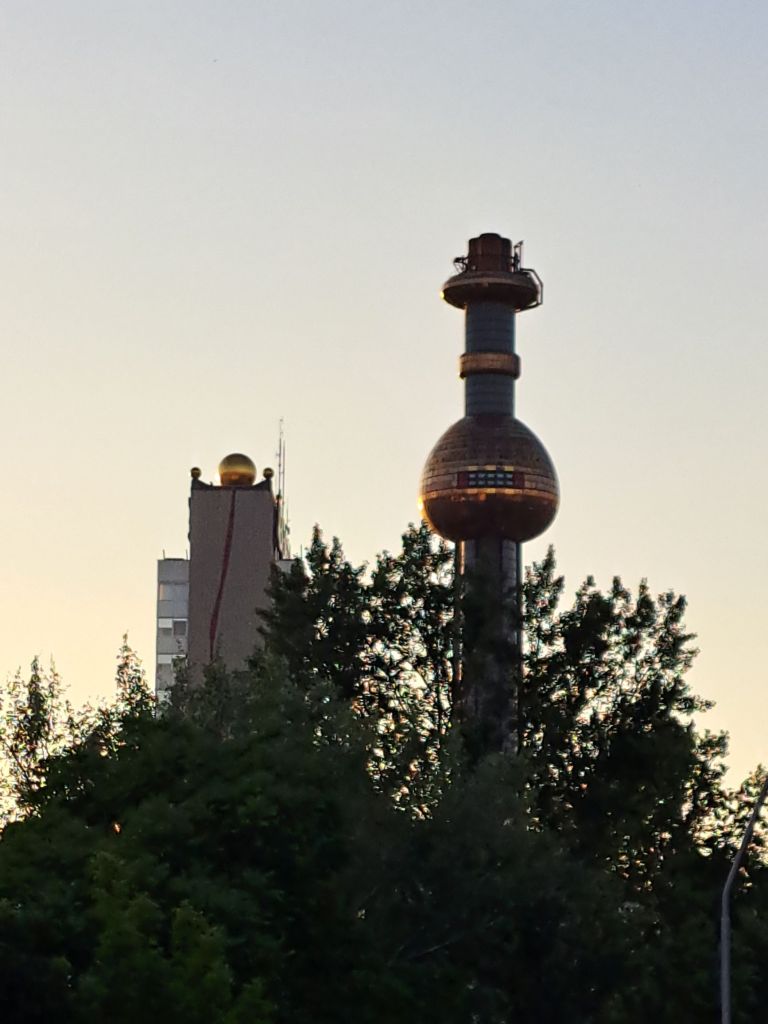
High time I came again. It is beautiful with the trees and green, swiftly flowing water. I didn’t used to come up to Spittelau, where the famous Hundertwasser trash incinerator is, but I’m glad I did this evening.

And the linden trees are getting started. There was promise in the air yesterday evening. After a temperature of 31°C (high 80s Fahrenheit) today, they are flooding the air with their perfume.

All in all, a nice evening constitutional on this “Pfingstmontag” (Whitmonday) holiday.

The Ice Saints

16 May

This year — as, in fact, in many years — the Eisheiligen (“Ice Saints”) arrived pretty much on schedule, bringing a real drop in temperatures and, this year, some rain.. They haven’t quite left us yet so are a bit tardy in that respect, but the rain is desperately needed so I, for one, am not complaining.

Who are the Eisheiligen? This year I decided to look into the matter a little bit and turned to the German-language Wikipedia (see link below).

The first thing I noticed was that Wikipedia listed Mamertus on May 11th as the first “ice saint”. I had never heard of Mamertus, even though he was Archbishop of Vienna in the 5th century. Then I noticed that Mamertus apparently only counts in northern Germany. Bavaria and Austria consider the first “ice saint” to be Pankratius on May 12th. Here I am on familiar territory.

The other “ice saint” I always remember is the last one, die Kalte Sophie, on May 15th. From Wikipedia I learned that she was tacked on later, perhaps to accommodate the fact that Bavaria and Austria usually get the weather from northern Germany a day later. This explains why “our” ice saints start a day later and end a day later.

Anyway here they are with their dates: Mamertus (May 11), Pankratius (May 12), Servatius (May 13), Bonifatius (May 14), and, as stated above, Sophia (May 15).

Why are these saints special? It’s complicated, partly because the dates that have been handed down come from the Julian calendar and don’t align with the Gregorian calendar. In any case, it’s a little bit like the weather forecasts in the Farmers’ Almanac in the USA — there to help farmers plan their planting times but predicted on the basis of recognizable patterns far before any forecast can hope to be accurate. And, yet, the forecasts are right quite a bit of the time.

Here is the link to the article for the German speakers: https://de.wikipedia.org/wiki/Eisheilige

May Day 2026

1 May

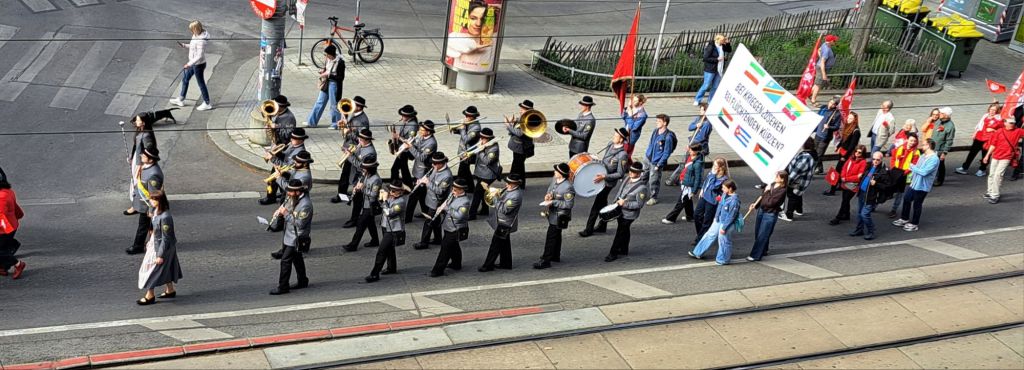
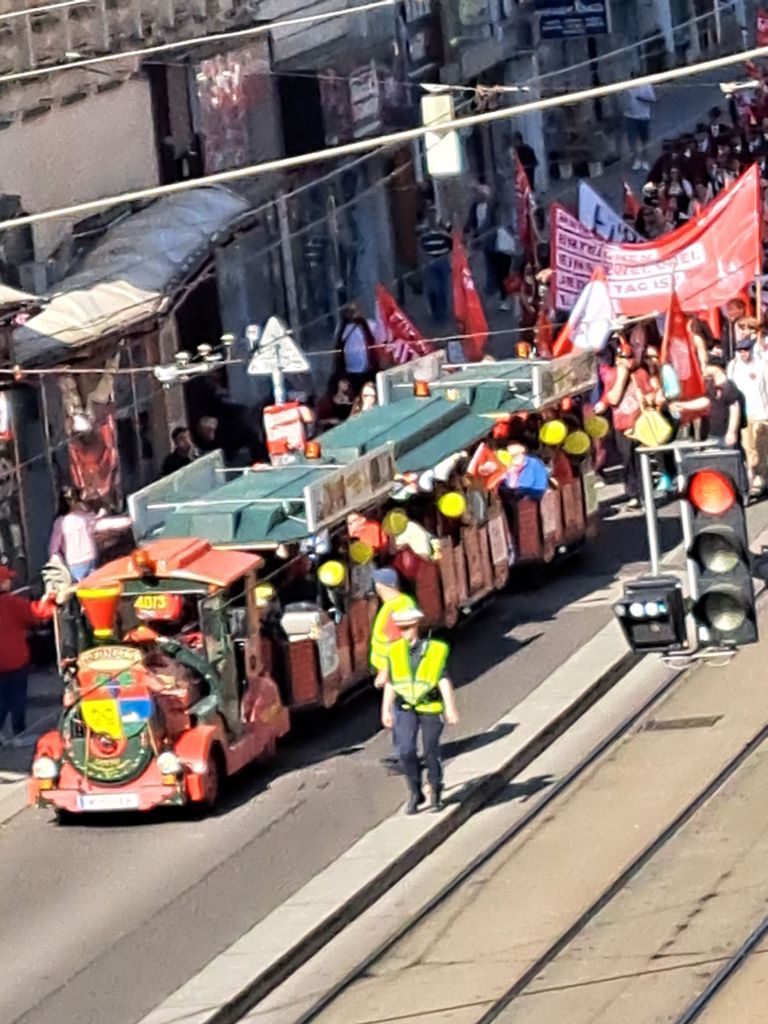
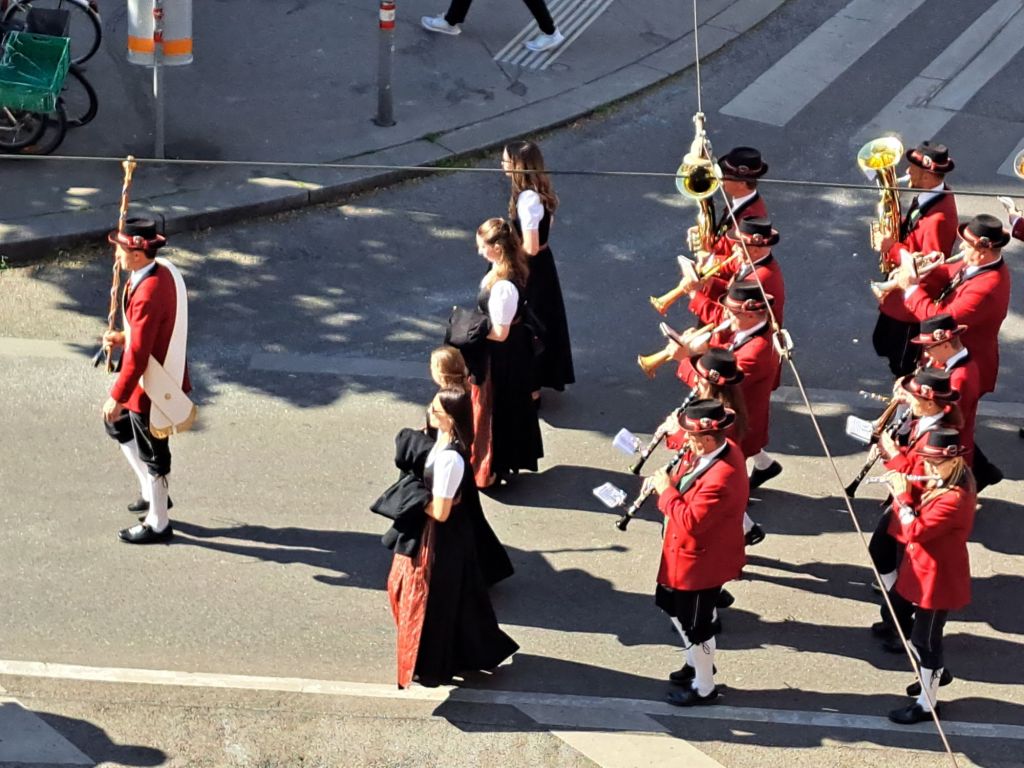
And the band sounded especially tuneful and jaunty this morning.

Main themes were peace and freedom, two “F”s in German: Frieden and Freiheit. The banner in the photo says “Watch wars [without doing anything] and cut the budget for those fleeing them?” Interesting, but typical for the Social Democrats, that the sign uses the less negatively connoted “Flüchtende” (fleeing people) rather than the older, more loaded “Flüchtlinge” (refugees).

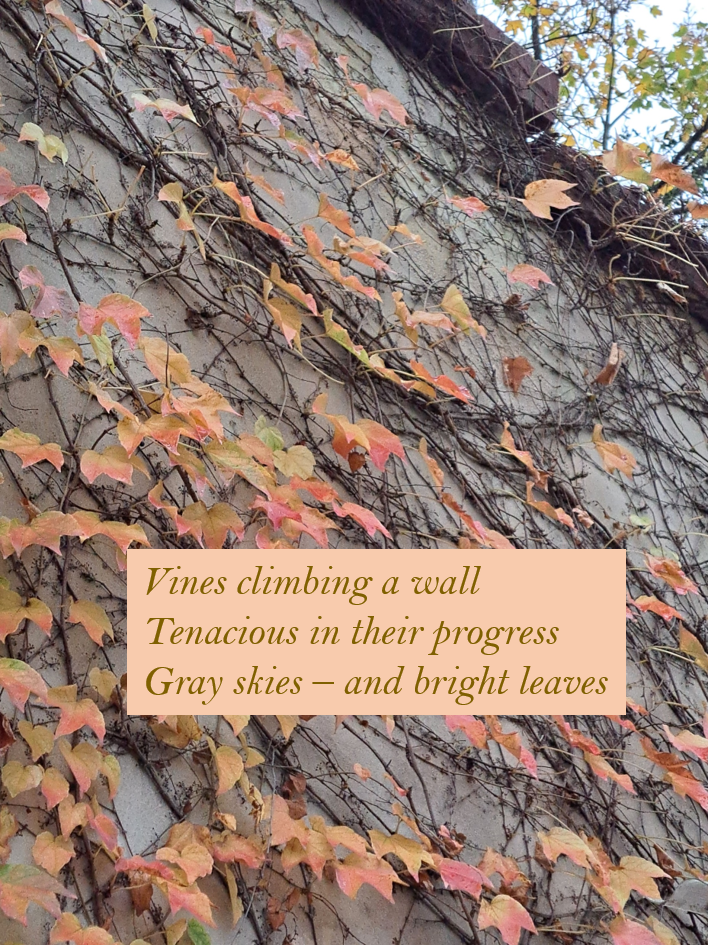
Holiday haiku and greetings

23 Dec

Hard to believe, but I am wrapping up my Christmas preparations today, not on the 24th (or 25th or 26th, etc., invoking the Twelve Days of Christmas, which are taken seriously in Austria).

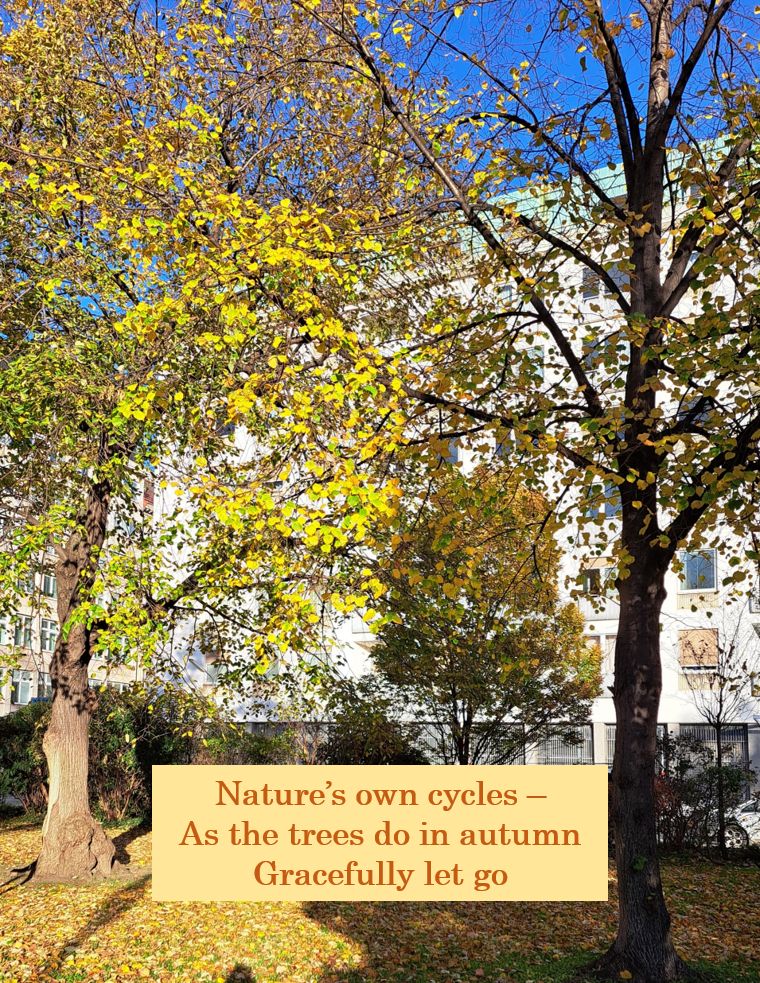
May you all have peaceful and happy holidays and a wonderful 2026!

Fasching (or Carnival)

11 Nov

I was talking over the weekend with a friend who was visiting from London and mentioned that Carnival (Fasching) starts on November 11th. I’ve so internalized this, still remember having a member of the seminar hotel waitstaff bring a bottle of bubbly into the seminar room in the middle of a session, that I was surprised that he was surprised that this should be the case. I decided to explore.

After a quick search and skimming articles, I see that often Carnival really doesn’t start until Shrovetide starts, although there is a bit of disagreement as to when that is. (Some sites say Shrove Saturday, or the Saturday before Ash Wednesday, and some say Shrove Sunday — three days before Ash Wednesday.)

Fasching, however, is a different story. According to the website feiertage-osterreich (or Austrian holidays), Fasching does really start on November 11th at 11:11 a.m. Legend has it that on November 11th, the fools are woken up. The partying isn’t supposed to start until January 7th — the day after Three Kings — but time is needed for the preparations. It’s interesting to know that on November 11th the Head Fool (Obernarr) traditionally was given the key to the city and took over the government. (Some would argue that the Head Fool rarely leaves!)

Apparently this tradition comes from the Rhineland and didn’t make it to Austria until the middle of the 20th century. It certainly has become embedded (see hotel story above) since then, possibly because it aligns with St. Martin’s Day, which has long been a part of Austrian culture!

For German speakers, there are a few more details here: https://www.feiertage-oesterreich.at/festtage/faschingsbeginn/

Some Wiener Grant of my own

25 Oct

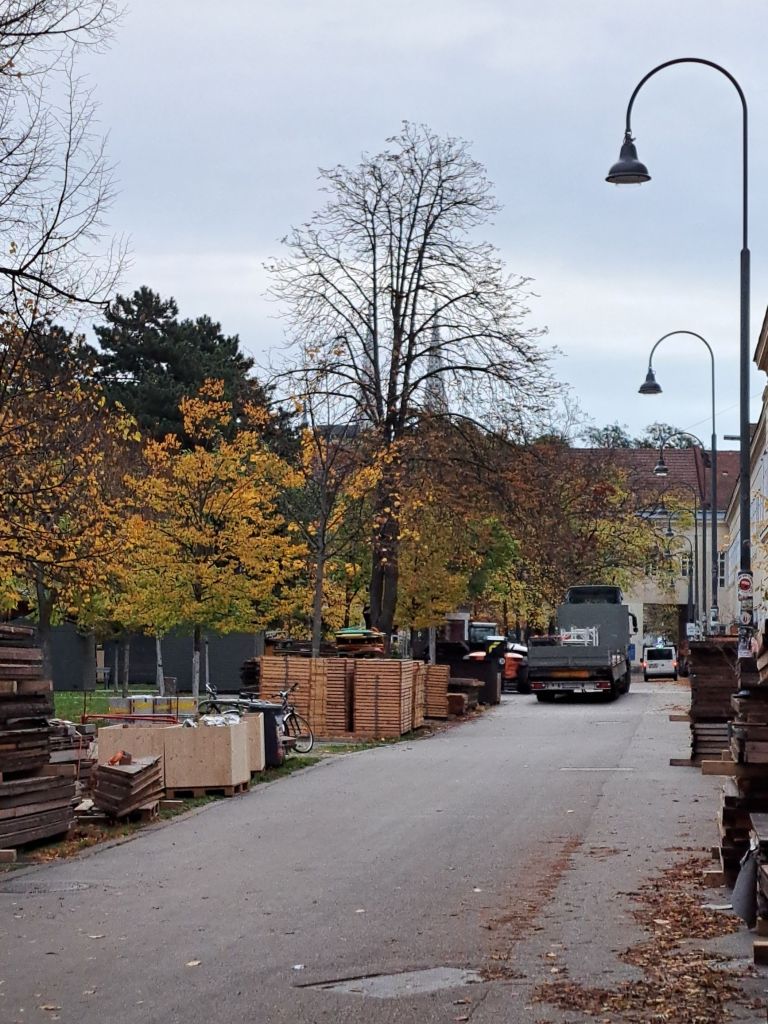
Why am I grumpy? Because that, ladies and gentlemen, is a photo of a Christmas market to be. When I arrived in Vienna, many years ago, granted, there wasn’t a Christmas market in every corner of the city and, if I remember correctly, they didn’t open until the First Sunday in Advent. At last, I thought, I’ve found a land unmoved by the consumerism of free-market capitalism.

Well, it was too good to be true. For a number of years, the Christmas markets have opened the middle of November. This year they seem almost to be striving for a pre-Halloween date.

Grant (a.k.a. grumpiness).

May Day 2025

1 May

And the SPÖ (Social Democrats) are marching again. This year, the parade looks a little bigger than the past few years, perhaps because of their solid results in the elections last Sunday. Beautiful weather and a well-trained brass band are part of the tradition.

Not surprisingly, one of the banners called for solidarity. This took me back to an exercise I used to do with my U.S. American summer school students in Vienna.

To highlight one of the major differences in worldview that I see between the USA and Europe, I would ask my students for their associations with the word “solidarity.” This question was almost invariably met with confusion. What associations should they have with that word? Then I would give them examples of what my Austrian students of the same age would answer: Lech Walesa, of course, sticking together, and taking care of each other. Some Austrian students would even get into the political aspects and how solidarity is built into the systems here. I see the common use of and familiarity with the word “solidarity” as a cultural artifact for the more collectivist system here.

My little intercultural comment for today. 😉

The Second Day of Christmas

26 Dec

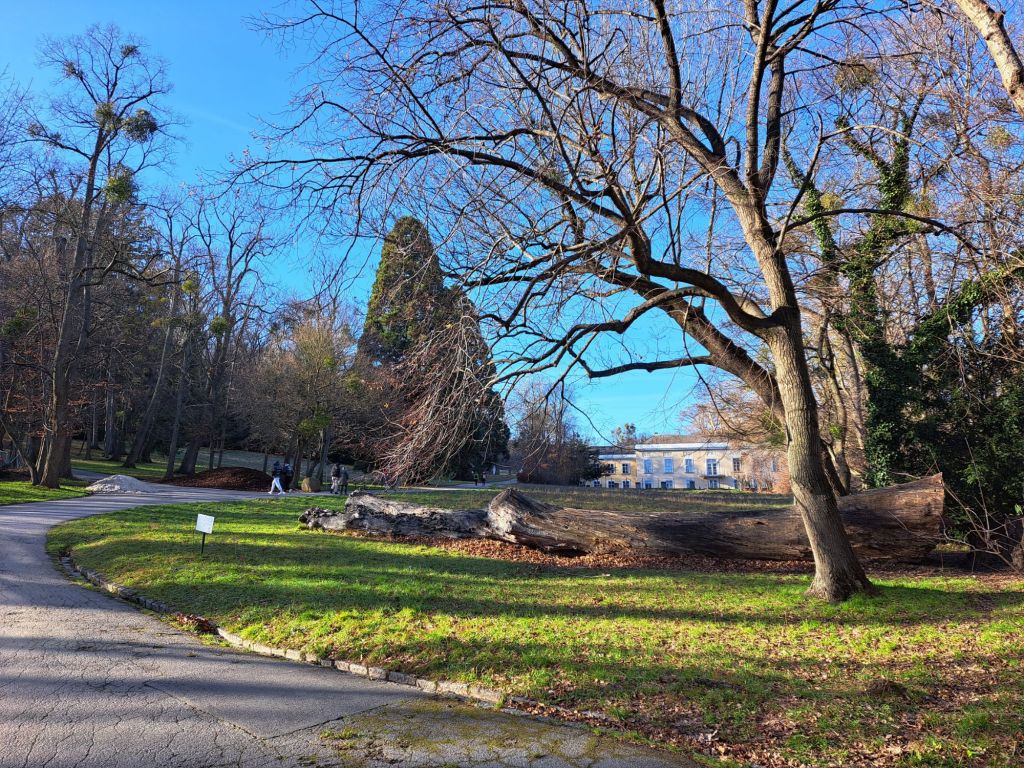
No turtle doves, but Vienna is showing itself from its best side. Weeks of grayness are very common in November, December, and January, so we rejoice over every hour of sunshine. At the same time, today, the temperatures are hovering around freezing, making it feel like Christmas. And, of course, who could do without the walk in the Vienna Woods (in the picture, you see the Pötzleinsdorfer Schlosspark in the 18th district) after the celebrations yesterday — and, in my case, this evening again?

Lots of people were out.

April Fool’s Day Viennese Style

1 Apr

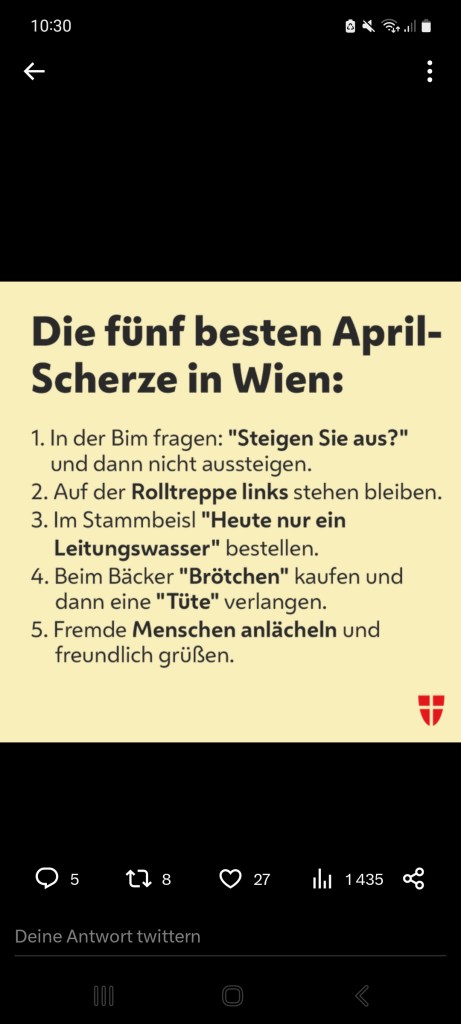
Seen on Twitter. The City of Vienna has a few ideas on how to discombobulate the Viennese this April Fool’s Day. 1: On the tram say “I’m getting off” [so that people make room for you to get out the door] and then stay on. 2: Stand on the left on the escalators. 3: In your regular neighborhood restaurant order “Just a glass of tap water today”. 4: (my favorite) At the bakery buy “Brötchen” (rolls) and then ask for a “Tüte” (bag) to put them in. Both those words are High German and sound really weird in this context. Viennese would probably say “Gebäck” and “Sackerl”. 5: (also good for anyone familiar with the grumpy side of the Viennese) Smile at complete strangers on the street and greet them in a friendly way.

Sorry, in some ways you had to be there, I think, but they made me laugh.

Haiku 2022

26 Dec

With warmest holiday wishes also for a healthy, happy New Year full of peace!