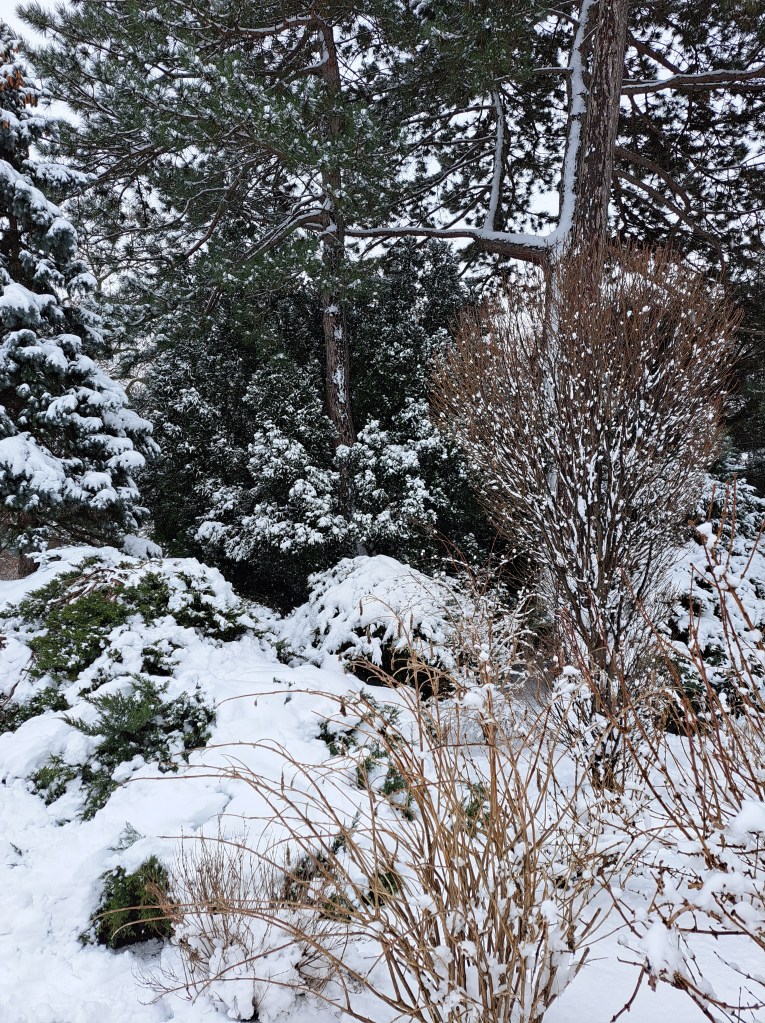
This year — as, in fact, in many years — the Eisheiligen (“Ice Saints”) arrived pretty much on schedule, bringing a real drop in temperatures and, this year, some rain.. They haven’t quite left us yet so are a bit tardy in that respect, but the rain is desperately needed so I, for one, am not complaining.
Who are the Eisheiligen? This year I decided to look into the matter a little bit and turned to the German-language Wikipedia (see link below).
The first thing I noticed was that Wikipedia listed Mamertus on May 11th as the first “ice saint”. I had never heard of Mamertus, even though he was Archbishop of Vienna in the 5th century. Then I noticed that Mamertus apparently only counts in northern Germany. Bavaria and Austria consider the first “ice saint” to be Pankratius on May 12th. Here I am on familiar territory.
The other “ice saint” I always remember is the last one, die Kalte Sophie, on May 15th. From Wikipedia I learned that she was tacked on later, perhaps to accommodate the fact that Bavaria and Austria usually get the weather from northern Germany a day later. This explains why “our” ice saints start a day later and end a day later.
Anyway here they are with their dates: Mamertus (May 11), Pankratius (May 12), Servatius (May 13), Bonifatius (May 14), and, as stated above, Sophia (May 15).
Why are these saints special? It’s complicated, partly because the dates that have been handed down come from the Julian calendar and don’t align with the Gregorian calendar. In any case, it’s a little bit like the weather forecasts in the Farmers’ Almanac in the USA — there to help farmers plan their planting times but predicted on the basis of recognizable patterns far before any forecast can hope to be accurate. And, yet, the forecasts are right quite a bit of the time.
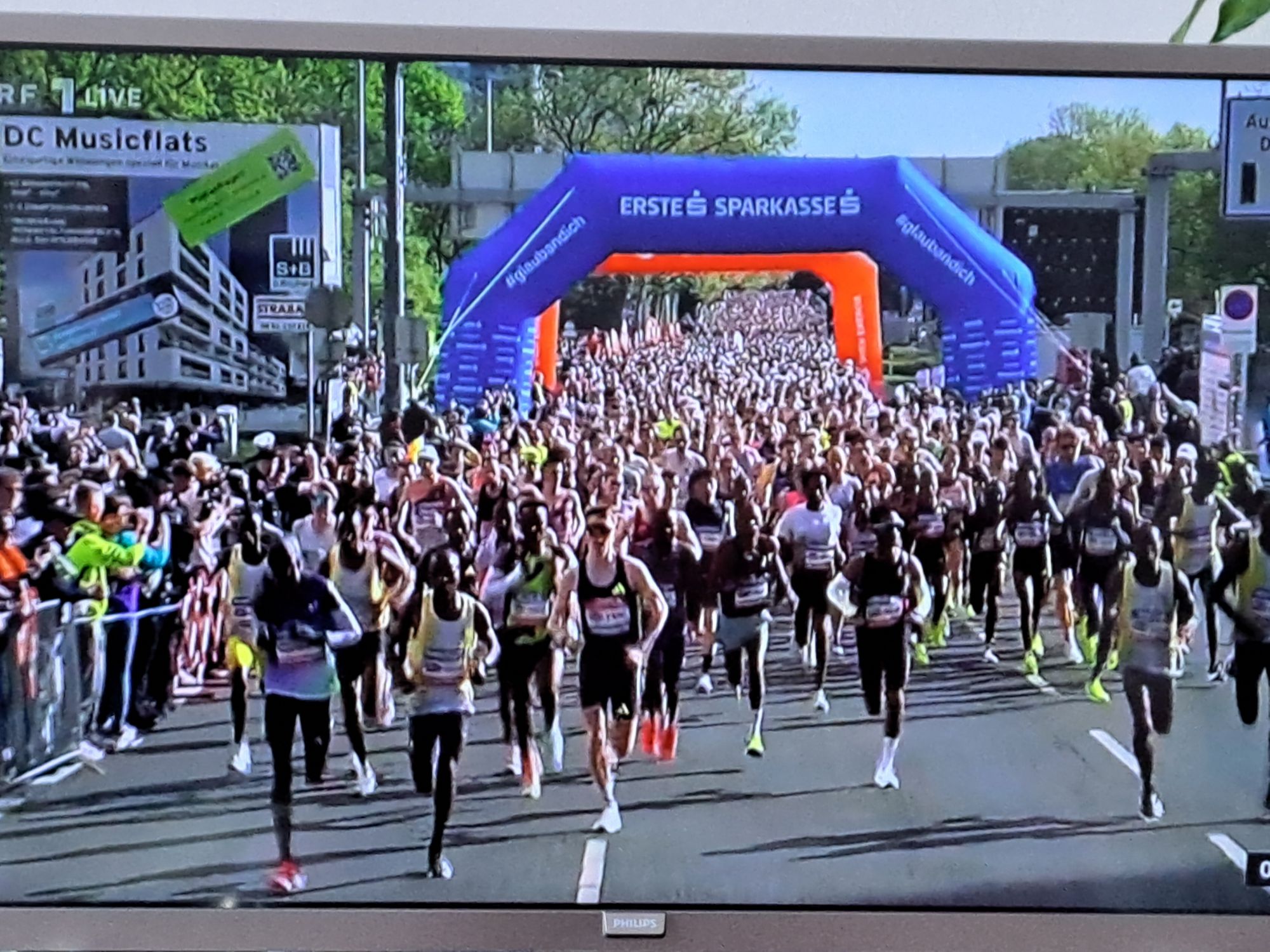
As mentioned on International Haiku Poetry Day, this will be shorter than usual. I’m glad I got to see the Marathon, though, and can write a little bit about what I saw.
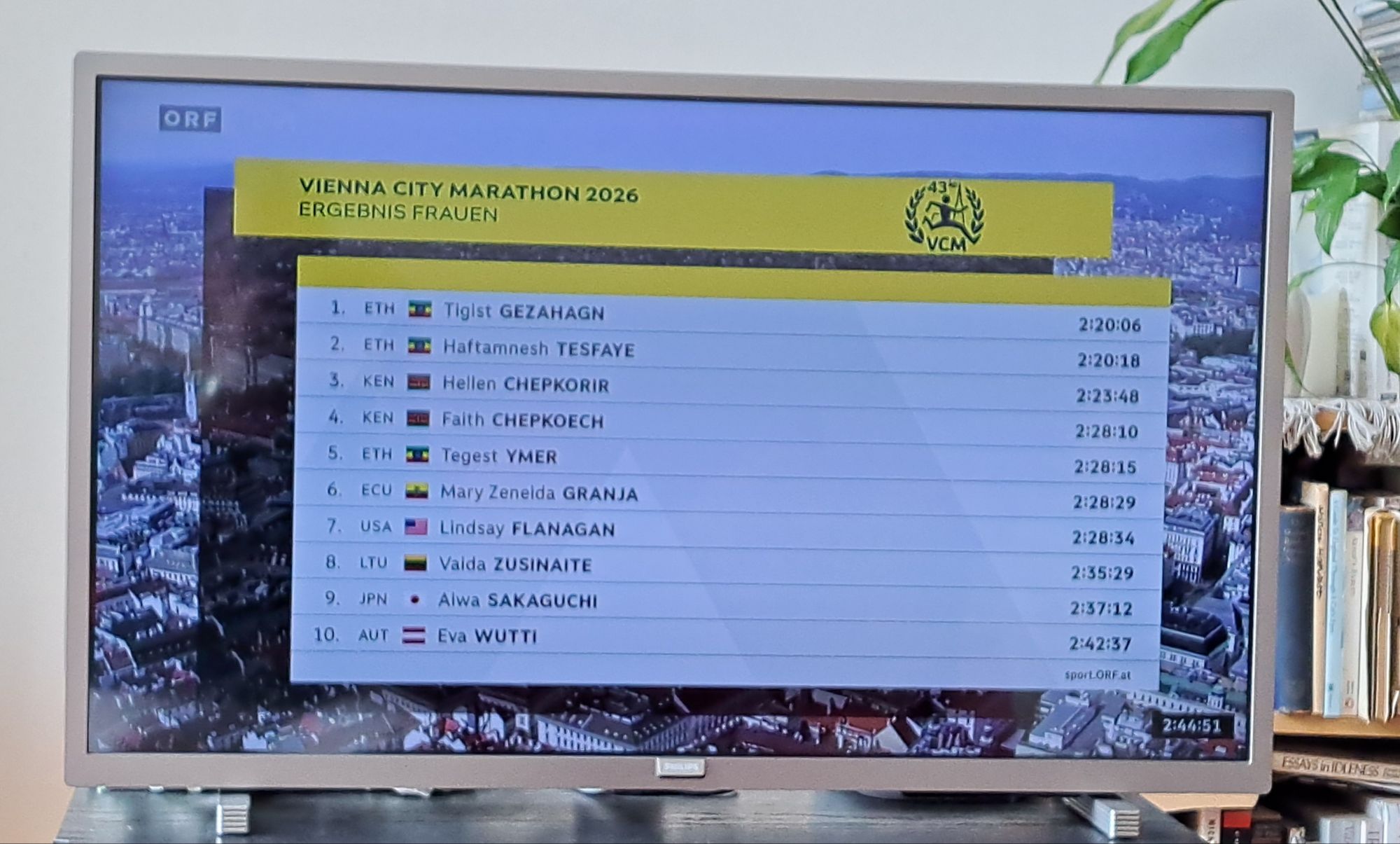
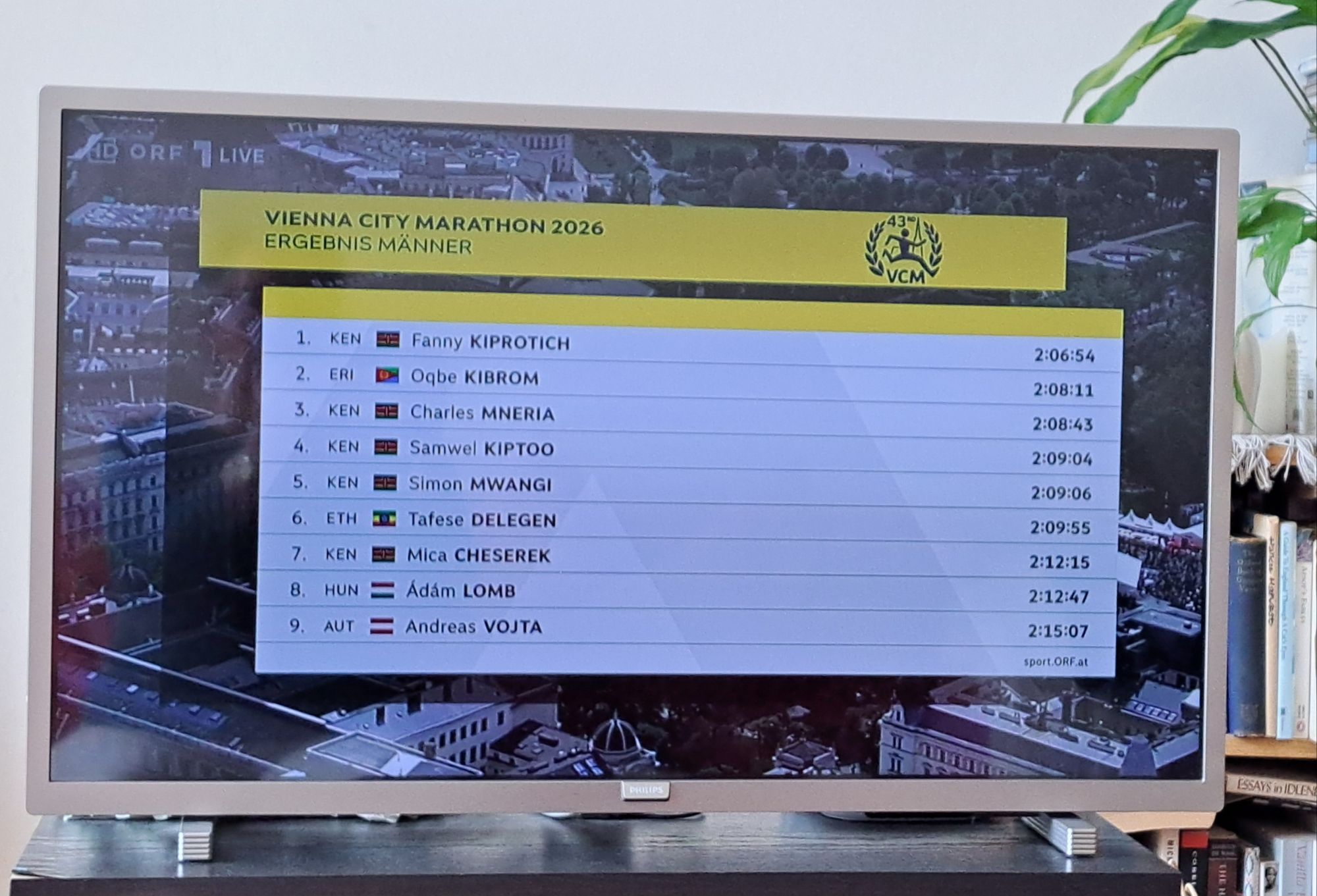
Maybe this time I’ll start with the end. For the first time (I think), I’m uploading screenshots of the list of top 10 runners, women and men.
The men’s race was not at all close. The three top runners came in quite far apart, as you can see from the times listed. There was some hope that the record might be broken in the men’s race, but by Oqbe Kibrom, who was the favorite but came in second. In the women’s race, Tigist Gezahagn did break Vibian Chebkirui’s 2022 record. She ran the marathon in 2:20:06 compared to Chebkirui’s 2:20:59. In fact, Haftamnesh Tesfaye, who was a close second in the women’s race, also came in under Chebkirui’s record.
The women’s race was especially interesting because of those two top runners, who ran as a group with their pace setter. Apparently, they train together and it all looked very collaborative — at one point Tesfaye, who ran almost exclusively right behind Gezahagn, slipped and very briefly went down and Gezahagn took time to look over her shoulder and check — until the two of them entered the Ring, down at Wollzeile, and then Tesfaye made a move. It was quite suspenseful for a bit and then Gezahagn found it in her to simply pull away, to cross the finish line 12 seconds ahead.
First Austrians were, as you can see, Andreas Vojta and Eva Wutti, the same runners to come in first for Austria in 2025. Both were somewhat disappointed with their performances. Andreas Vojta was hoping for a personal best but did more or less as well as he did last year, both in terms of time and position. Eva Wutti was struggling at times and at one point in the Prater simply stopped, clearly in distress. She later mentioned that she was having muscle problems and that the heat affected her. (In fact, a lot of people talked about the heat. By the end, the ORF was saying that it was 23°C [about 73°F] — my thermometer showed about 18° [64°F] but OK. In any case, it was well over the 8° to 9°C that they last year, when it was barely above freezing, said are ideal.)
A couple of things I want to remember:
Once again there was a running reporter, Peter Herzog. Sometimes it was really hard to understand what he was saying because he, understandably, was breathing so hard. At one point, the reporters in the studio told him to stop talking and breathe! But in Viennese. Something like: “Schnauf dich jetzt a bisserl durch. Sprechen abstellen und atmen.”
To encourage Eva Wutti, a fan held up a quickly made sign that said “Zieh durch, Oida!” (“Keep going” or “Hang in there”) using the Viennese expression “Oida” that can mean almost anything (see link to YouTube video below). In this case, it was clearly affectionate and meant, I felt, to bring a smile.
In fact, the Viennese dialect and accent made a particular impression on me this time. One organizer of the race sounded German to me and that really stood out. Otherwise it was the Viennese, or perhaps simply Austrians, “unter sich” — among themselves.
Michael Buchleitner, a former top Austrian marathoner, now 56 years old, on hearing one of the no longer young Austrian runners say he was hoping to improve next year that there comes an age where there is no more room for improvement. True in other aspects of life as well — although not all aspects!
I find myself surprised at how young the runners are. The top runners seem to be mainly in their 20s. Obviously, I’ll have to jettision my idea that the marathon favors older runners because of the need for experience. I grew up with that perception. I now have no idea where it came from. (I thought it was from Frank Shorter, but he was 25 when he won his (first?) gold medal.) Ah, well.
How much attention was given this time to the “Verpflegung” or, basically, refreshments for the runners, and how important a role they play both in terms of what and when
The repeated emphasis from both commentators and runners that, while the outcome of any sporting event is unpredictable, those of marathons are especially so.
And, finally, that at the beginning the commentators were talking about a Harvard Medical School student who was running and had to be back in time for classes because attendance is mandatory. This is possible, they explained, because tomorrow is a holiday in Massachusetts because the Boston Marathon is being held — never realizing that the Boston Marathon is being held tomorrow because it is a holiday (Patriots Day). 😉
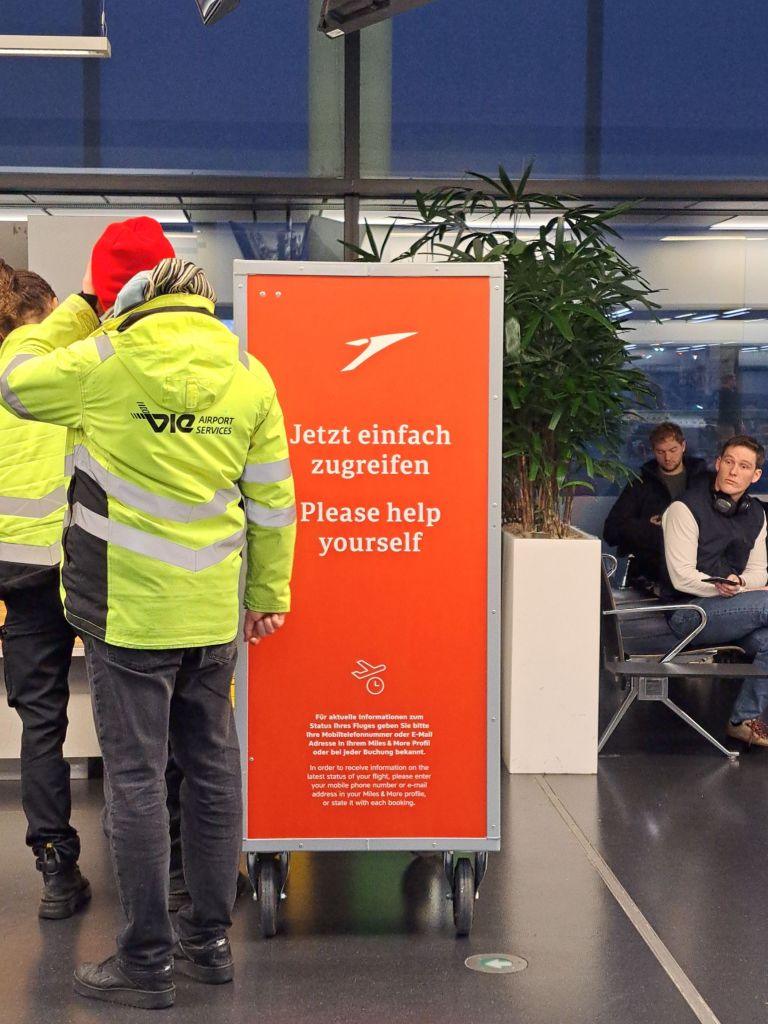
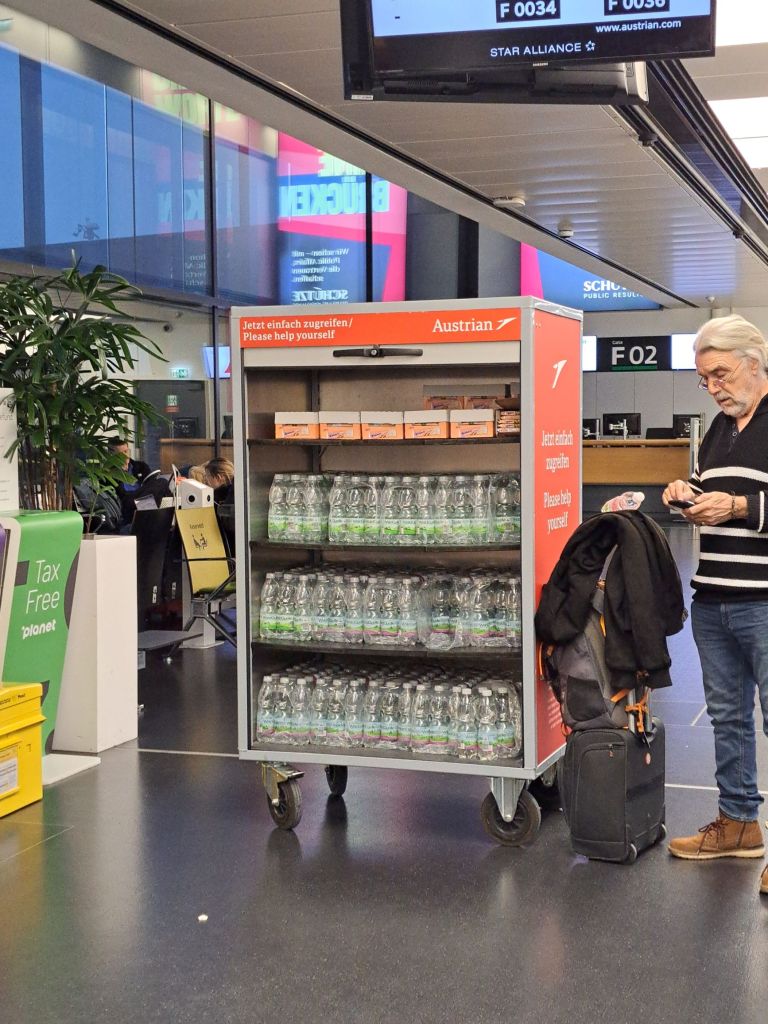
And so I won’t be making it to Edinburgh today. The ice is so thick they won’t even know until 11:00 whether anything can take off from here and the one connecting flight from Frankfurt leaves at 10:55.
But Austrian does take care of their passengers as best they can and in a very Viennese way — free bottled water and Manner-Schnitten (those crunchy wafers filled with chocolate and nuts). The cart arrived at the service desk the same time I did.
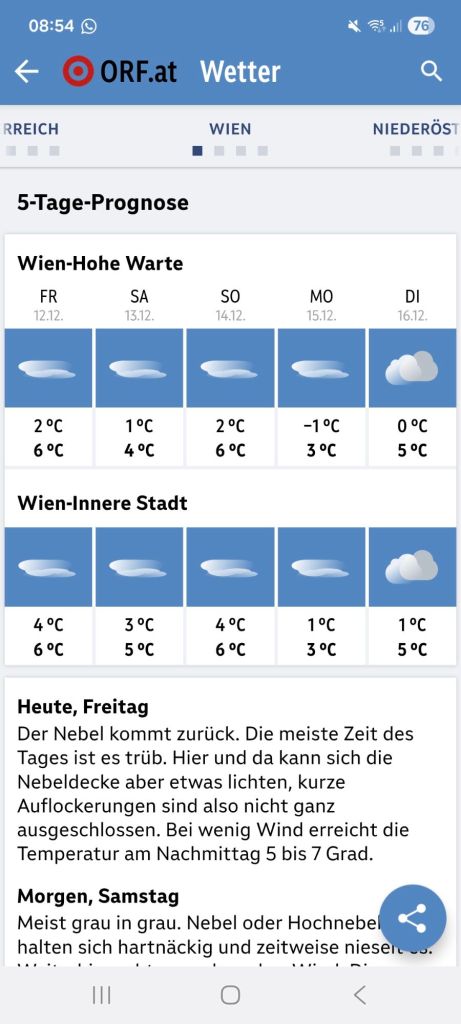
Vienna is doing what Vienna does in November and December (and sometimes in January and February). I like it. I find the mistiness soft and gentle, but, as you can see, it can go on for days at a time without a change. This explains why the Vienneselike to go to the mountains. Anyway, typical.
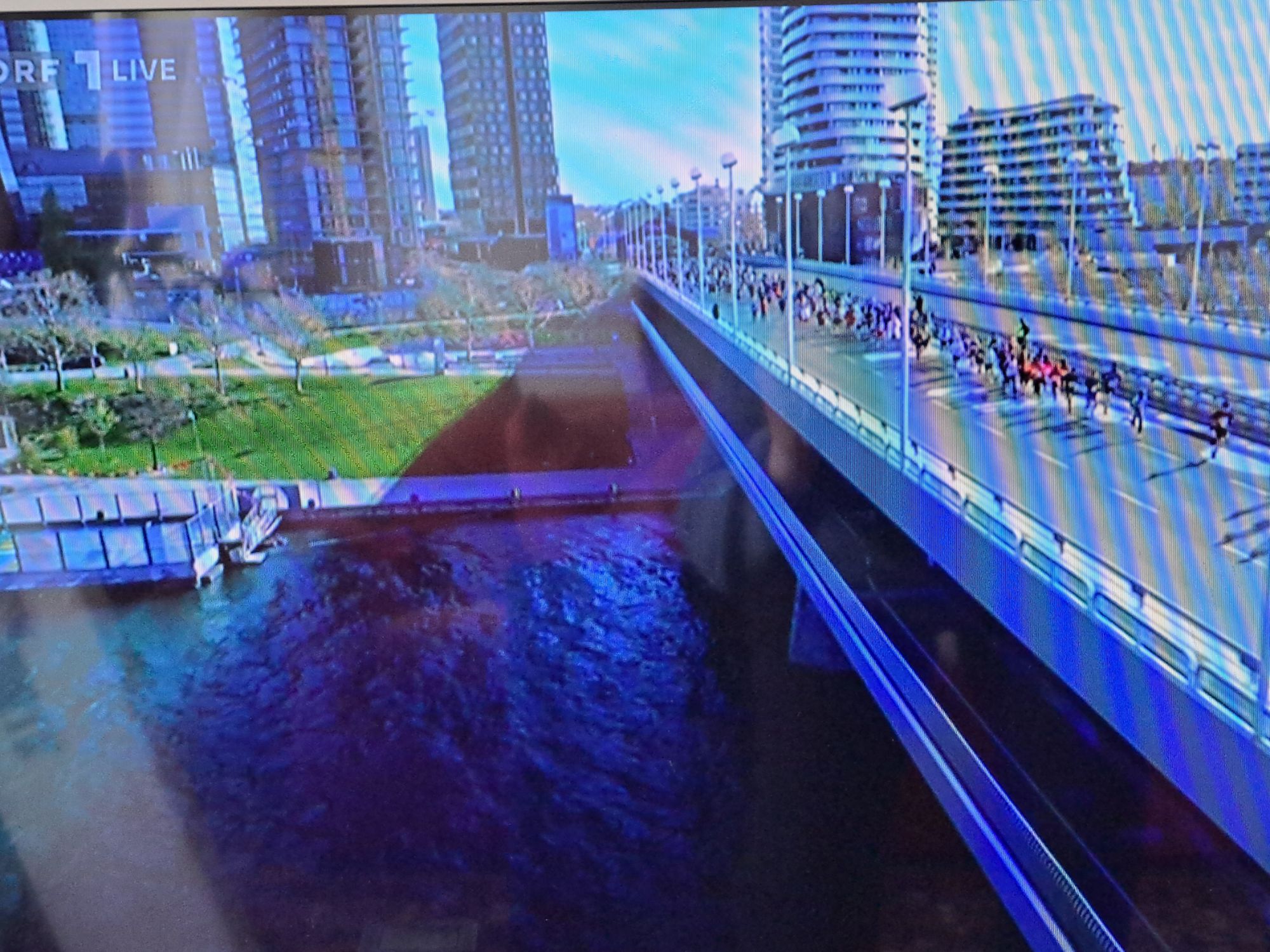
This time I actually remembered to tune into the ORF reporting 20 minutes or so before the start of the race. The main topic this year is the weather. No one’s going to get heatstroke today. It is beautifully sunny but currently 0°C with winds up to 40 kph(!). (Everyone interviewing, being interviewed, and commentating was in down jackets.) Apparently, 8 to 10 degrees are considered optimal. Maybe the organizers should have thought of that before moving the race up by about two weeks!
Some of the effects of the weather: the wind, of course, will be a major challenge. A prominent former Austrian marathoner, Michael Buchleitner, who was commenting, remarked on the water temperature. No, the runners do not need to swim the Danube – it’s a marathon not a triathlon – but they do need to drink water, and the water has been outside all night and will be very cold. He also mentioned, twice, before and after, that it is the kind of weather where the winners will not necessarily be the ones in top form (so, one kind of “fittest”) but rather the ones who adjust to the conditions most quickly and effectively, partly in terms of what kind of clothing they’re wearing. Survival of the fittest in Darwin’s original sense.
In fact, I immediately noticed the difference in clothing among the top runners in comparison to other years. I saw arm warmers, t-shirts under singlets, longer tighter shorts, some gloves, but, with one exception (and in contrast to the amateur runners) no ski hats among the men. One male runner did wear very large earmuffs, though. (He won.)
A small point, there are always ORF reporters on a motorcycle (now electric, if I remember correctly) reporting from the frontline, and they are concerned about how they will stay warm for the two plus hours they’ll be tootling about.
In spite of the temperatures and wind, there were a record number of runners this year. Over 46,000, if I understood correctly.
Watching this (from the comfort of my sofa, except for the half hour or so when I go down to cheer on the frontrunners) brought the usual joy of familiar landmarks: the Tegetthoff column at Praterstern, the Urania, Vienna River, Schönbrunn, Votiv Church, Prater again with the Lusthaus, (even the Ernst Happel stadium looked good) –and, of course, the glories of the Ringstraße (although I do always worry about the runners and the tram tracks).
The many, many campaign posters of the unpleasantly baby-faced Dominic Neff of the FPÖ lining Lassalle Straße were less enjoyable.
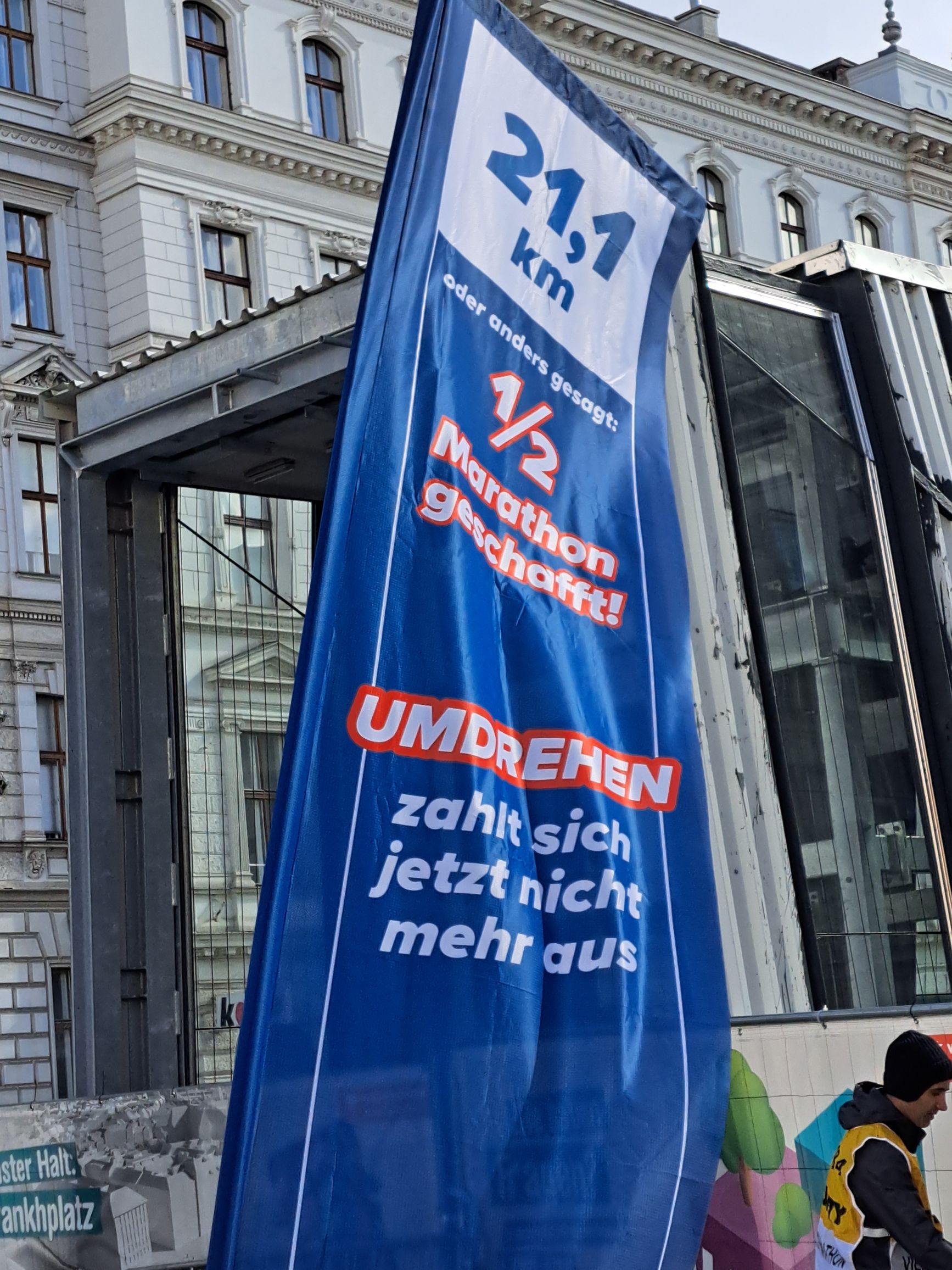
Other kinds of advertising were less disturbing, like the Erste Bank’s #glaubandich (“Believe in yourself”) in huge letters on the asphalt of the Reichs Bridge and the Hervis (sporting goods shop) banner at the halfway mark, telling the runners, who I’m sure had no time to take it in, that it made no sense to turn around now. (Like the old joke of the channel swimmer who got within 50 meters of the other shore and said, “I’m too tired. I can’t,” and turned around to swim back to where she came from.)
Valentin Pfeil, who was the first Austrian and Austrian man to cross the finish line in 2016, had been roped in as a running reporter, wired for sound and expected to comment on how the race was going while he was running it. This seemed kind of brutal to me, but he didn’t seem to mind. At the end, he even said that he experienced “runners’ high” for the first time ever in a marathon and thought that might have been because, knowing that he would be called upon to comment on the race, he wasn’t trying to run 100%. Nonetheless, I found it tactless of his ORF colleagues to ask him a couple of times along the way at which point he knew he was going to make it to the end. He finally deigned to give a clear answer, saying, “I’m passing the Staatsoper now. I think I’ll make it.” (The end is at the Burgtheater, less than a kilometer away.)
Some random points:
Vienna is really into recycling, even for the marathon. There were plastic recycling bins (those water bottles!) lining parts of the route.
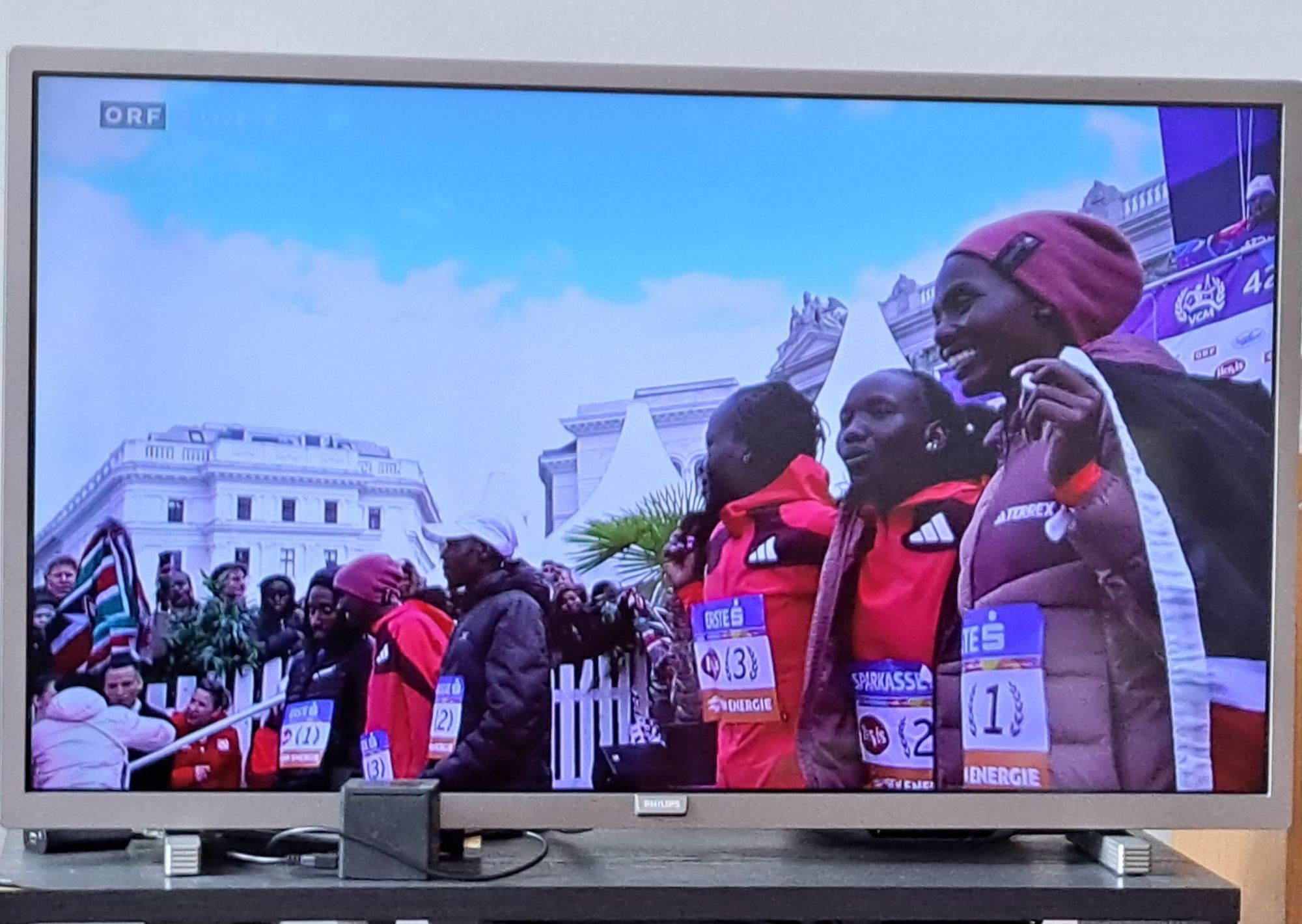
The top three women – in order of arrival at the finish line: Betty Chepkemoi, Rebbeca Tanui, and Catherine Cherotich – ran as a group for most of the race, very close together, one had the sense out of solidarity. (They are all Kenyan. Perhaps that made a difference? Or was it really, as one of the commentators suggested, a strategy to minimize the negative effects of the cold and wind?)
Two of my favorites from past years, Nancy Kiprop and Vibian Chepkirui, were nowhere to be seen, although reports leading up to the marathon had suggested they, too, would be running.
The two winners – Haftamu Abadi from Ethiopia for the men and Betty Chepkemoi (see above) – were basically upsets. I’m not sure even they expected to win. And yet both won by a considerable margin. No tense finishes today. Both crossed the finish line looking incredibly strong with no one else anywhere near them. Coincidentally, they both had the starter number 12 (M12 and F12).
Haftamu Abadi pulled a picture out of his pocket just before he crossed the finish line. On the other side of the finish line, he kissed the picture (it seemed to be of Jesus), looked at the sky, crossed himself, kissed the ground, and then took off one of his shoes and kissed that. The Austrian commentators seemed to think this was a reference to his compatriot, Derera Hurisa, who crossed the finish line first in 2021, also in something of an upset and in a blaze of glory, but was disqualified because his shoes did not meet the (brand-new) regulations.
On top of that, Haftamu Abadi, who, in spite of the conditions, achieved a personal best time of 2.08:26, is the youngest winner of the VCM in its all 42 years. He’s 21 years and 12 days old in a sport that traditionally, and oddly, favors the older contestants.
The first Austrian woman this year, Eva Wutti, is in the legal profession (that generic term “Juristin” was used so I don’t know if she is a full-fledged lawyer or a legal adviser in a company, for example) and didn’t arrive in Vienna until Friday evening because she had to work(!). (She lives in Carinthia.) She also has a daughter, and the ORF reporter predictably asked how she managed to combine family, job, and running. (Equally predictably, none of the men were asked this question.) At the same time, of the four “firsts” she was the only one who had a clear answer to the question “What’s next?” She’s hoping to run the Salzburg marathon in May. (Glutton for punishment, anyone?)
The first Austrian man, and therefore first Austrian, across the line was Andreas Vojta, who, it turns out was also the first European. He came in ninth, behind the first and third runners, who are from Ethiopia, and the six Kenyans in-between. I think this kind of result is especially amazing given that he was not able to train in December or January because of an (my dictionaries and online sources failing me I’m translating word for word here) an inflammation of the skin of the heart (Herzhautentzündung) and only started training again in February.
Valentin Pfeil, the running reporter, is coaching Johannes Pell, the second Austrian man (and 12th overall) to cross the finish line.
Have I mentioned it was really cold? (See the two winners in their down jackets!)
Curious for more? There are some website suggestions below:
The Wienfluss (Vienna River) is usually a trickle. It is extraordinary to see it looking like this. Even the extensive construction work done a few years ago to ensure that the underground tracks don’t flood has not been enough. The U4 line is only running from Heiligenstadt to Friedensbrücke at the moment, about a quarter of its usual route. And we are the lucky ones (so far)!
The last two mornings I got the faintest whiff and thought I was imagining it because it is very early. This morning, it was clear — the linden trees are flowering again and the air is full of the sweet tantalizing scent.
Since I like to check my perceptions, I decided to go back and see if it really is so early or whether I was making that up. Here are the dates of my previous posts about the linden trees:
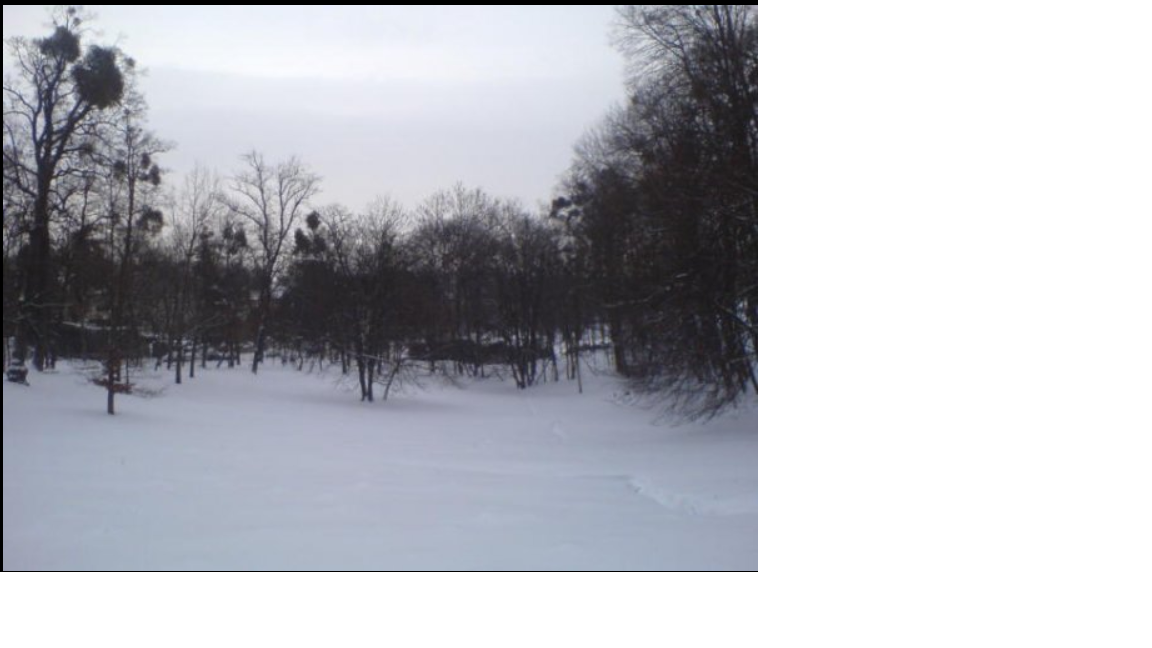
A very grainy photo from my first ever mobile phone
My Facebook memories just reminded me of an exchange with colleagues in January 2010 that gave me great pleasure.
First post I had to work late yesterday and missed going skating. So this morning I went for a walk even though it was snowing pretty heavily.
This haiku is the result (in German first): Viel Schnee ist heute In Pötzleinsdorfer Schlosspark Aber wenig Leut’
… which translates into English more or less like this: Lots of snow today In Pötzleinsdorfer Schlosspark Very few people
Later As I was waiting for the tram to make its way back into Vienna I sent it by text message to friends and colleagues. One of my colleagues challenged me to write a limerick and I came up with this (long tram ride!):
Eliza went out in the snow She had nowhere else to go She slipped on the ice Said something not nice And now when she goes she goes slow. 🙂