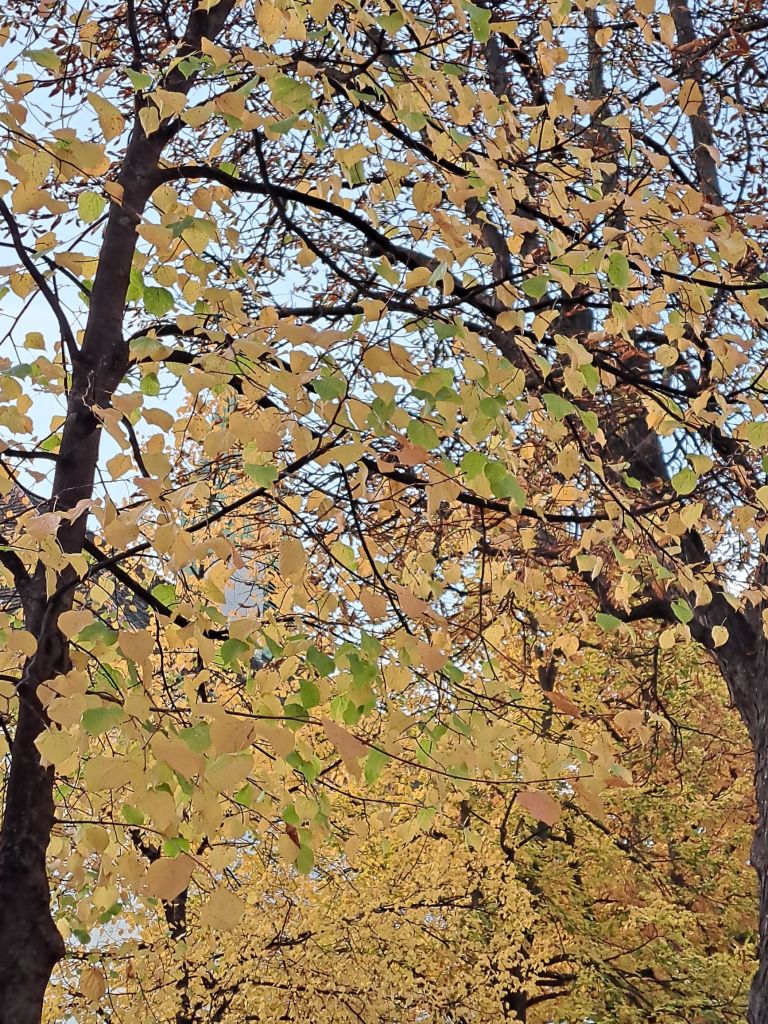
I took my walk this morning through a Klimt painting.
https://orf.at/av/video/onDemandVideoNews53058
The magazine Condé Nast Traveller has released the results of their survey on the friendliest city in Europe. (We beat out Lisbon!?!) I hardly know what to say. Friendliness is fine, but the famous “Grant” (grumpiness) in Vienna also had something.
Makes me think of the Boston Globe (New York Times?) headline when the Red Sox finally won the World Series after well over 70 years of not winning it: Now just a team like any other?
Maybe the Russians were involved?
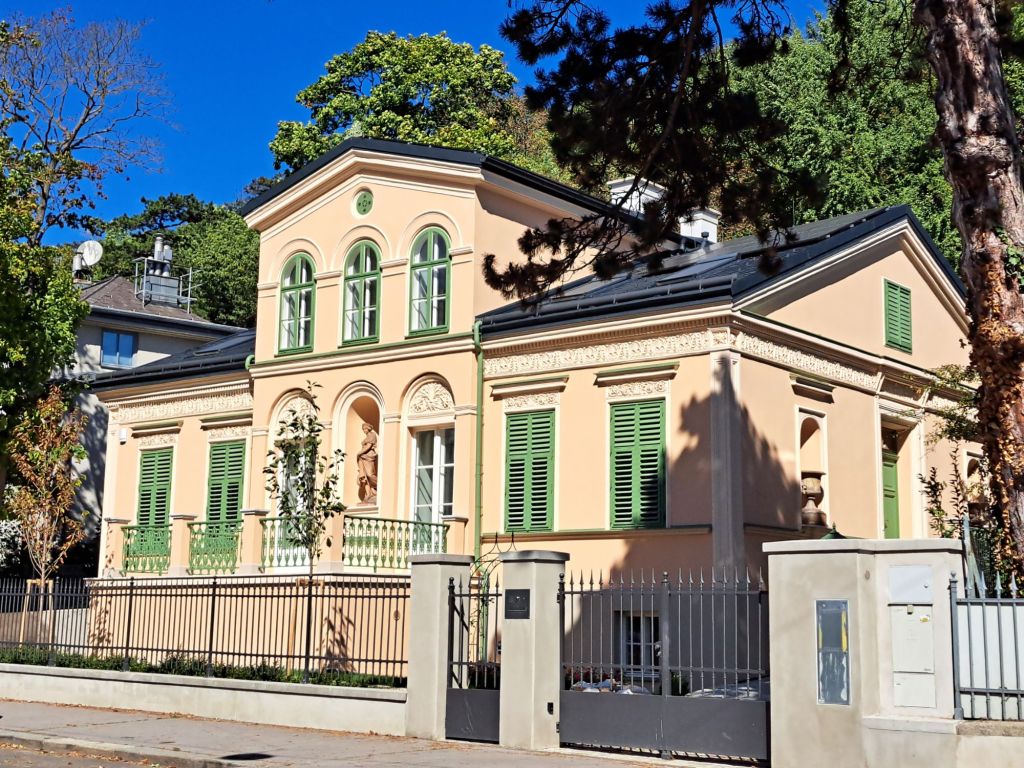
A friend and I have been keeping an eye on this villa in Neuwaldegg. We’ve seen too many treasures over the years been allowed to decay to a point when they could legally be torn down. Invariably, they were replaced with faceless, cement structures that were, possibly, quite nice to live in but brought no joy to the folks out front.
This one sat on a construction site for about two years, and for a while it wasn’t clear which way the project was going to go. Then it started to look promising. This time when I walked by I was treated to the fully renovated version.
If the person who invested the time, money, and care into restoring this property ever reads this — thank you! Not only did you save a beautiful piece of Viennese history. You restored a tiny bit of my hope in people.
Twice in one year, but they have been flirting with us. After my near rapturous post on May 26, the scent faded again. Then it would appear and disappear. Just Monday, a friend commented that it was a wonderful year for roses, and I said, rather sadly, “But not for the linden trees.”
This morning I was taking my usual walk in the park and was overwhelmed with the scent. They’re back in full force, and I am basking in the fragrance.
A little later this year than last, which I think is a good thing. I caught a faint whiff this morning and by this evening they were as noticeable as ever. Ah, May!
https://www.npr.org/2025/05/13/nx-s1-5339958/climate-laws-solutions-vienna-solar-geothermal
One of the reasons I am still so happy to live in Vienna.
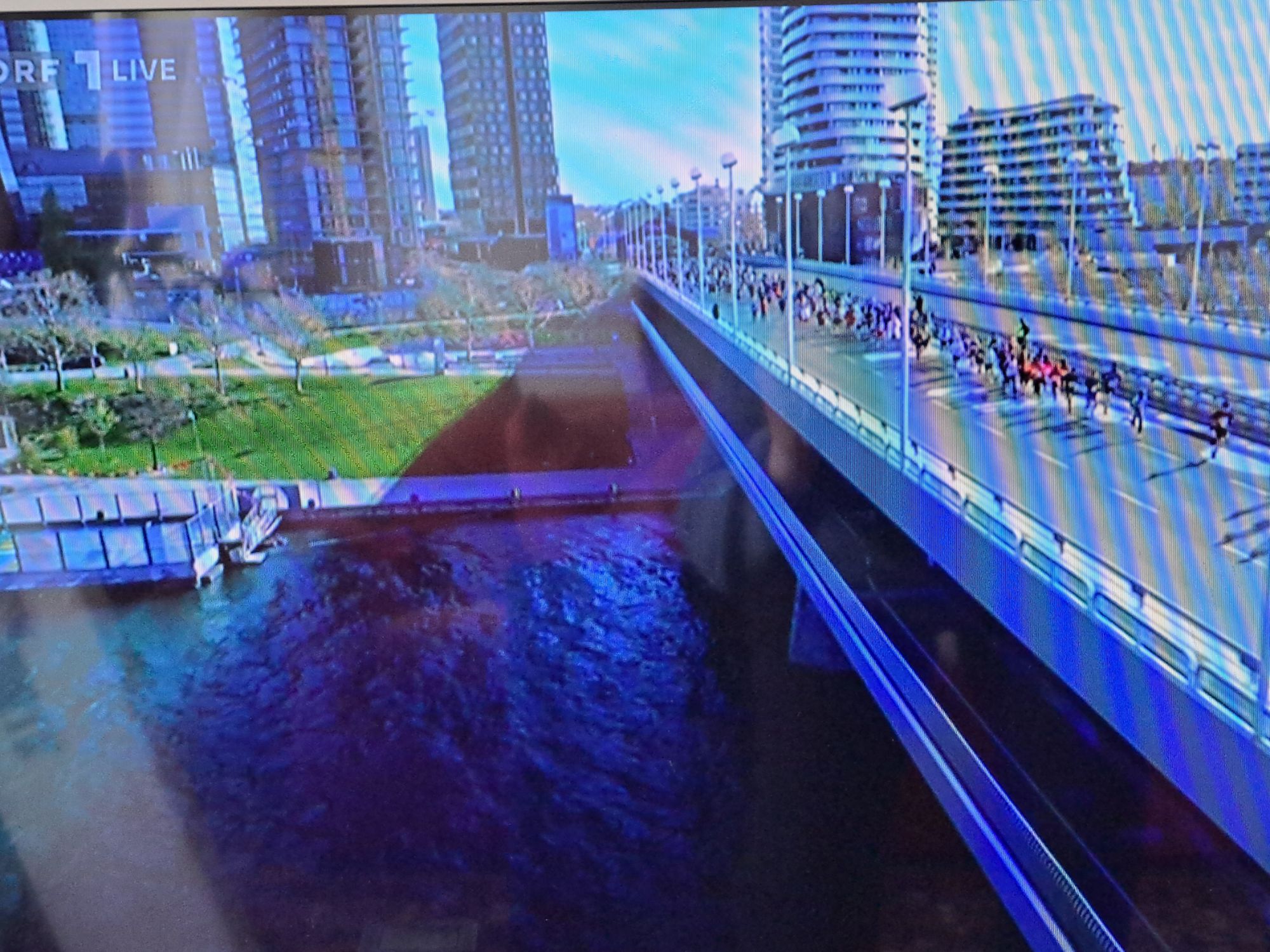
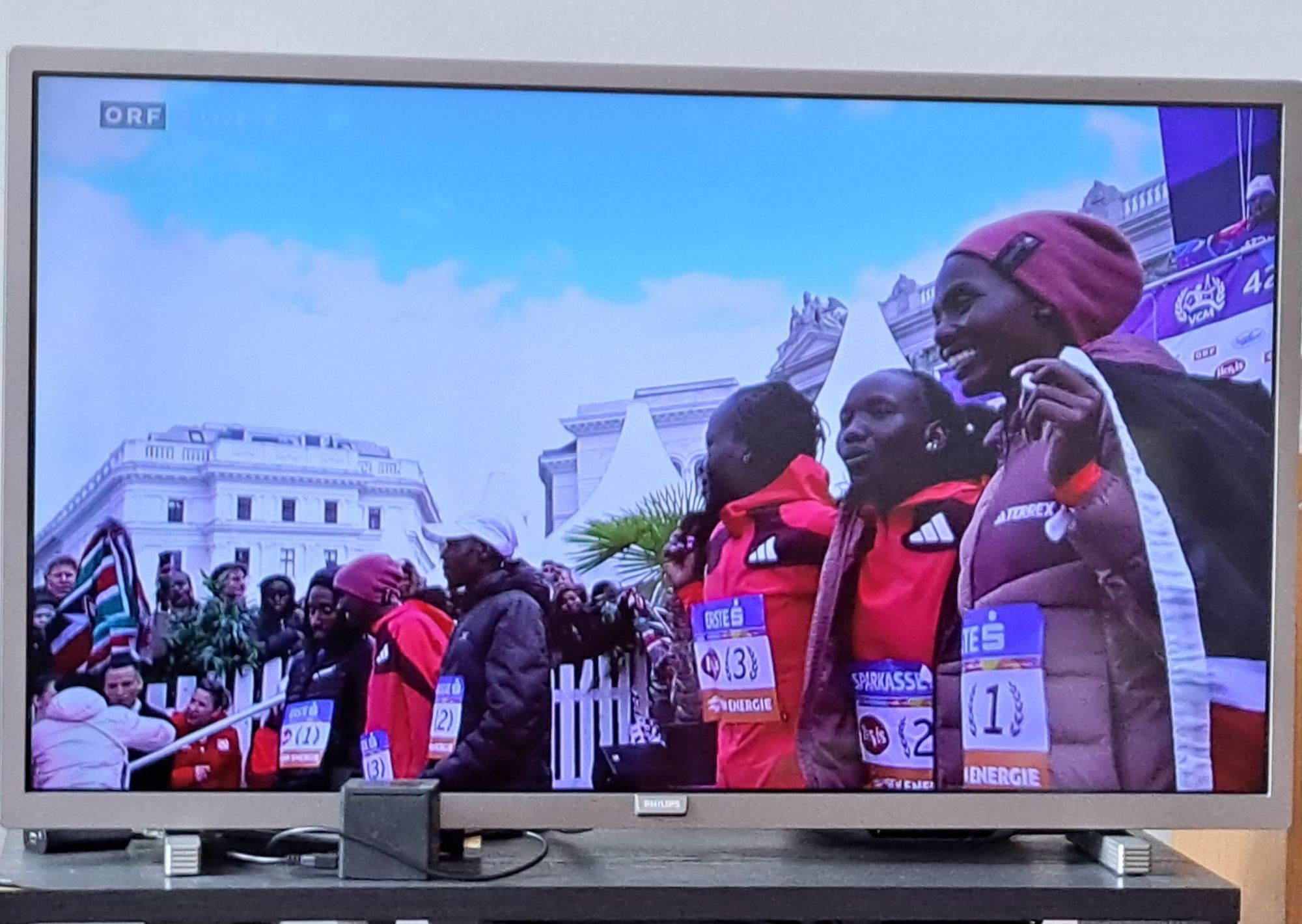
This time I actually remembered to tune into the ORF reporting 20 minutes or so before the start of the race. The main topic this year is the weather. No one’s going to get heatstroke today. It is beautifully sunny but currently 0°C with winds up to 40 kph(!). (Everyone interviewing, being interviewed, and commentating was in down jackets.) Apparently, 8 to 10 degrees are considered optimal. Maybe the organizers should have thought of that before moving the race up by about two weeks!
Some of the effects of the weather: the wind, of course, will be a major challenge. A prominent former Austrian marathoner, Michael Buchleitner, who was commenting, remarked on the water temperature. No, the runners do not need to swim the Danube – it’s a marathon not a triathlon – but they do need to drink water, and the water has been outside all night and will be very cold. He also mentioned, twice, before and after, that it is the kind of weather where the winners will not necessarily be the ones in top form (so, one kind of “fittest”) but rather the ones who adjust to the conditions most quickly and effectively, partly in terms of what kind of clothing they’re wearing. Survival of the fittest in Darwin’s original sense.
In fact, I immediately noticed the difference in clothing among the top runners in comparison to other years. I saw arm warmers, t-shirts under singlets, longer tighter shorts, some gloves, but, with one exception (and in contrast to the amateur runners) no ski hats among the men. One male runner did wear very large earmuffs, though. (He won.)
A small point, there are always ORF reporters on a motorcycle (now electric, if I remember correctly) reporting from the frontline, and they are concerned about how they will stay warm for the two plus hours they’ll be tootling about.
In spite of the temperatures and wind, there were a record number of runners this year. Over 46,000, if I understood correctly.
Watching this (from the comfort of my sofa, except for the half hour or so when I go down to cheer on the frontrunners) brought the usual joy of familiar landmarks: the Tegetthoff column at Praterstern, the Urania, Vienna River, Schönbrunn, Votiv Church, Prater again with the Lusthaus, (even the Ernst Happel stadium looked good) –and, of course, the glories of the Ringstraße (although I do always worry about the runners and the tram tracks).
The many, many campaign posters of the unpleasantly baby-faced Dominic Neff of the FPÖ lining Lassalle Straße were less enjoyable.
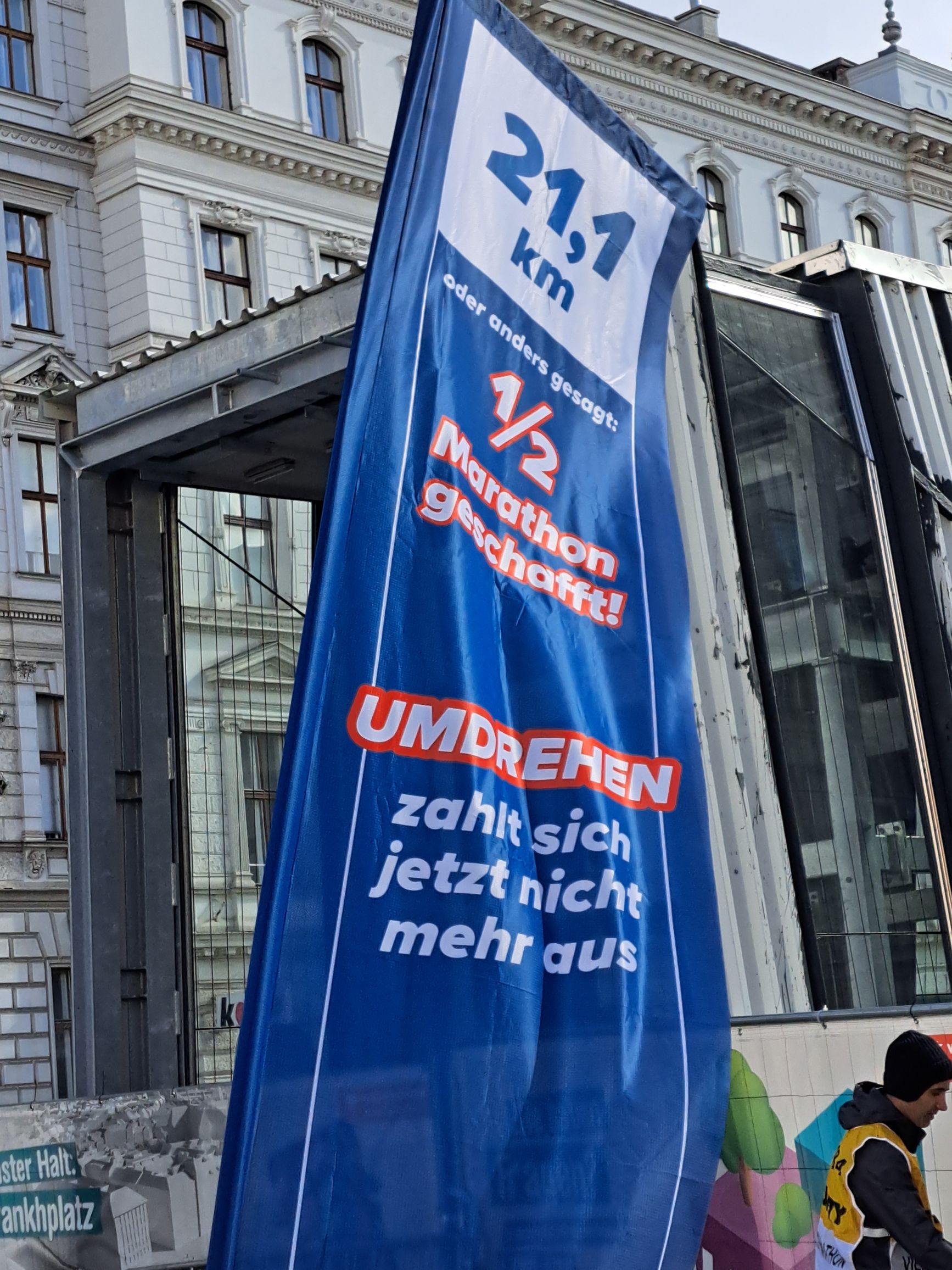
Other kinds of advertising were less disturbing, like the Erste Bank’s #glaubandich (“Believe in yourself”) in huge letters on the asphalt of the Reichs Bridge and the Hervis (sporting goods shop) banner at the halfway mark, telling the runners, who I’m sure had no time to take it in, that it made no sense to turn around now. (Like the old joke of the channel swimmer who got within 50 meters of the other shore and said, “I’m too tired. I can’t,” and turned around to swim back to where she came from.)
Valentin Pfeil, who was the first Austrian and Austrian man to cross the finish line in 2016, had been roped in as a running reporter, wired for sound and expected to comment on how the race was going while he was running it. This seemed kind of brutal to me, but he didn’t seem to mind. At the end, he even said that he experienced “runners’ high” for the first time ever in a marathon and thought that might have been because, knowing that he would be called upon to comment on the race, he wasn’t trying to run 100%. Nonetheless, I found it tactless of his ORF colleagues to ask him a couple of times along the way at which point he knew he was going to make it to the end. He finally deigned to give a clear answer, saying, “I’m passing the Staatsoper now. I think I’ll make it.” (The end is at the Burgtheater, less than a kilometer away.)
Some random points:
Have I mentioned it was really cold? (See the two winners in their down jackets!)
Curious for more? There are some website suggestions below:
The official Vienna City Marathon site: https://www.vienna-marathon.com/?go=welcome
The ORF (Austrian Broadcasting, in German): https://sport.orf.at/stories/3139958
Eissaison 2025 ehrt Johann Strauss – wien.ORF.at
https://wien.orf.at/stories/3297736/
I’ve always known that ice cream parlors in Vienna officially close sometime in September or October and re-open in March. I didn’t realize until now that it’s the Chamber of Commerce that chooses the dates. (I always thought the ice cream sellers simply agreed on that.)
I knew something was up when I was in the First District yesterday and saw lots of people, still in their winter coats, leaning in to large ice cream cones before lunch. And I have to say I love that about the Viennese. In the meantime, you can get “Saloneis” — as opposed to “Supermarkteis” — any time of the year, but there is still a noticeably large number of people who celebrate the First Day of Ice Cream, even if the weather is distinctly March-like, with quite a cutting wind.
The added attraction this year is that the ice cream artisans are among those contributing to the celebrations for the 200th anniversary of Johann Strauss’s birth. (The son, not the father, and therefore the composer of the “Blue Danube Waltz” and not, for example, the “Danube Songs”.) Apparently, there is already a Fledermaus flavor (I have to try that one!) and a “Night in Venice” flavor that was inspired by tiramisu.
Guten Appetit!
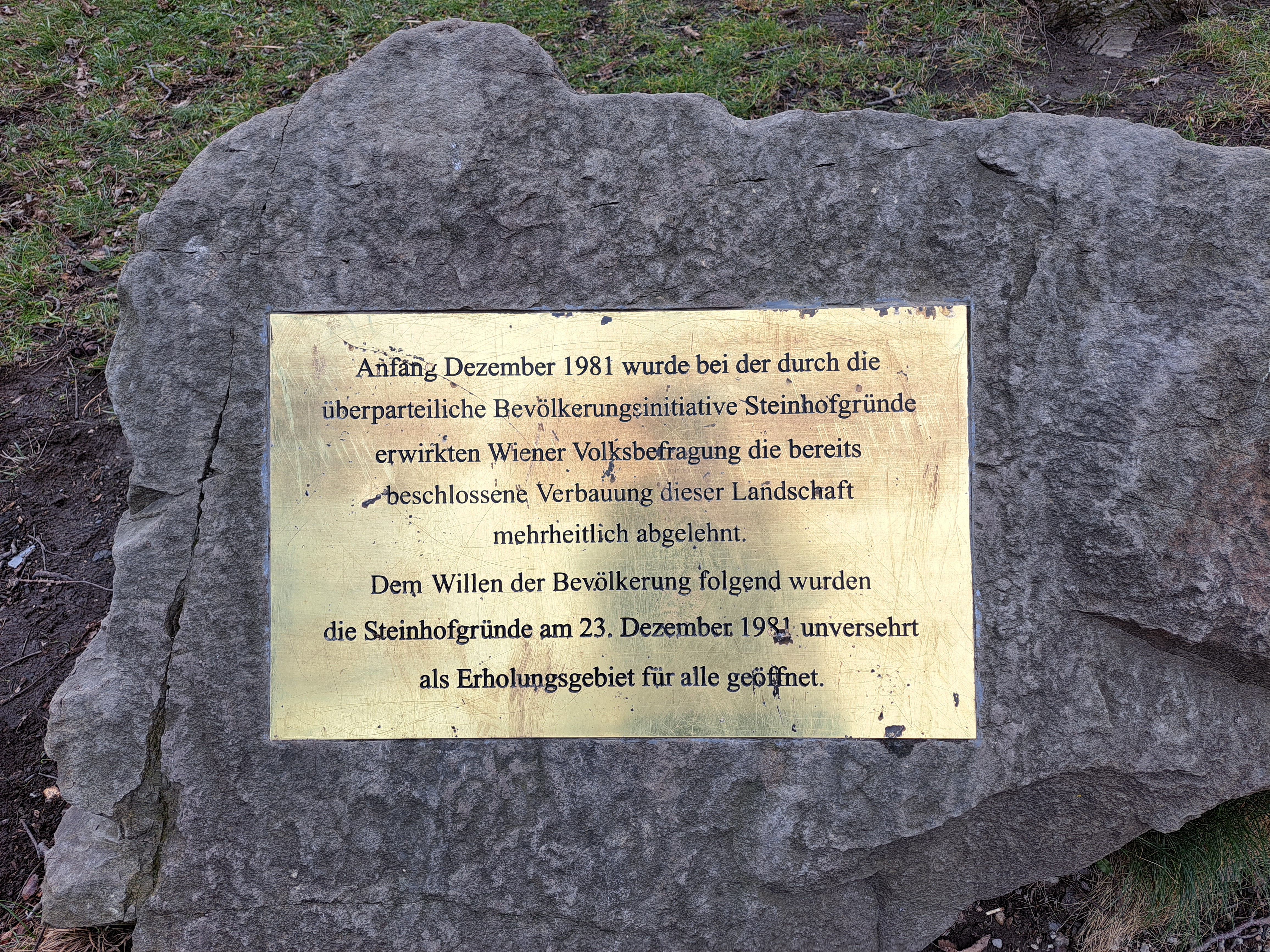
My translation of the plaque at Steinhof: At the beginning of December 1981, a Vienna-wide referendum initiated by the non-partisan citizen group Steinhofgründe rejected the construction that had already been approved for this site.
In accordance with the will of the people, the Steinhof area, in its untouched state, was opened to the public as a recreational space on December 23rd, 1981.
(Nice Christmas present! ;-))
How is it that I have now lived over 36 years in Vienna and only last Sunday discovered this part of Steinhof? I have an excuse for 11 of those years as dogs are not allowed in the area. This does however leave 25 years for which I cannot account. And how did I come to discover it now?
An answer to the first question first. All that time, whenever I heard the name Steinhof I thought of the hospital complex designed by Otto Wagner and Carlo von Boog and devoted largely to the treatment of the (wealthy!) mentally ill. (In Viennese, the area was also referred to as Baumgartner Höhe and had become a kind of shorthand for the psychiatric clinic, much the way “McLean’s” is used in Boston.) I had even taken a tour of the hospital complex once. I’m sorry to say that the only thing that sticks in my mind, other than the beauty of the Jugendstil buildings, is that the church, designed by Otto Wagner, was lined with tiles to quite a height. Taller than me, as I remember, and the reason given was that patients were more or less required to attend services but could not always control their bodily functions. The tiles made it possible to hose down the building after the services.
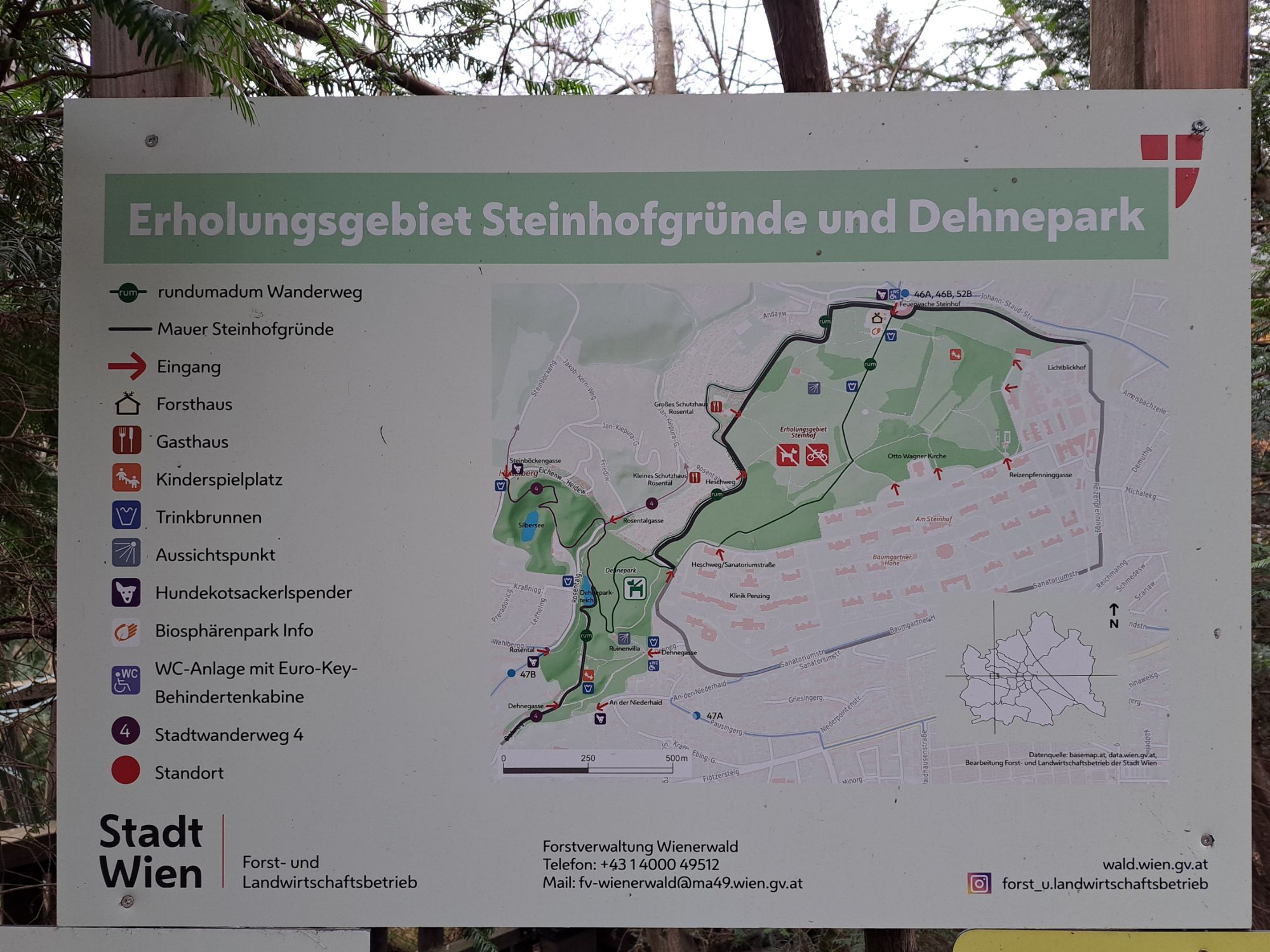
How did I come to discover it last Sunday? I wanted to go to Wilhelminenberg in the 16th district for a walk and on the bus up from the Ottakring S-Bahn station decided to get off at the Feuerwache am Steinhof stop, rather than the Savoyenstraße one, and then walk towards Dehnepark in the 14th. I was planning to walk around the outside of the grounds, as I had often done with Maylo, and enjoy the beautiful houses out that way. When I got off the bus, though, with an astonishing number of people, I realized I didn’t have to walk around the outside. I could go in. And I’m very glad I did. It is one more beautiful place to walk more or less in the Vienna Woods and will, I think, make a really nice place for picnics when the weather is warmer.
By the way, this being Vienna, I actually ran into someone I know on my walk. (“Wien ist ein Dorf” we often say. Vienna is a village.)
Here are a few more photos.
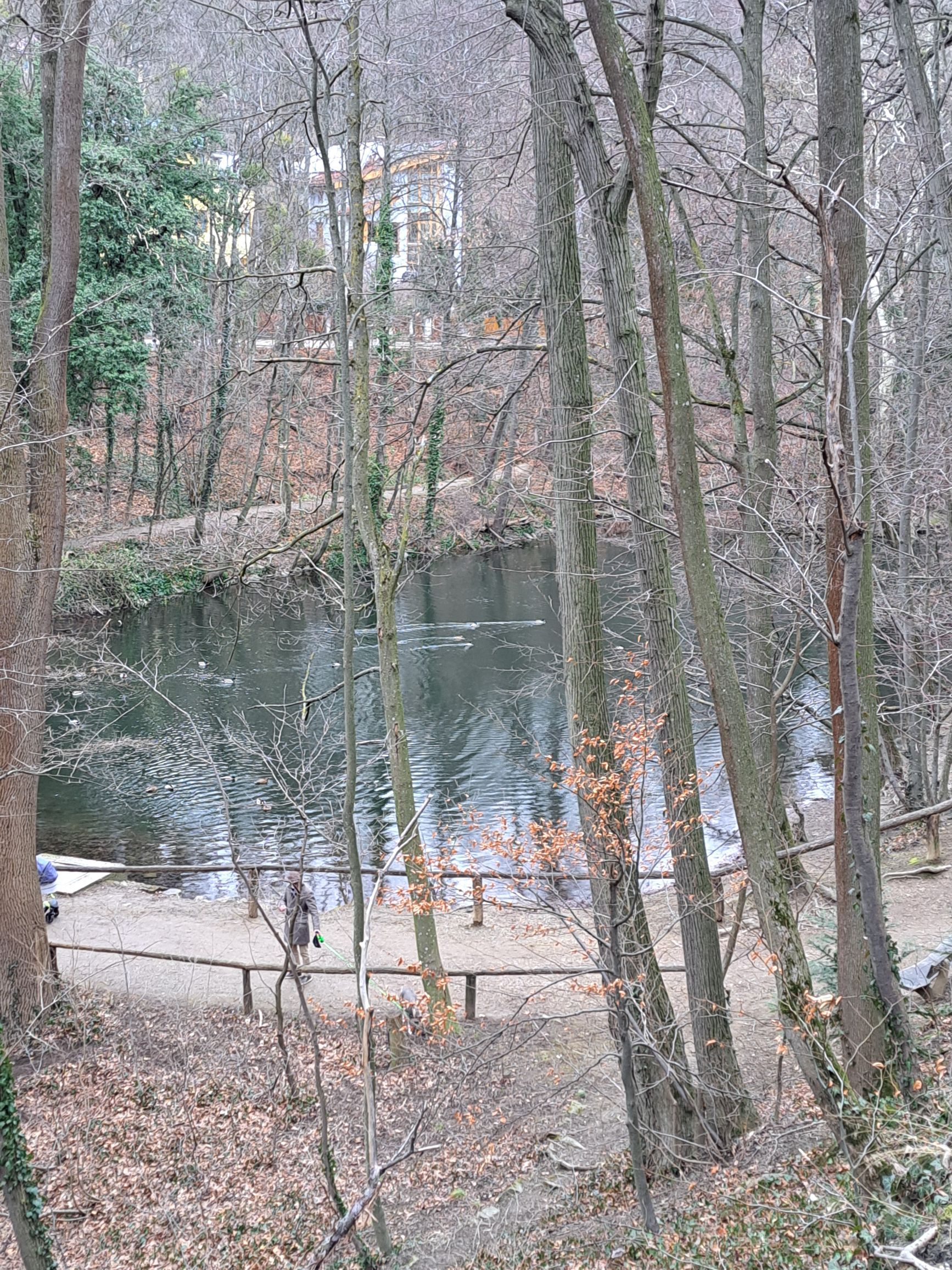
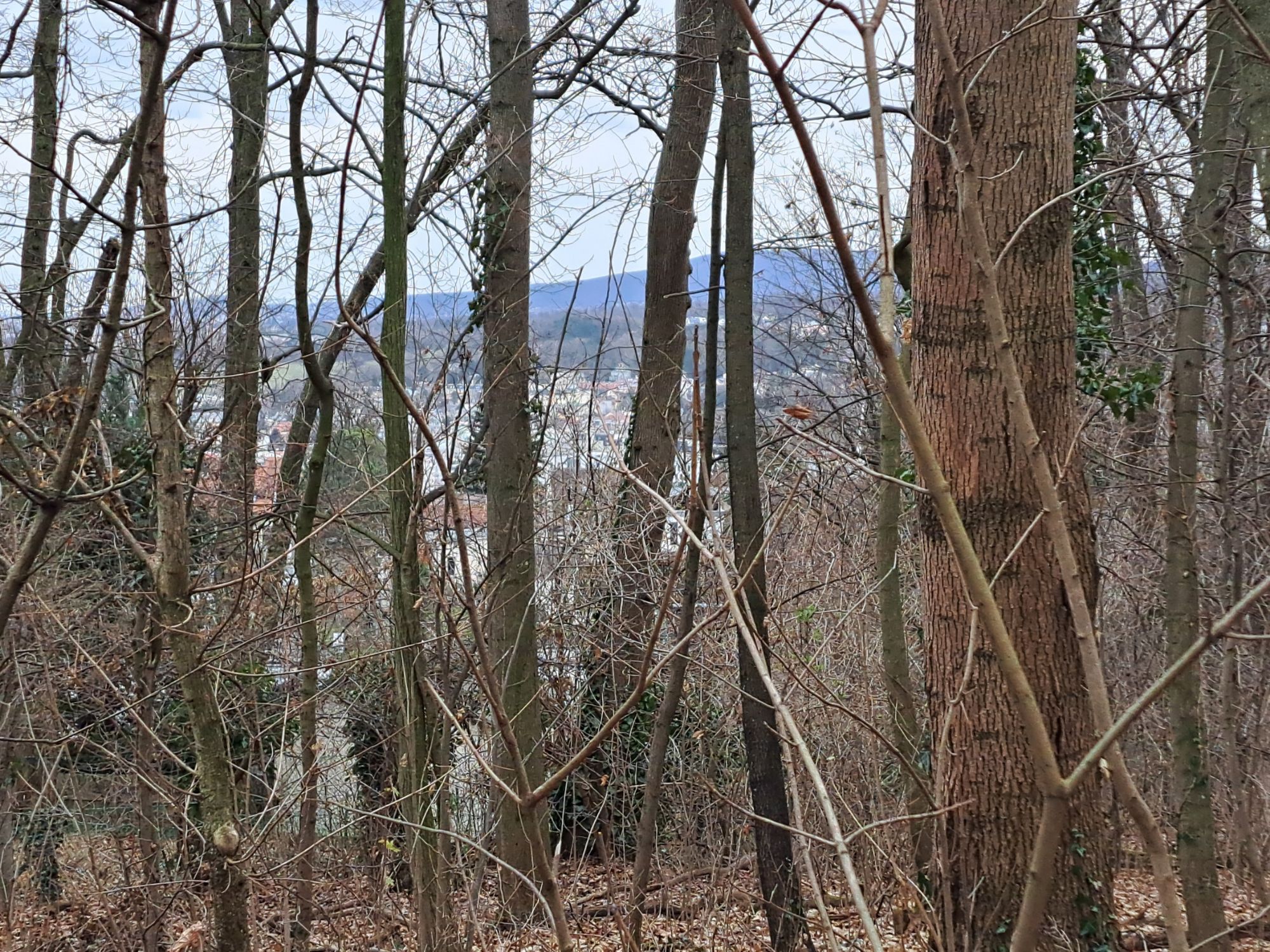
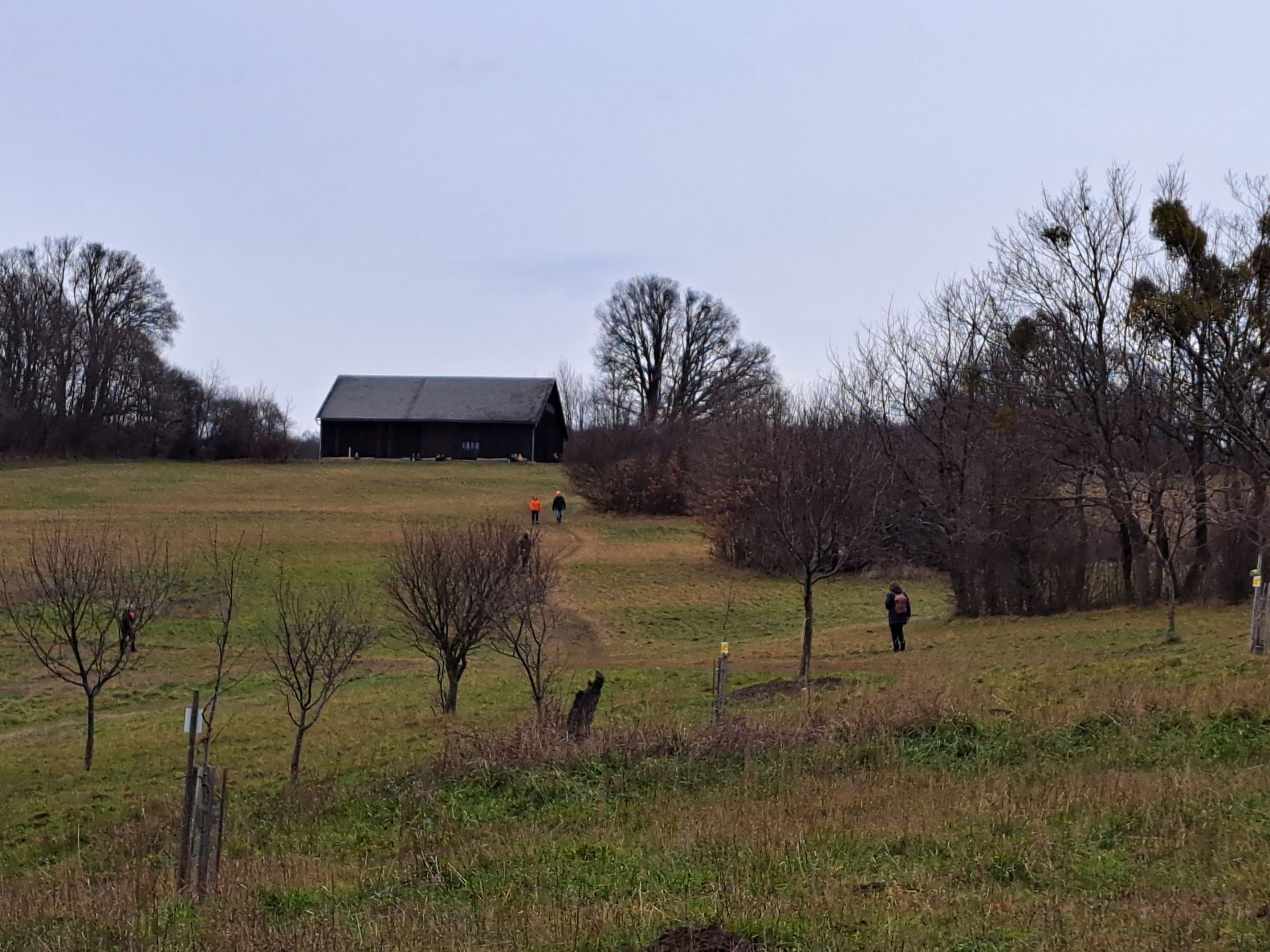
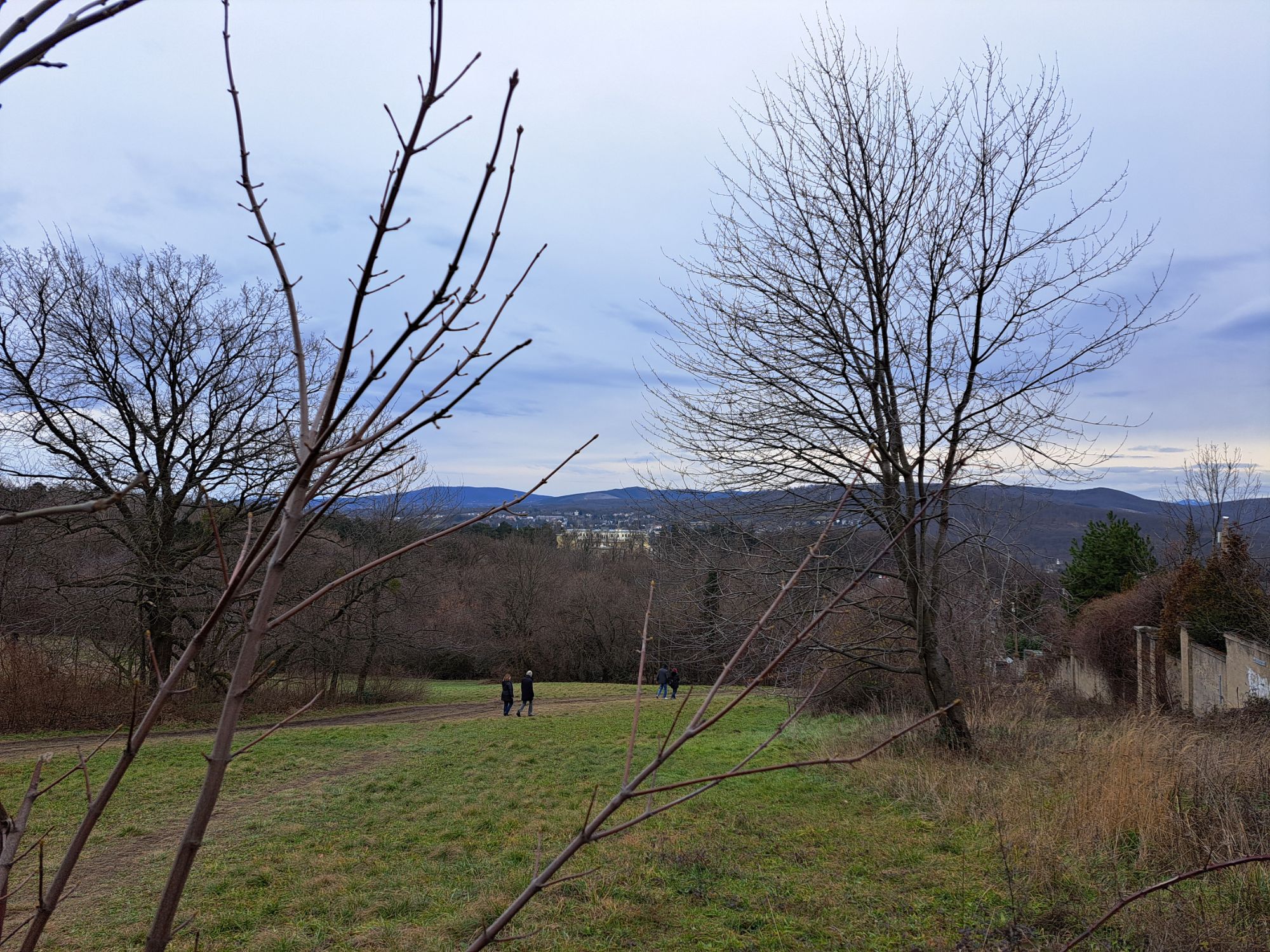
Walking time from Feuerwache am Steinhof to Hütteldorferstraße this time around (I got a little lost) was probably about an hour and a half. Below you can see the map.
We did it! We finally finished the Rundumadum hiking trail. And only 😉 two and a half years or so after we went hiking together the last time, as described here. We managed to pick the perfect day for it, too. It was sleeting and windy and, of course, rather icy under foot with all that sleet. But, as we agreed, there is no such thing as bad weather, only inappropriate clothing, so we pulled on our warm and water-repellent things and went out.
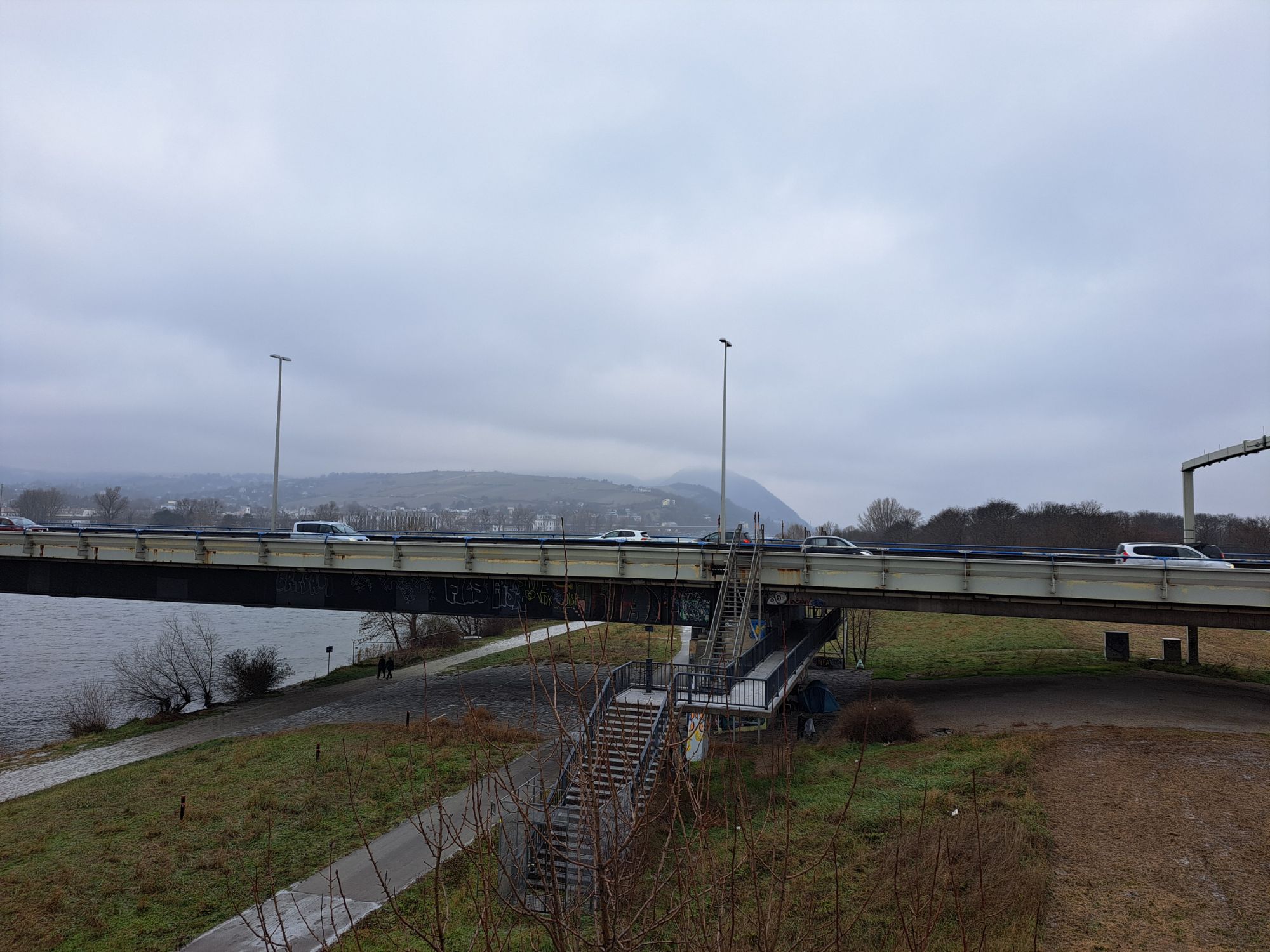
As I mentioned in that post from May 2022, we didn’t manage the whole last stretch in one shot and so just had a couple of kilometers to go this time. We took the 34A bus from Floridsdorf more or less to where we stopped last time and set off from there in the direction of the Danube. Remarkably, given that we had often had trouble with the directions and missing trail signs, we didn’t have to re-trace our steps once. We found the pedestrian overpass that allowed us to cross the Autobahn first try and found ourselves walking along the banks of the Danube where the wind was, if possible, even stronger.
Other than a few hardy dog walkers, some with rather unhappy looking dogs, and a couple of joggers, we were the only ones crazy or driven enough (“We *will* finish it today”) to be out. Oddly enough, I can’t say it was unpleasant. We had enough to talk about, the scenery is always beautiful, and we were about to complete a journey I started alone in November 2018, if my memory serves me correctly. (Here is that first Rundumadum post with some photos of the stretch in friendlier weather.)
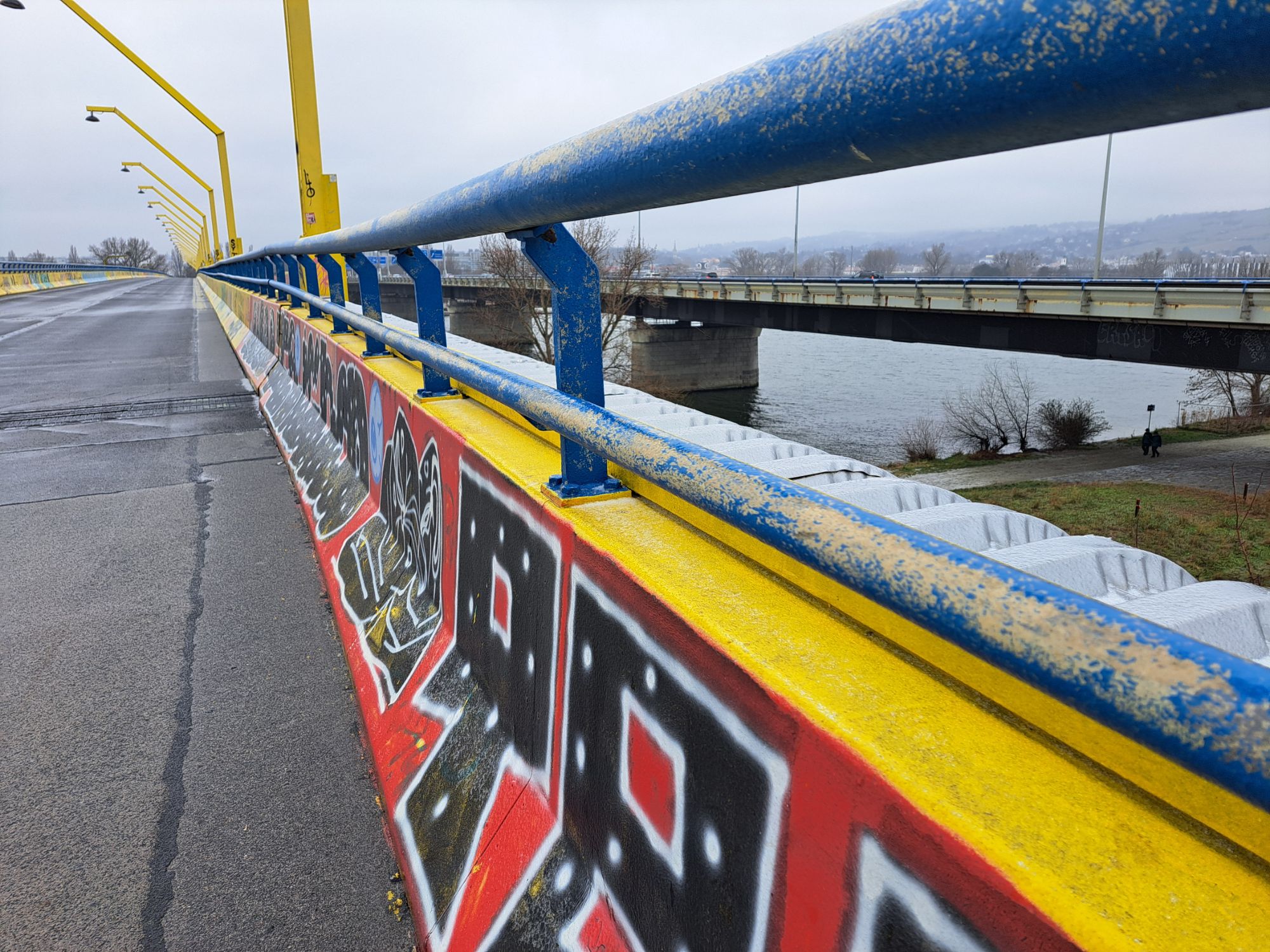
We found the Jedlerseer Brücke (bridge) easily and crossed to the Donauinsel, I remembering the first time I did that, with Maylo, who had to be carried part of the way. (He never did get used to bridges.) Then we transversed the Donauinsel, waved to Nussdorf, where we were headed, on the other side of the Danube, and followed the trail southeast to the next bridge and crossed. We came out quite close to the Heiligenstadt U4 station, and it was a little tempting to just stop there. However, we walked out to Heiligenstädter Straße and walked northwest to Nussdorf, the official end of that trail section. We were rewarded with a combination of some of the most famous “Gemeindebauten” or public housing blocks, including the Karl-Marx-Hof, and some beautiful 19th-century privately owned apartment buildings.
In Nussdorf, we congratulated each other and went back to my hiking partner’s place for some much needed Glühwein and Christmas cookies.
Up next — the city’s 14 “city hiking trails” (“Stadwanderwege”), which include some as short as 4 km and one as long as almost 23 km. (I suspect we won’t be walking that long one in one go!) Most of them seem to be between 10 and 12 km.
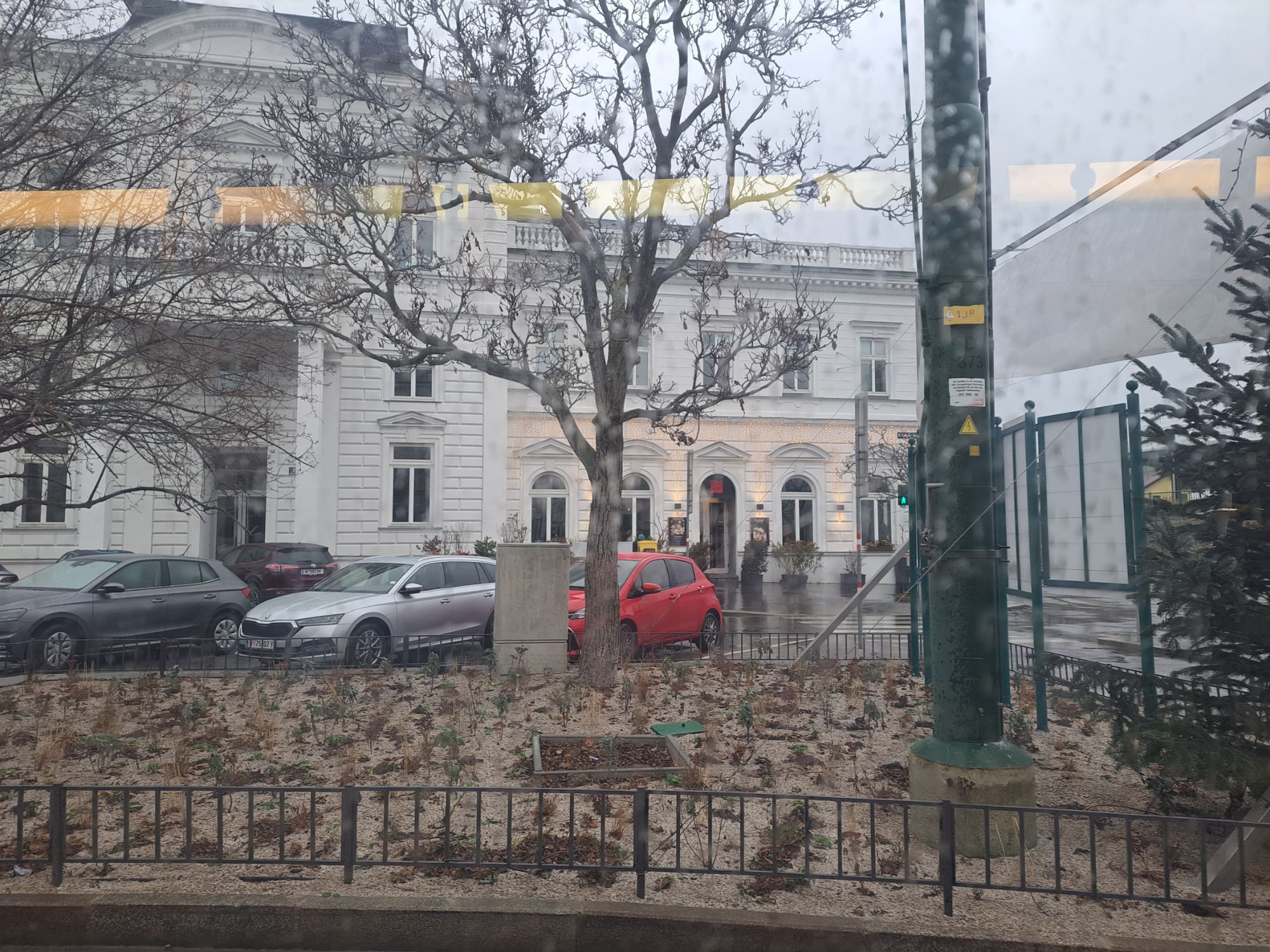
Below are a few photos from today’s walk, mainly to show the sleety, foggy weather. The last one also shows that we did make it all the way to Nussdorf.
Trail number 24
Distance: 7.8 km (of which we did three or four today)
Time (if you do the whole thing): 2 to 2.5 hrs
Link: https://www.wien.gv.at/umwelt/wald/freizeit/wandern/rundumadum/etappe24.html

