Image

The Votivkirche

9 Jan

image

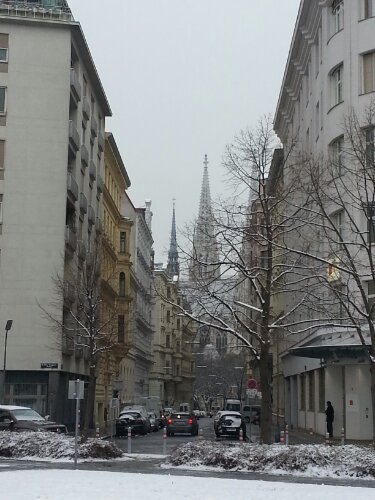
The snow is already gone, but I felt it made a nice picture yesterday with the Votivkirche, that neo-Gothic church erected by Emperor Franz Josef’s brother in thanks that the Emperor escaped an assassination attempt, visible here at the end of Frankgasse in the 9th district.

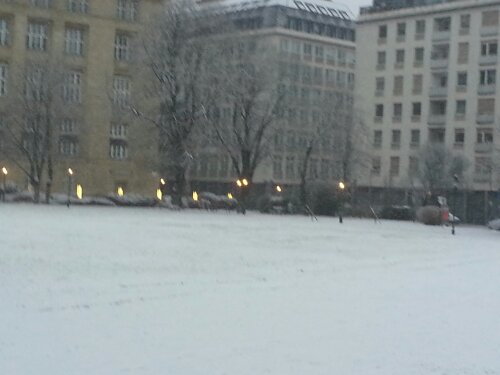
Perhaps I was also drawn to the picture because of the drama that is unfolding in and around the Votivkirche. The end of November, if I remember correctly, tents appeared in Freud-Park, named indeed for Sigmund Freud, and located between the Votivkirche and the Ringstrasse. At some point I walked down to find out what it was about and it turned out to be a protest for overfilled refugee and asylum-seeker camps. Over the weeks that followed the camp didn’t grow, but it didn’t shrink either. At the end of December the police stepped in to clear the camp, which was in violation of several ordnances. A number of inhabitants of the camp fled across the street into the Votivkirche, where the priest decided to let them stay, at least for now.

At the moment there is something of a stalemate. The refugees, asylum-seekers, and organizers of the protest are, of course, reluctant to give up since they have, presumably as intended, received a lot of media attention through their action and gotten the government to discuss their plight. The City of Vienna, and indeed the government of Austria, is reluctant to give in to what has become essentially a form of blackmail and might encourage other groups to follow suit. So, your basic lose-lose situation. In an attempt to up the ante a number of the protestors have now gone on hunger strike. So far it hasn’t made a difference.

What I have further garnered from the free daily newspaper, Heute, and the website of the Austrian Broadcasting Corporation (ORF), is that the FPÖ (the Freedom Party of Austria, far right) has responded by saying that the hunger strikers should be forcibly removed and force fed (always makes me think of the scenes about the suffragette movement as shown in “Upstairs, Downstairs”), the Grünen (the Green Party of Austria) has come under attack in Parliament for their relative support of the protestors, the ÖVP (the Austrian People’s Party, right centrist) is against the occupation of the Votivkirche and would probably like more regulation of immigration, and the SPÖ (the Socialist-Democrats in Austria and by far the strongest party in Vienna–not for nothing known as “Red Vienna”) are lamenting that the one federal state in Austria that is actually fulfilling its commitments to refugees is the one with the large-scale protest. Dr. Michael Häupl, mayor of Vienna, has also, legitimately, I think, expressed concern that the refugees and asylum-seekers are being used to political ends. The City of Vienna offered, apparently even before the occupation of Freud-Park, alternative accommodation that was rejected. Add to the mix that the organizers are reportedly from Bavaria (a federal state in Germany) and you have a sense of the complexity of the situation, and the low, low chances of a favorable outcome for anyone.
Café Konditorei Klement

4 Jan

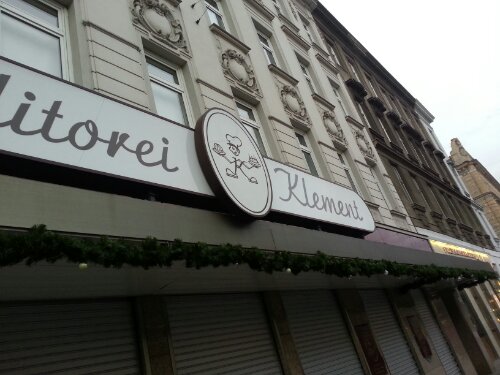
I went to have breakfast with a friend at Café Konditorei Klement in the 17th district and found that they closed their doors on December 31st. The friend actually has been a customer there much longer than I have and was able to give me a bit of background, although she, too, hadn’t known they were closing.

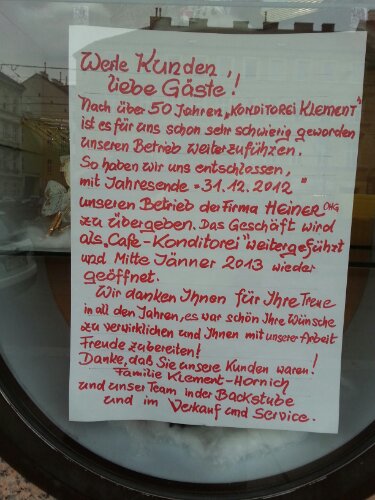
It is a fairly typical story not only for Vienna. The children–in this case a daughter–didn’t want to take on the business so that when the parents reached an age where they could no longer keep the café going (and, let’s face it, it is very long hours and hard work with no great financial return) the café closed. The photo below of the notice outside Café Konditorei Klement explains the circumstances to some extent. Another factor may very well have been that the terms on the lease changed with the new proprietor. This makes it even harder for children to take over the business and make a good living.

Klement was, in fact, one of the few hold-outs left. A number of other Konditoreien (fine pastry shops) have become chains–centralized their production and standardized their look, taking over family businesses with sound customer bases as they close. In fact, L. Heiner, who is taking over the Klement premises, is one such company. Originally a very select pastry shop in the First District it has grown to simply a very good mass producer and distributor of creamy cakes. (Can you tell where my preferences lie? ;-))

image

image

It reminds me a little of the sign Kathleen Kelly hangs on her children’s bookstore in “You’ve Got Mail” when she accepts the inevitable. One paragraph above says: We thank you for your loyalty over all those years. It was a pleasure to fulfill your wishes and delight you with our work. Thank you for having been our customers!

New Year’s Day

1 Jan

image

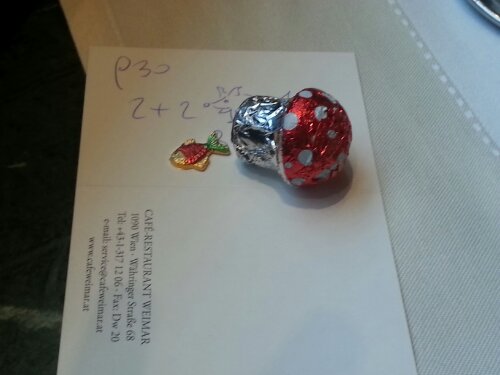
Went to Café Weimar for breakfast this morning to welcome in the New Year (starting as I mean to go on ;-)). I reserved a table for two people and two dogs and this is what the card looked like. 🙂 And people say Viennese coffeehouse waiters aren’t friendly!

The mushroom is to bring luck in the New Year. The fish is to put in one’s wallet to ensure lots of money coming in. Mine went in there immediately and is, I hope, doing its job!

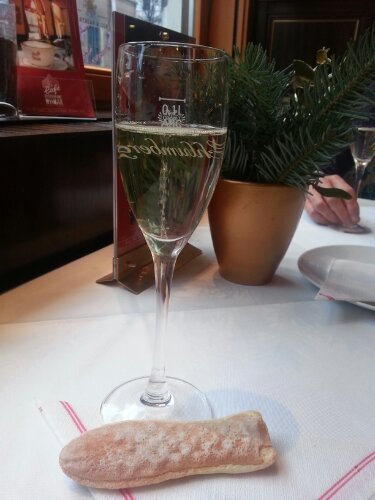
And, of course, what is a New Year’s breakfast without sparking wine (Sekt) served here with light, crispy fish cookies, again to ensure plenty throughout the year. But careful–you have to eat it head first or some terrible fate will befall you!

image

Odd that when I still lived in the U.S. I listened to the New Year’s concert with the Vienna Philharmonic every single year it was broadcast, first on the radio then on TV. Now it is rather hit or miss whether I hear it. This year it was, as you can see, a miss. I had other fish to fry. 😉

The Viennese ‘House Mountains’

29 Dec

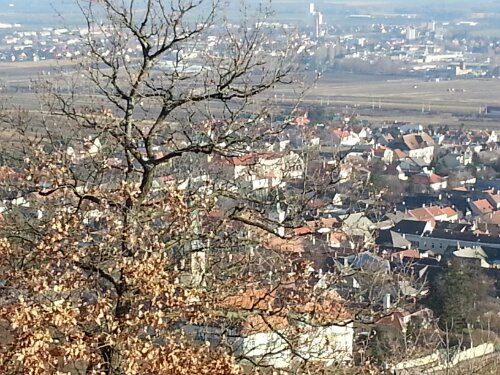
Today the weather was gorgeous (after a number of days of gray skies and rain) and Mylo and I went off to do something very Viennese–we left town and headed out to one of the ‘mountains’ in the Vienna Woods, the Anningerberg in Gumpoldskirchen. There we had a long walk under beautifully blue skies followed by lunch with a glass of the local (famous) wine for me. This gives you an idea of what it looked like:

image

A good way to spend a day, don’t you think? 😉

White Christmas?

25 Dec

Well, we didn’t make it, at least not downtown.

image

Never mind. It still has a certain Viennese charm. (The focus on my camera works just fine, by the way. That is the common Viennese winter fog you see in the picture.)

Winter wonderland?

24 Dec

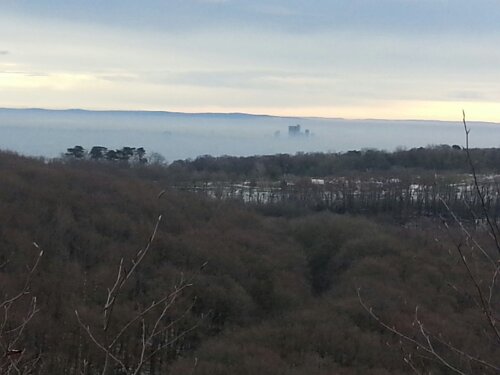
The Vienna Woods this Christmas Eve …

image

image

A White Christmas?

23 Dec

Will we perhaps have a white Christmas in Vienna after all?  Stay tuned!

image

Old Vienna

22 Dec

With the exception of the cars and the height of the trees this view of Vienna probably hasn’t changed much since the houses were built over 100 years ago. It seems to have been largely spared the destruction in the war and has been protected since then.

image

The Viennese and their weather

19 Dec

It occurred to me that those of you who have never lived in Vienna might wonder why I have a special tag for the weather. That is because we have a lot of it in Vienna. 😉 At least, the Viennese are very aware of their weather and talk about it a lot–not in the way the British do, as a kind of safe subject for small talk, but as an explanation, not to say excuse, for all kinds of things. Everybody is short-tempered? Must be the weather. You’re tired even though you slept well last night? Must be the weather. You’re dizzy? Guess what. Must be the weather.

There is, in fact, one weather phenomenon known to cause some physcial symptoms–Föhn. This is more common in Innsbruck, but that doesn’t stop the Viennese from talking about it. I once had the joyful job of trying to explain Föhn (pronounced rather the way Inspector Clouseau as played by Peter Sellars pronounced “phone”) to a group of American visitors. At the time I believed, because my Viennese friends had told me this, that it was a hot wind coming up from northern Africa. Now there is Wikipedia and I can tell you with authority that it is a “warmer trockener Fallwind” or a warm dry wind that comes down over a mountain (great diagram at: http://de.wikipedia.org/wiki/Fallwind). What does it feel like? Perhaps it helps to mention that Austrians use the word Föhn for  “hairdryer”  rather than the more standard Haartrockner.

But what does it do, this warm dry wind coming down off the mountain? The most common complaint associated with Föhn is headache. But sometimes you also hear of someone suffering from a Kreislaufzusammenbruch (Kreislauf = circulatory system; Zusammenbruch = breakdown). The first time a business partner called to cancel an appointment because she was suffering from Kreislaufzusammenbruch I gasped and said, “Are you calling from the hospital? Can I do anything to help?” She was audibly amused and said no she was at home but not up to a meeting. Life-threatening as it sounds, Kreislaufzusammenbruch does not usually require medical intervention. It makes the sufferer feel dizzy and miserable, but is not usually serious and is usually quite short-lived. (The circulatory system, by the way, is to German speakers what the  liver is to the French. We have Kreislaufzusammenbrüche; they have crises de foie.)

In spite of my New England upbringing, where external factors are seldom an excuse for falling down on the job, I notice that I have lived in Vienna long enough to feel it, too. Got a headache? Must be the Föhn!

Photos from the Vienna Woods

16 Dec

From a walk today from Cobenzl to Kahlenberg …

image

image