We did it! We finally finished the Rundumadum hiking trail. And only 😉 two and a half years or so after we went hiking together the last time, as described here. We managed to pick the perfect day for it, too. It was sleeting and windy and, of course, rather icy under foot with all that sleet. But, as we agreed, there is no such thing as bad weather, only inappropriate clothing, so we pulled on our warm and water-repellent things and went out.
As I mentioned in that post from May 2022, we didn’t manage the whole last stretch in one shot and so just had a couple of kilometers to go this time. We took the 34A bus from Floridsdorf more or less to where we stopped last time and set off from there in the direction of the Danube. Remarkably, given that we had often had trouble with the directions and missing trail signs, we didn’t have to re-trace our steps once. We found the pedestrian overpass that allowed us to cross the Autobahn first try and found ourselves walking along the banks of the Danube where the wind was, if possible, even stronger.
Other than a few hardy dog walkers, some with rather unhappy looking dogs, and a couple of joggers, we were the only ones crazy or driven enough (“We *will* finish it today”) to be out. Oddly enough, I can’t say it was unpleasant. We had enough to talk about, the scenery is always beautiful, and we were about to complete a journey I started alone in November 2018, if my memory serves me correctly. (Here is that first Rundumadum post with some photos of the stretch in friendlier weather.)
We found the Jedlerseer Brücke (bridge) easily and crossed to the Donauinsel, I remembering the first time I did that, with Maylo, who had to be carried part of the way. (He never did get used to bridges.) Then we transversed the Donauinsel, waved to Nussdorf, where we were headed, on the other side of the Danube, and followed the trail southeast to the next bridge and crossed. We came out quite close to the Heiligenstadt U4 station, and it was a little tempting to just stop there. However, we walked out to Heiligenstädter Straße and walked northwest to Nussdorf, the official end of that trail section. We were rewarded with a combination of some of the most famous “Gemeindebauten” or public housing blocks, including the Karl-Marx-Hof, and some beautiful 19th-century privately owned apartment buildings.
In Nussdorf, we congratulated each other and went back to my hiking partner’s place for some much needed Glühwein and Christmas cookies.
Up next — the city’s 14 “city hiking trails” (“Stadwanderwege”), which include some as short as 4 km and one as long as almost 23 km. (I suspect we won’t be walking that long one in one go!) Most of them seem to be between 10 and 12 km.
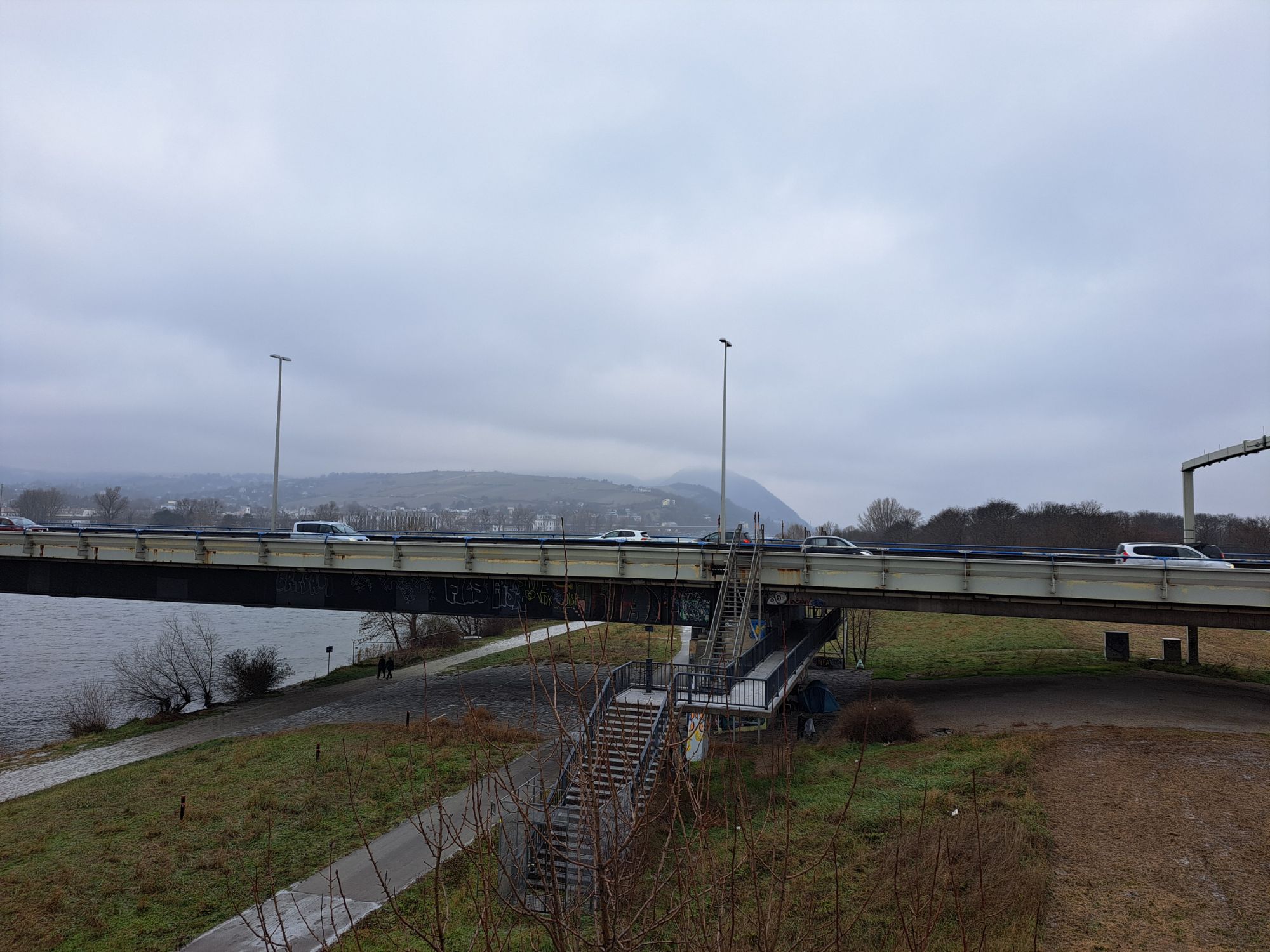
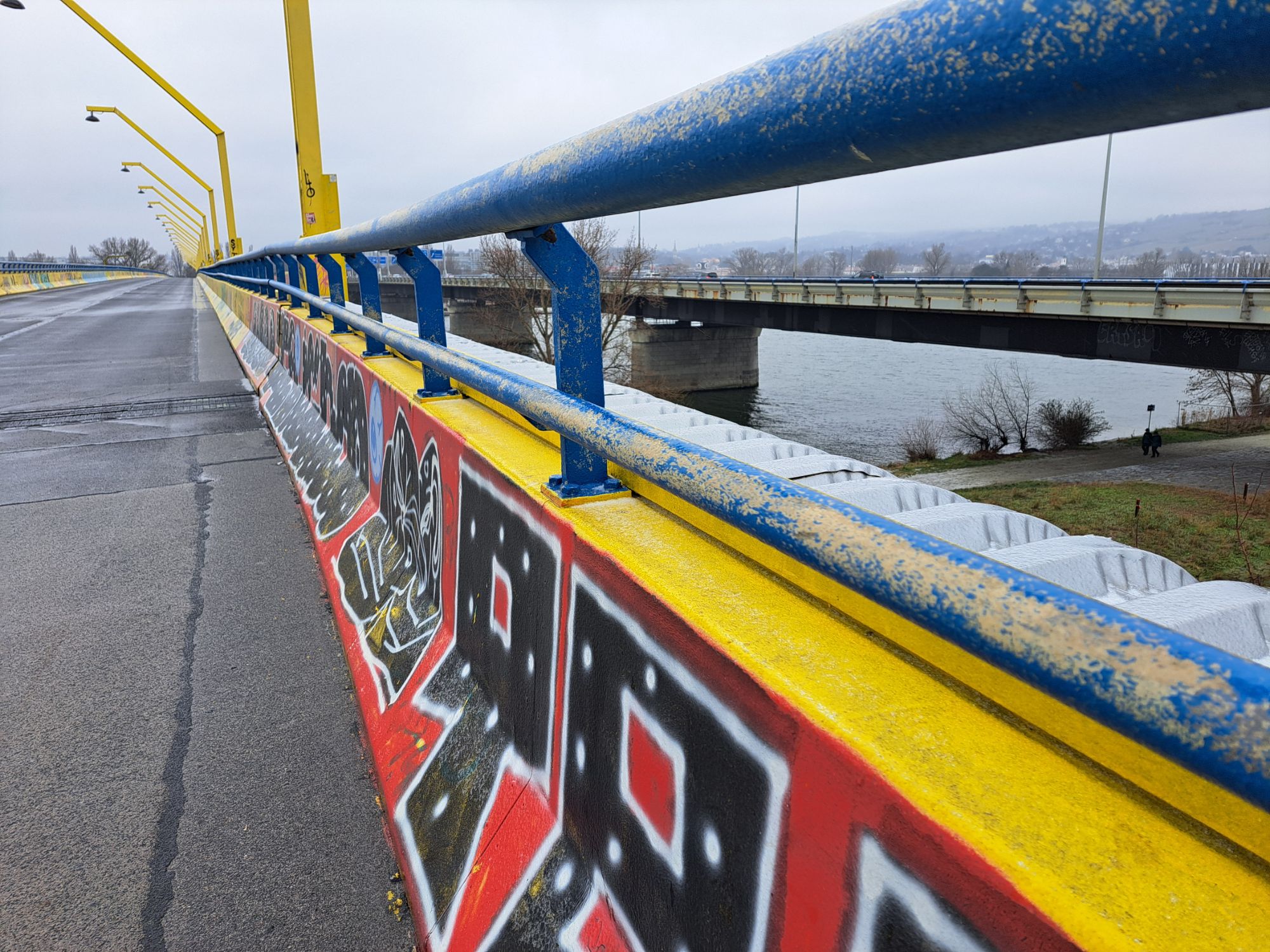
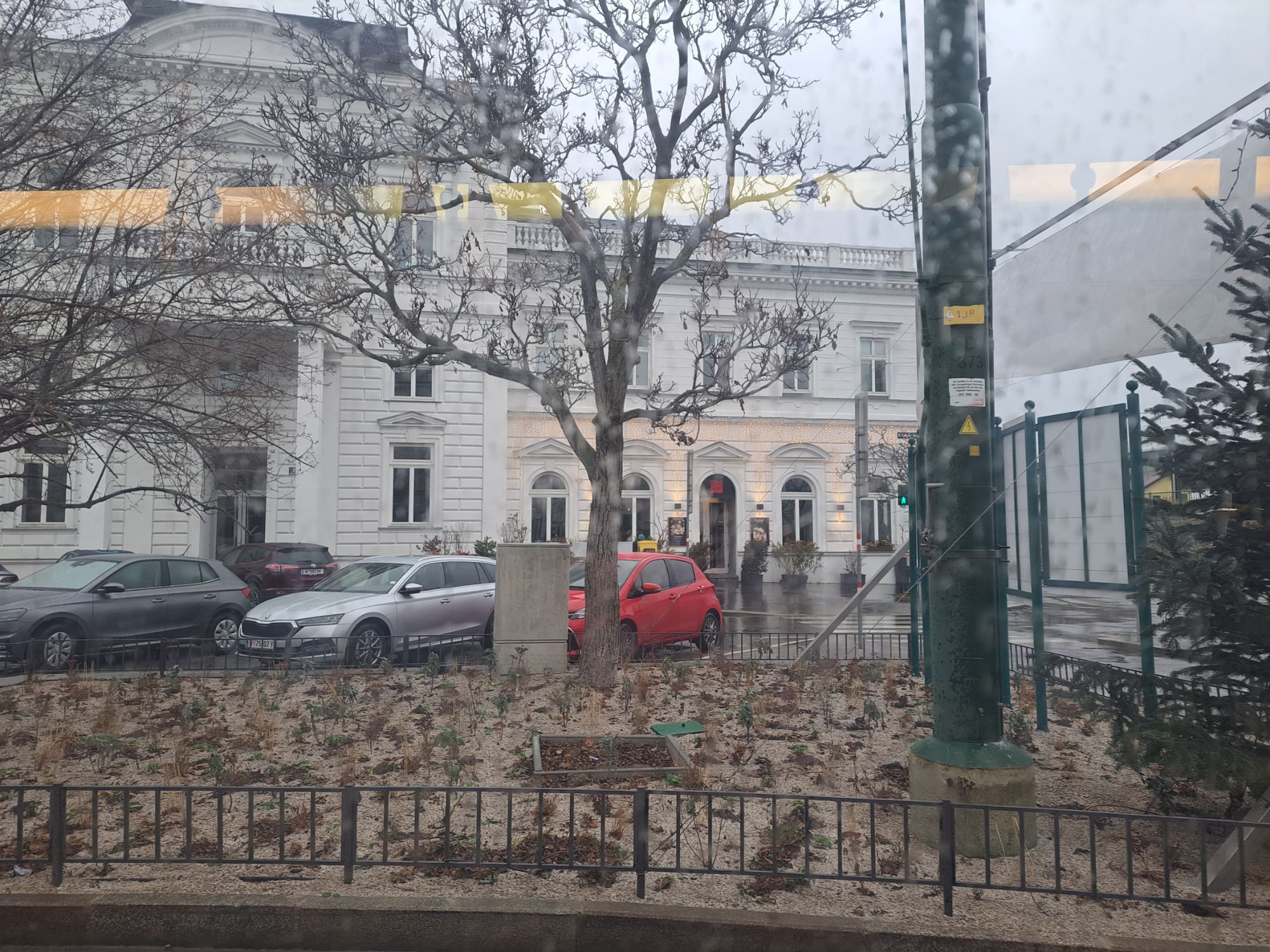
Below are a few photos from today’s walk, mainly to show the sleety, foggy weather. The last one also shows that we did make it all the way to Nussdorf.
Trail number 24
Distance: 7.8 km (of which we did three or four today)
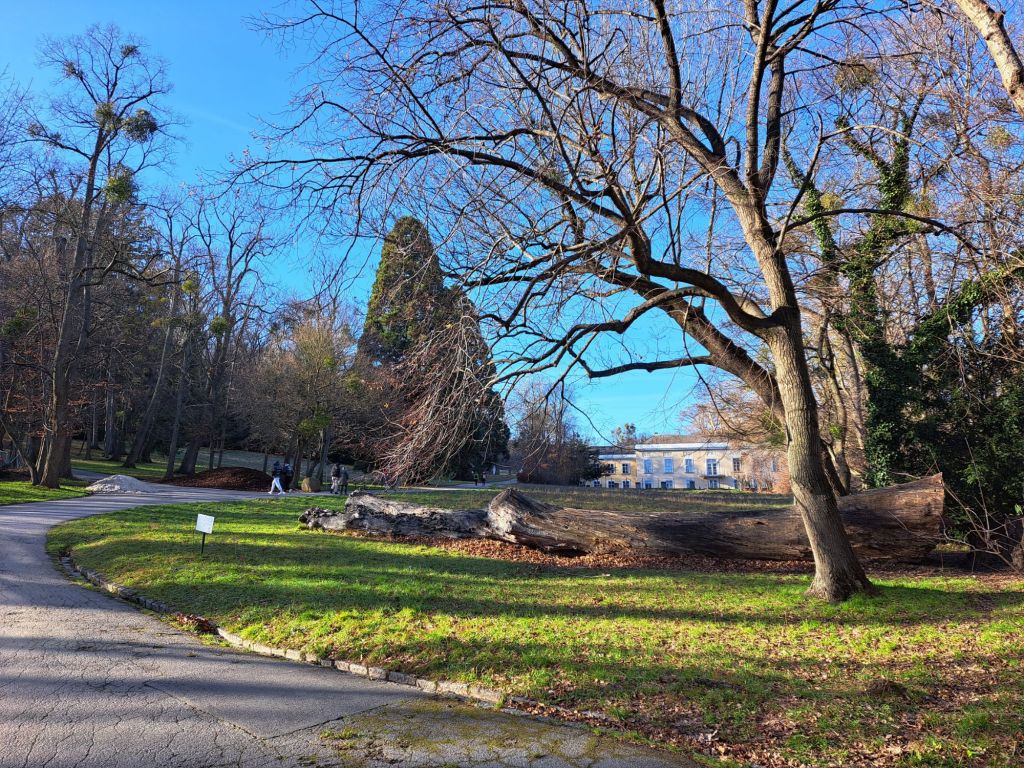
No turtle doves, but Vienna is showing itself from its best side. Weeks of grayness are very common in November, December, and January, so we rejoice over every hour of sunshine. At the same time, today, the temperatures are hovering around freezing, making it feel like Christmas. And, of course, who could do without the walk in the Vienna Woods (in the picture, you see the Pötzleinsdorfer Schlosspark in the 18th district) after the celebrations yesterday — and, in my case, this evening again?
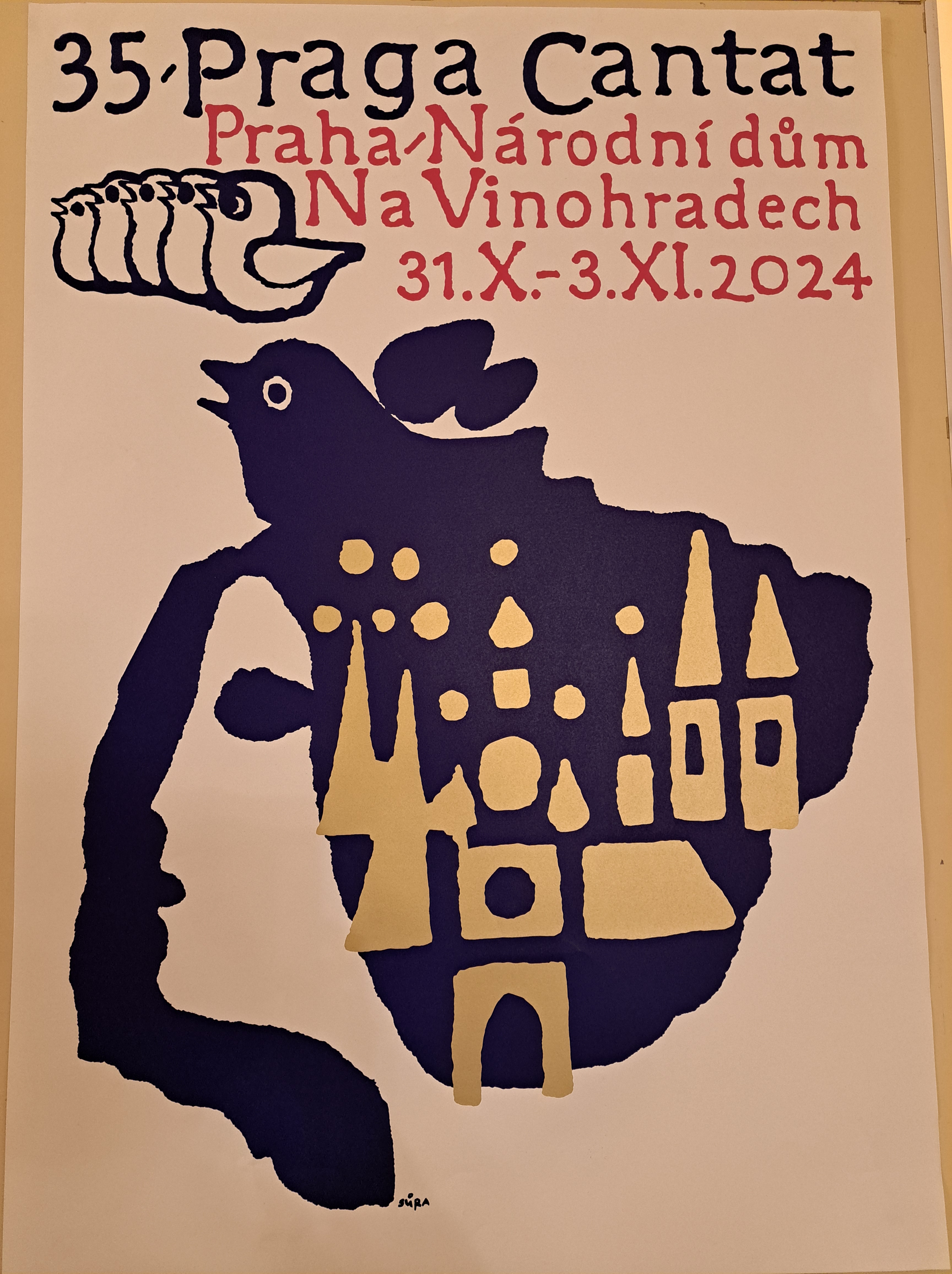
I went to Prague this weekend to see a friend I hadn’t seen in over 20 years (often the price of this international life I lead). His choral group was participating in the 35th Praga Cantat choir competition and festival, and the four hours by train to Prague seemed much more manageable than the however many hours it would take me to visit him in Cancún, where he has lived since he left Vienna.
Perhaps I should mention that I hadn’t been to Prague in over 15 years and wouldn’t have minded never going again. My memory was of grim, unhelpful people and taxi drivers who rip you off ruthlessly. (This was not just my impression. The reputation of the Prague taxi drivers got so bad that the mayor disguised himself as an Italian tourist and found himself paying over five times as much as usual. See the New York Times piece on the story: https://archive.nytimes.com/intransit.blogs.nytimes.com/2009/09/08/hailing-taxi-tips-in-prague/ ) This complaint makes me sound like a spoiled brat who takes taxis all the time. The truth is that I rarely take taxis unless I am very late or have a lot of luggage or have another pressing reason. For some reason, my then partner and I took taxis three times in a several-day visit to Prague and got ripped off a different way each time. (Points, at least, for ingenuity.)
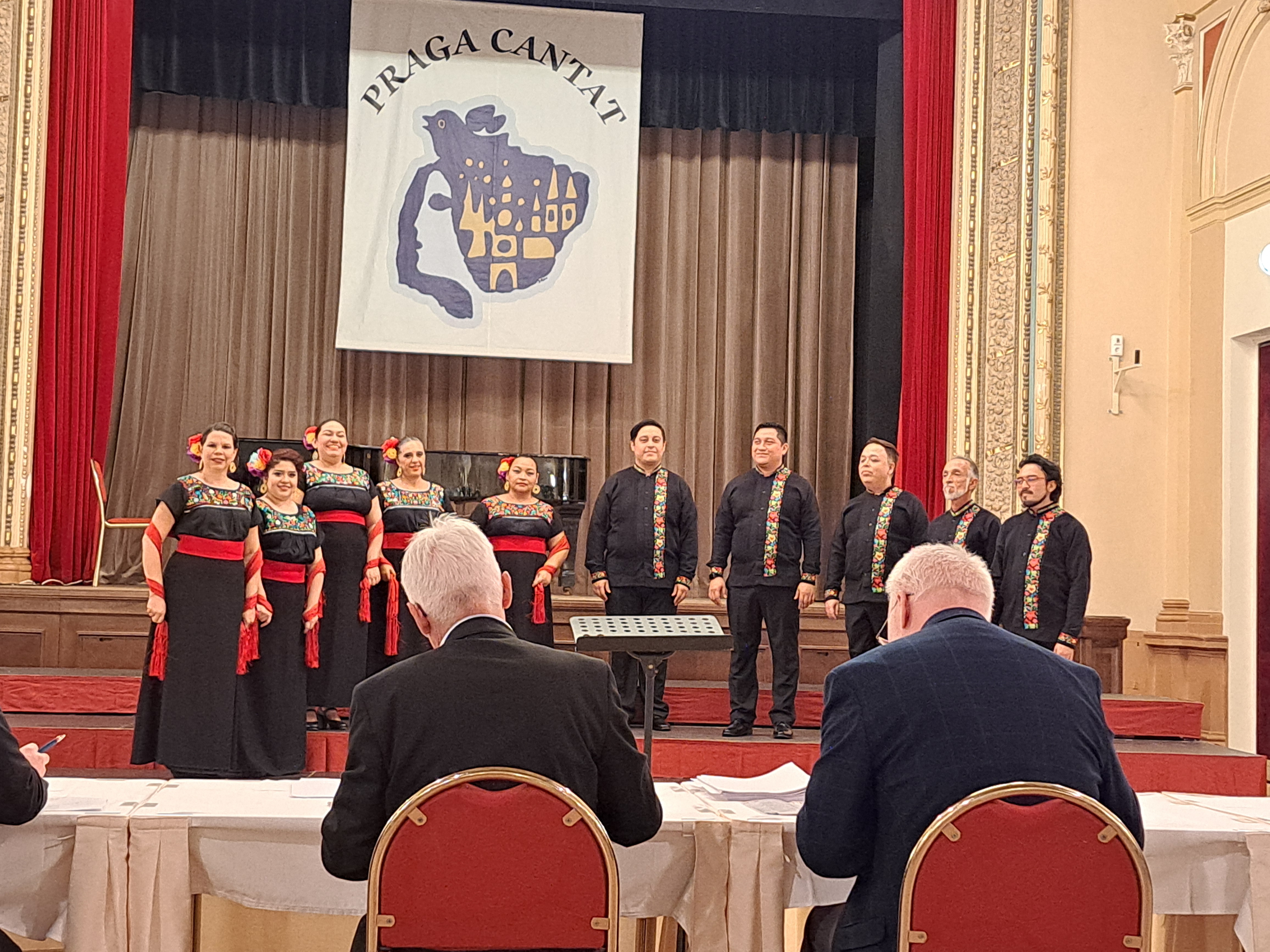
In any case, I went to Prague to see my friend Chris and cheer on his small, a cappella singing group from Cancún (Coro Municipal de Cancún). And now I need to re-write my experiences of the Czech capital. Perhaps it helped that the weather was good, but then I don’t remember it being so bad when I was there before. Perhaps it was limiting my stay to the pretty and quiet residential Vinohrady district or trailing about with a group of singers from Mexico who were loving their time in Europe and glowing from the fact that they had, a mere 14 months after their forming, just won two gold medals in their first ever choir competition in Madrid. Or perhaps it really was that it was a completely different experience with the people.
Taking no chances, I asked the hotel to book a transfer from the train station for me so that I would arrive in time to hear the preliminary rounds of the competition. The driver was prompt, friendly, and asked only the agreed upon price. The receptionist at the hotel, Martina, was exceptionally friendly, not only helpful but taking real pleasure in having a singing group in the hotel. (She even called Saturday morning, her day off, to find out how they had done in the preliminary rounds.) And the competition / festival staff were warmly welcoming and very helpful.
It was my first choir competition so I have nothing to compare it to, but I have to say it seemed more of a festival than a competition. Not that the singing wasn’t good – it was, partly extremely good. It was the atmosphere. There were no tickets to buy. You were let in for free and could enjoy as much of the competition as you wanted. The very competitors themselves didn’t seem very cutthroat but mainly seemed to be focused on enjoying themselves and doing as good a job as they could. The applause for the groups that made it to the next round was loud and hearty. An encouraging experience.
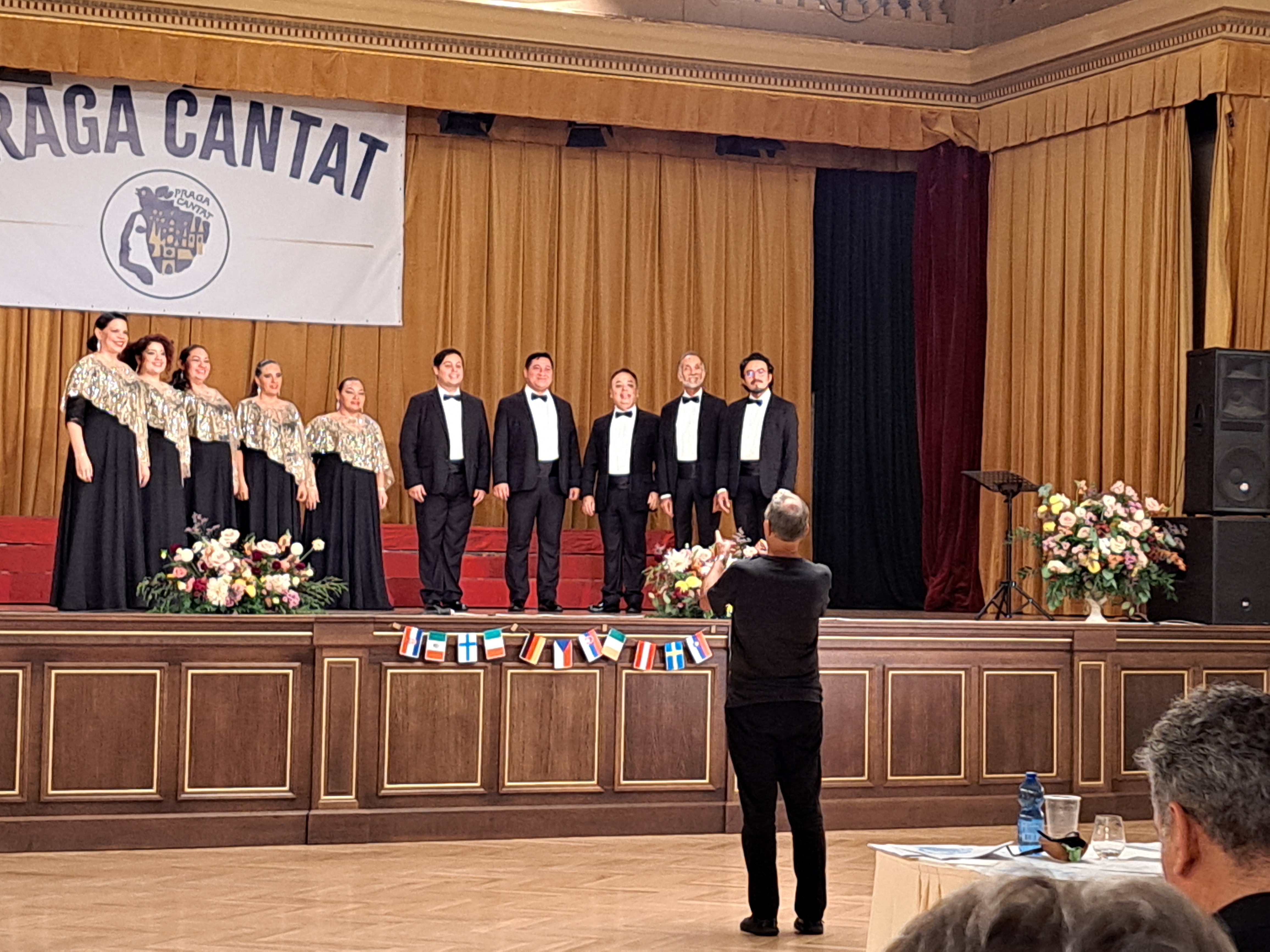
I’m not entirely clear on the structure, if I’m honest. I do know that Chris’s group was entered in two categories: folkloric and mixed choir (i.e., men and women). At the end of the first day, Friday, the best groups, regardless of category, were chosen to go through to the finals, which were held at 2 p.m. the following day. The Coro was one of six groups that advanced to the finals. 😊
The folkloric categoryThe mixed choir category (the man with his back to us was the tireless and tirelessly good-humored festival photographer)
This point was announced after 9 p.m. on Friday evening, and by the time we got underway in search of some supper we couldn’t find a place that would feed us. (We were a group of 17 people showing up as the kitchens were closing.) We made one last effort and asked at Vinohradský Parlament. Their kitchen was just closing, but they took pity on us and just asked that we be ready to order in 10 minutes, which, okay, with no one in the group who spoke Czech and not many who spoke English well enough to understand the menu, was more rushed that you might think but worked out. The food was a big hit as was – we’re talking Czech Republic here – the beer, and we all made it back to the hotel sated and happy.
The following morning, I had to grade some papers and the choir had to practice so we all met up again shortly before two o’clock and went over to the venue. What a crowd there was! I was happy for the organizers of the event because they really did such a good job and made the whole thing so welcoming. Each of the six groups that had made it into the finals sang two pieces. As I listened, I had that torn feeling many of my readers will recognize – there were two Austrian choirs I wanted to support and, of course, the Coro. The others were no slouches either – the youth choir from Sweden was especially impressive and, in fact, in the end, (spoiler alert) won the Grand Prix – so we left the sing-off with no clear idea of who might be the winners.
Then the closing ceremony with the awarding of the prizes. As far as I could tell, every participating group got something. For each category, bronze, silver, and gold medals were awarded, sometimes with more than one group getting a medal – you can see what I meant about it being more a festival than a competition – and then a winner of that category was chosen. On top of that, special prizes were awarded, one, for example, for the best overall conductor. (This went to an Austrian.)
The other thing that made it more of a festival than a competition was a ritual I found moving. There were three categories where the choirs were given a mandatory piece to learn. When the prizes had been awarded in those categories, all choirs in the category were asked to come up and sing the required piece together – conducted, I think, by the conductor whose group had won. For the Coro, this meant that their conductor, a native Spanish speaker originally from Venezuela, ended up conducting the Dvorak piece – in Czech in the capital of the Czech Republic – that was the required piece for the mixed choruses. (He was already completely overwhelmed because of the two special prizes that went to the Coro one was for the interpretation of that Dvorak piece!)
All in all, the newly formed group from Cancún won gold medals in each of their two categories, two special prizes (the other for vocal culture), and one trophy for the mixed choir category. You can imagine they were over the moon. Perhaps still are.
The awarding of the prizes was followed, as was to be expected, by a (rowdy) party. I didn’t stay to the end, which was officially announced for 11 p.m. I heard at breakfast this morning that, after the hired band finished playing, the choirs started singing again, standing in an enormous circle in the beautiful concert hall and taking turns singing favorites.
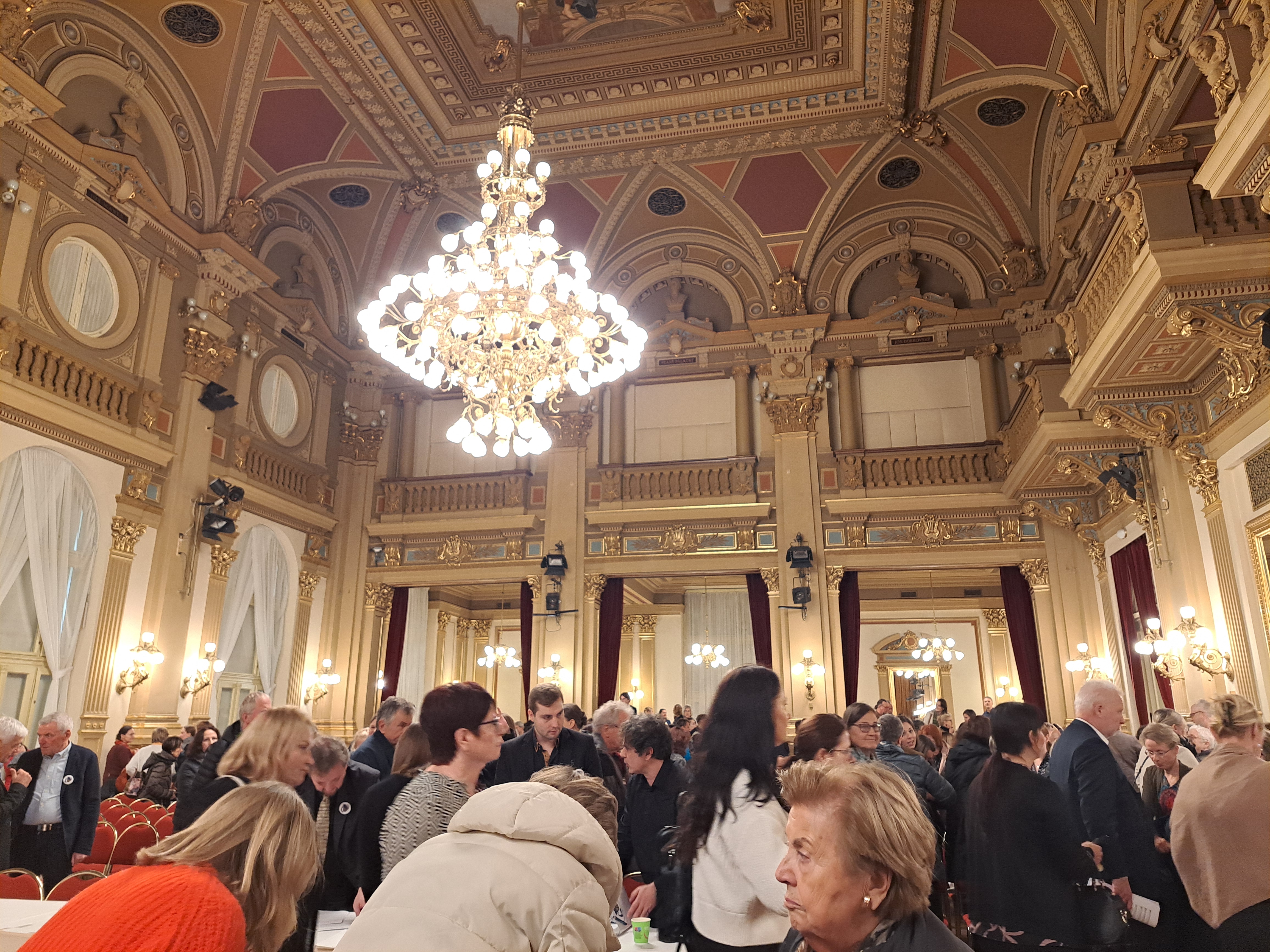
The beautiful main concert hall of the Vinohrady National House
I had such a good time I might need to go back to Prague sometime.
A couple of my personal (additional) highlights:
Of course, the stunning fire and precision of the Coro Municipal de Cancún
An Irish men’s choir who, surrounded by the prevailing Central European and Latin music, sang a couple of Irish folksongs, complete with penny whistle and drum, that brought tears to my eyes (that kind of music is in my bones)
The youth choirs, especially one from Sweden and one from Austria
The elderly gentleman from Germany who mentioned that he had started singing in his choir when his wife died. They had always sung together and he didn’t want to stop singing.
Hotel Anna (part of a chain of “small, charming hotels” and living up to its name): www.hotelanna.cz
Vinohradský Parlament (the restaurant that fed us when several had already turned us away, even though the kitchen had technically just closed): www.vinohradskyparlament.cz
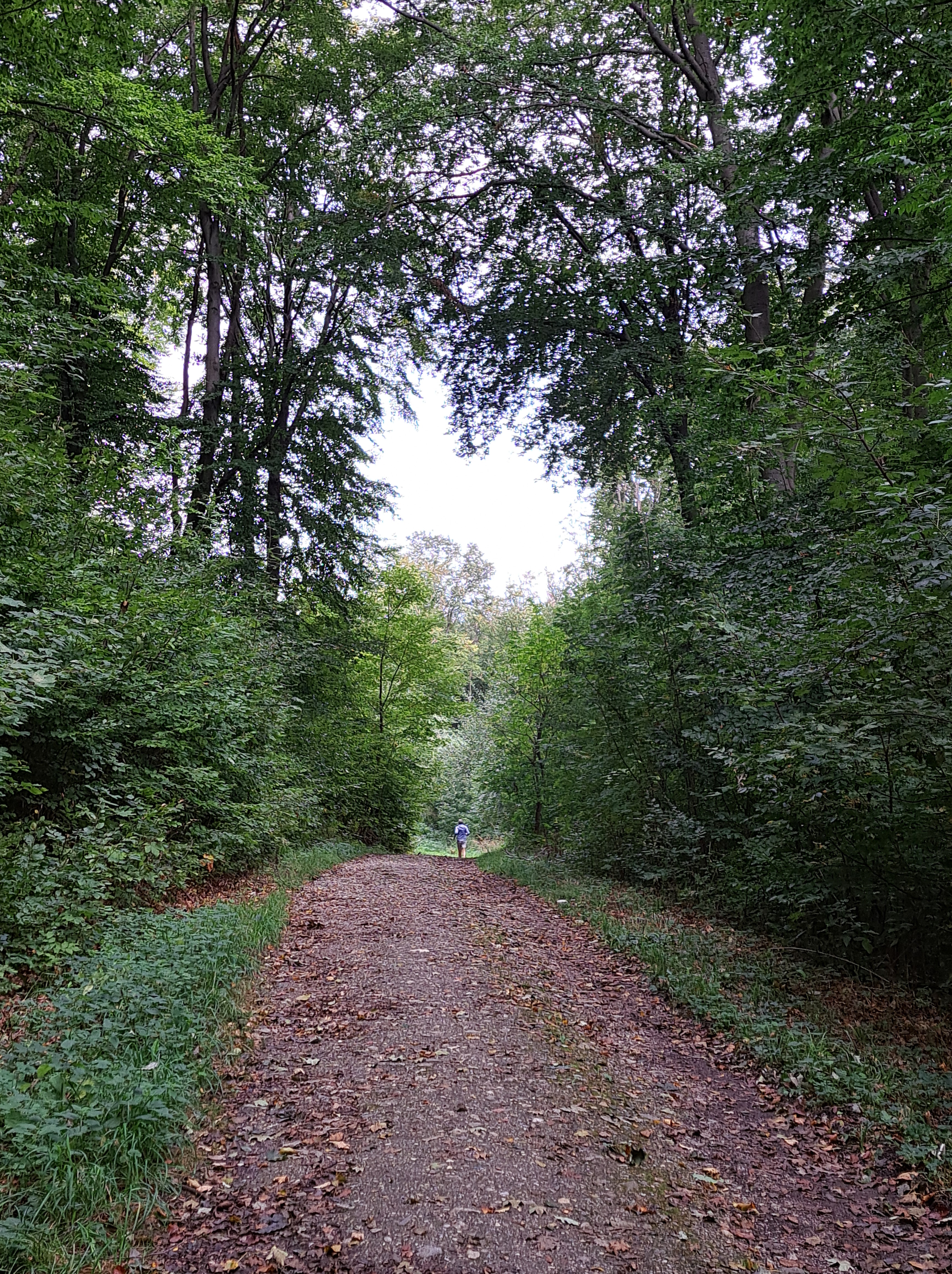
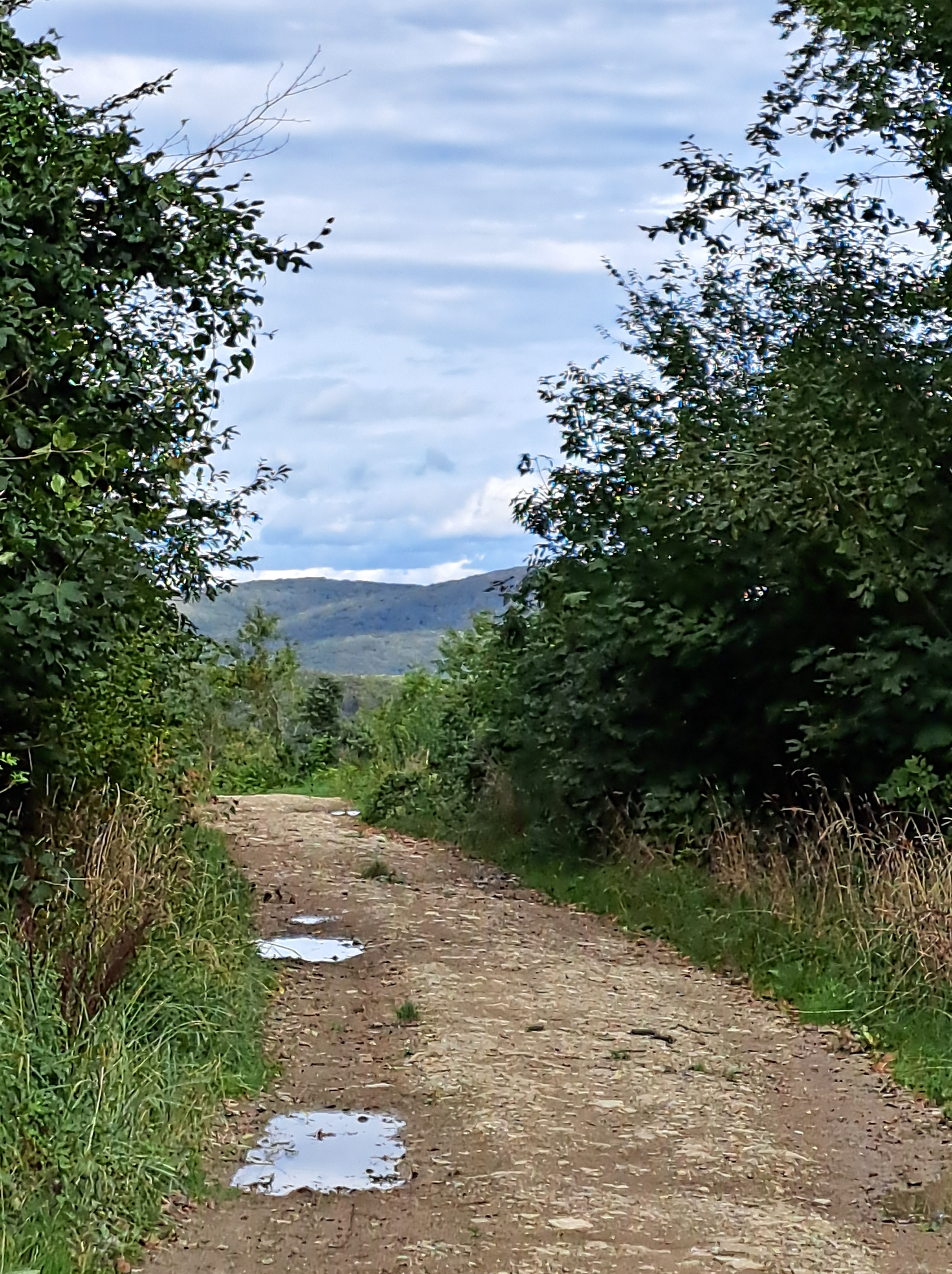
Actually, I already took quite a hike last weekend (Sophienalpe) but didn’t have time to upload photos so you are getting a couple of photos from yesterday’s hike on Wilhelminenberg. As I am fond of saying, “And it’s all within the city limits!” (A friend of mine from London, having heard this multiple times over a couple of hikes, commented, “That seems to be quite important to you.” Yes, it is!)
The big difference between last week’s hike and this was that yesterday, suddenly, the woods smelled autumnal. They had that special sent of fallen and just-starting-to-rot leaves as well as mushrooms.
Whatever time of year, it is all very beautiful, even when the sun isn’t shining.
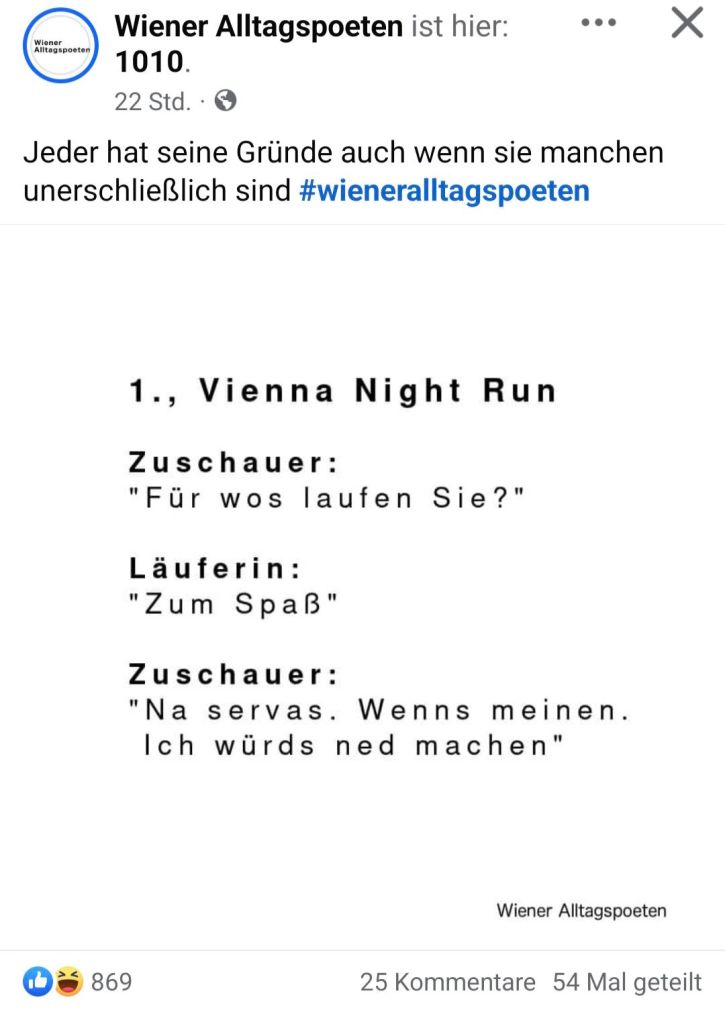
… but there still are a number of people who feel the way this spectator did: “Why are you running [in this race]?” “For fun.” “Huh. Well, if you think so. I wouldn’t do it.”
Is this the new normal? Attacking people out for an afternoon of fun?
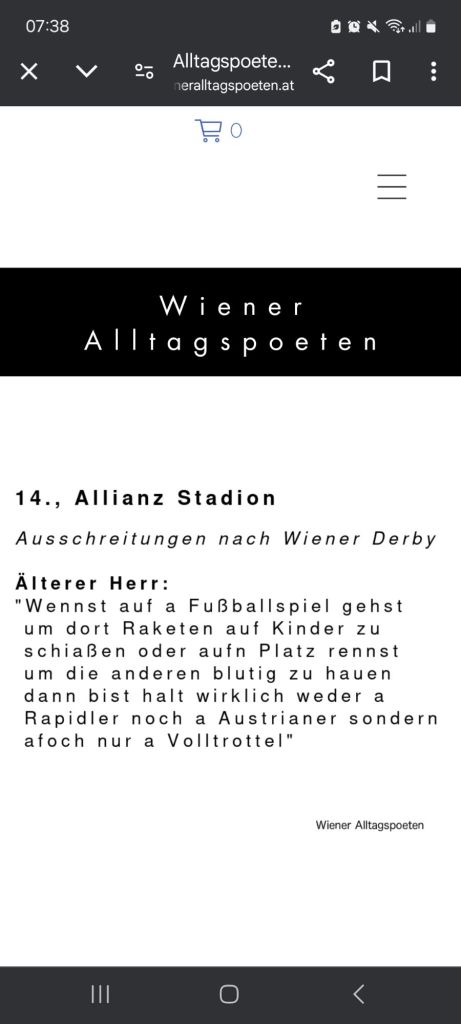
I first saw something about this on the Wiener Alltagspoeten site and then looked for the ORF report (link above). I’ll try to write more about this later, but it is a Tuesday and I do have an appointment with a client shortly.
I did want to put in what the Viennese everyday poet said (photo below), sadly in a very dull translation that doesn’t catch the Viennese tone: When you go to a football match to shoot fireworks at children and to run onto the pitch to pound other people bloody, you’re neither a Rapid fan nor an Austria fan, you’re really just a total idiot.” (Which is putting it mildly if you ask me.)
Mastery. Part of flourishing, according to the positive psychology field. (PERMA for Positive Emotions, Engagement, Positive Relationships, Meaning, and Achievement or mastery)
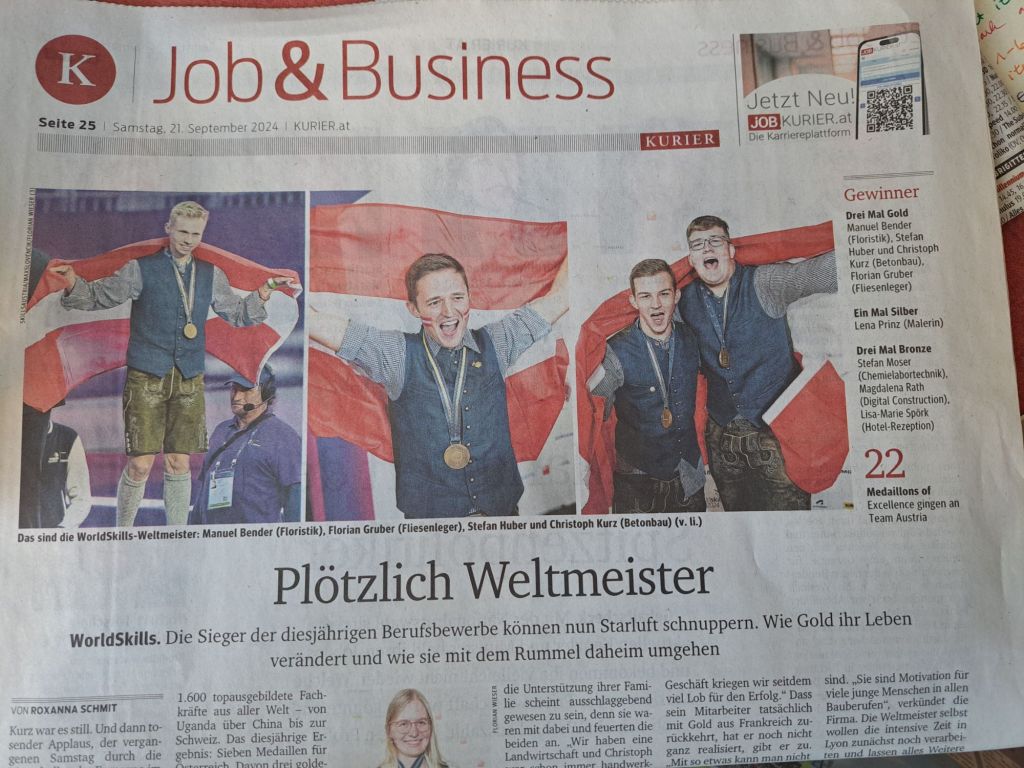
I love the fact that there is a worldwide competition for the trades. Austria’s gold medalists this year won for flower arranging, tile laying, and work with concrete. The silver medal for painting (e.g., doors) went to a young Austrian woman.
Why am I drawn to writing about this every year? Because I think athletes get too big a share of the glory. Being uniquely good at flower arranging – or building with concrete – is also a wonderful thing and needs to be celebrated more. (I love the Scripps National Spelling Bee, too, for providing celebration of another non-athletic achievement, not to mention often offering an alternative route to a better life for children from disadvantaged backgrounds.)
Additionally, I love seeing young people getting satisfaction out of working with their hands. I may teach at a university (and love academic work myself), but I think far too many students are pushed into it for the prestige. I feel we would all be better off if everyone were encouraged to find what they’re really interested in and were then supported in achieving mastery of it.
Anyway, congratulations to all the competitors at the WorldSkills competition! As the mother of one them said, “In our eyes, they have all already won. To make it to the world championships is such an unbelievable success.”
The Wienfluss (Vienna River) is usually a trickle. It is extraordinary to see it looking like this. Even the extensive construction work done a few years ago to ensure that the underground tracks don’t flood has not been enough. The U4 line is only running from Heiligenstadt to Friedensbrücke at the moment, about a quarter of its usual route. And we are the lucky ones (so far)!
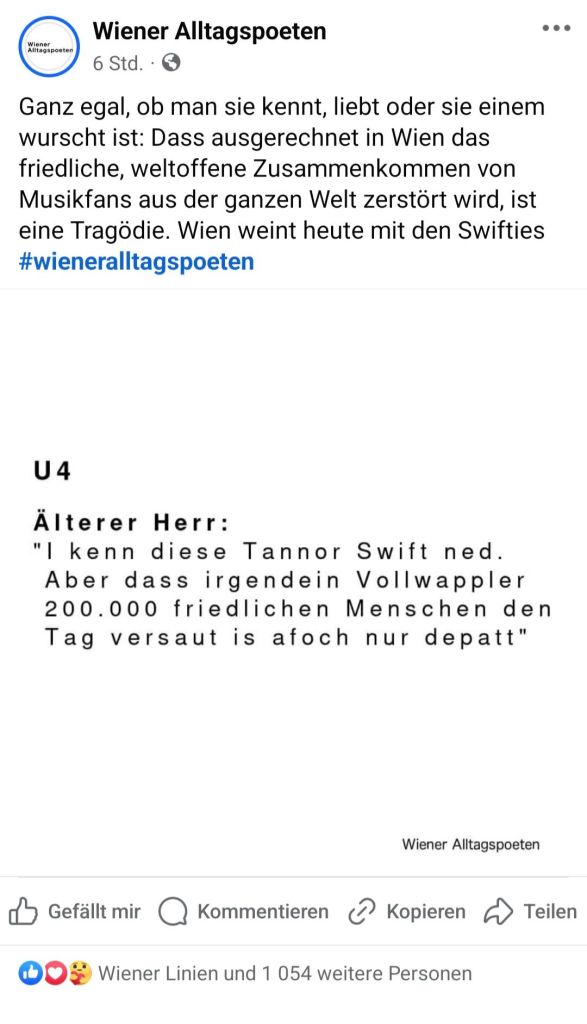
One of my kindest and most faithful readers asked if I had survived the invasion of Swifties. This made me think I should share these posts from the Wiener Alltagspoeten (Vienna’s Everyday Poets).
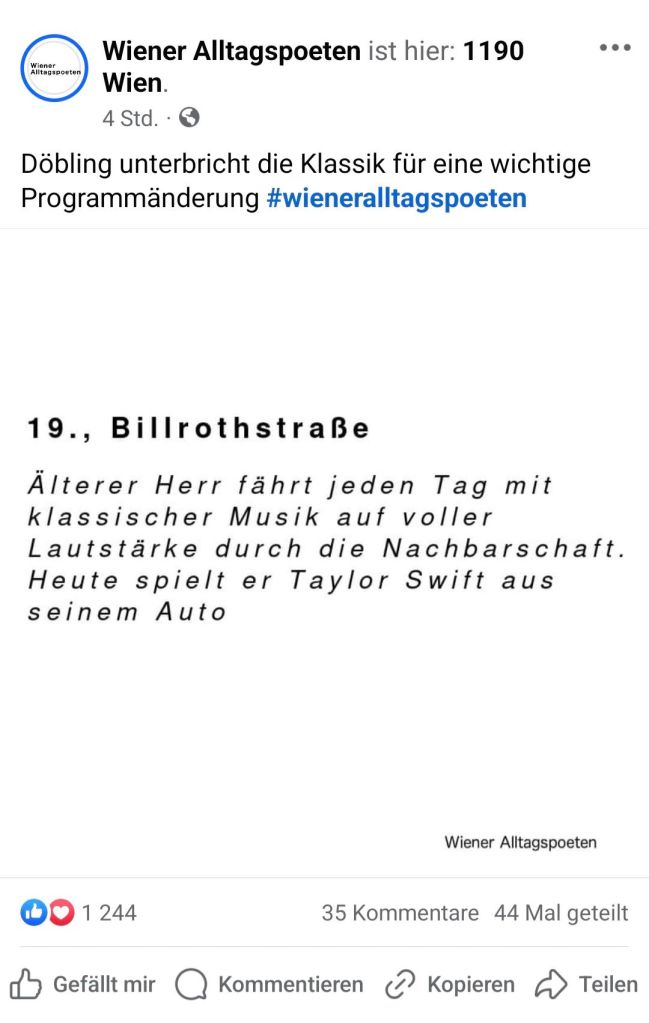
Wiener Alltagspoeten is a movement, one could almost say, started and run by Andreas Rainer. It comprises a website, Facebook page, and a couple of books. It’s a collection of “seen and heards” from the streets of Vienna.
The two excerpts below come from the Facebook page. In the first one, an older gentleman is saying he doesn’t know who this “Tannor Swift” is, but he finds it utterly ridiculous that some total idiot wants to ruin the day for 200,000 peaceful people. The only thing is that it’s pretty much completely in Viennese dialect (e.g. Vollwappler, versaut, and depatt), which makes it especially memorable.
The second one tells the tale of, again, an older gentleman, this one in the upmarket district, Döbling. He is usually observed driving through his neighborhood playing classical music full volume on his car stereo. After the concert was canceled, he was heard playing Taylor Swift. 😊
 ecbinvienna