Two news tidbits from yesterday’s free newspaper, “Heute” (Today)

22 Nov

Dunkin’ Donuts has finally made it to Vienna. Yesterday they opened a store on Mariahilfer Straße. Apparently, there was already a line when they opened at 7 a.m, and at its peak the waiting time was two hours!

The other bit of news that caught my eye was that 6% of Viennese apartments still have their WCs outside on the shared hall. It’s not so bad when you’re young and healthy. My first year in Vienna I lived in such a flat. It’s not so great as one’s bladder capacity starts to fail or when one has stomach flu. (Ick!)

(I hope everyone realizes that these are two *unrelated* news items!)

Autumn 2014

4 Nov

image

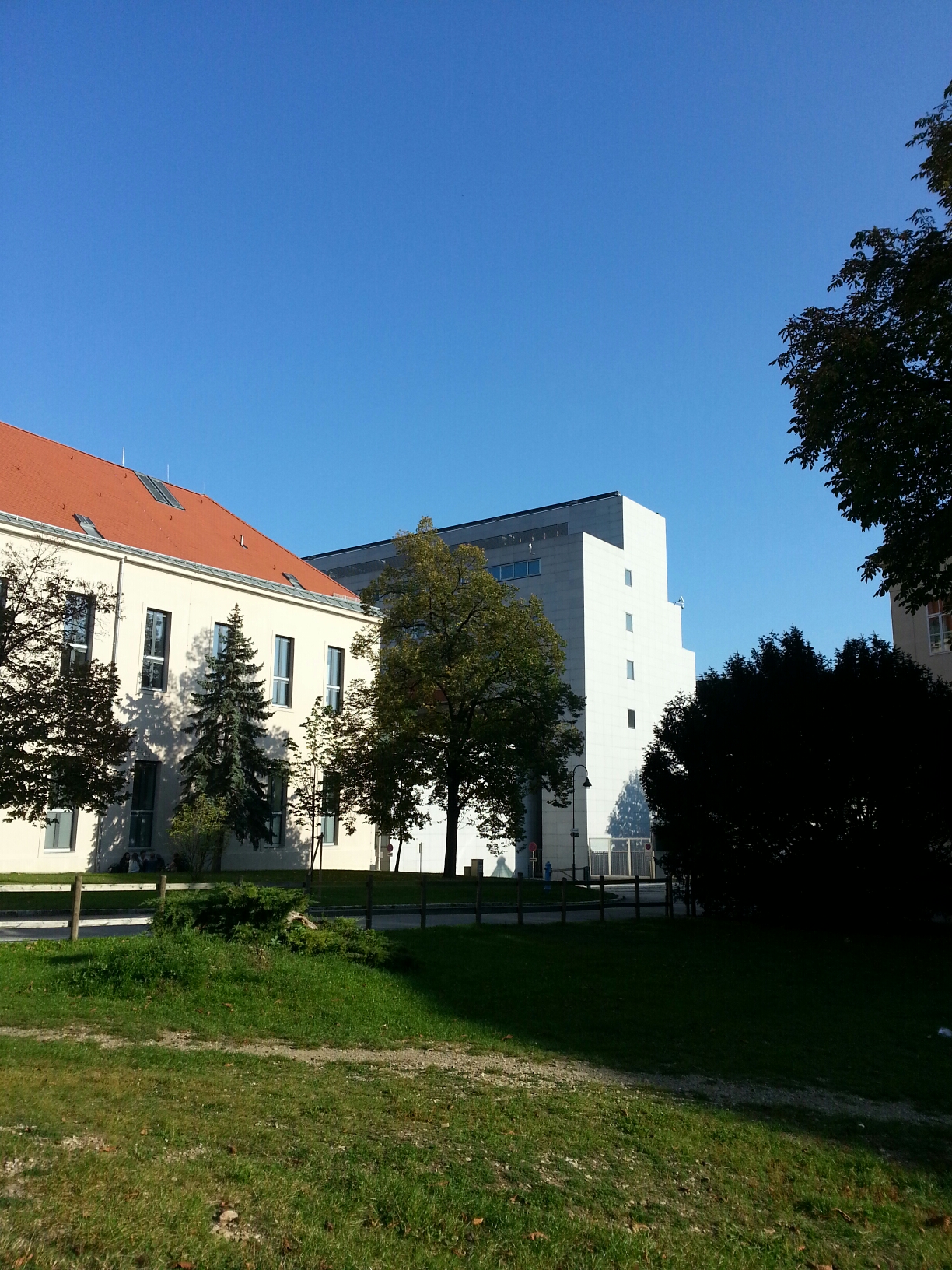
I *thought* everything was late this year. Last year I posted a photo of these trees with more gold and fewer leaves on October 12th!

End of summer time (as daylight savings time is called in German)

27 Oct

It was amazing how many people were out and about at seven o’clock this morning. The last few weeks my morning walks with Mylo were fairly solitary, and dark, and chilly, for that matter. Yesterday we set the clocks back, and suddenly everyone has come alive again. The Viennese, especially the ones in my generation, tend to be pretty early risers. Now they are back in form.

Halloween in Vienna

19 Oct

halloween_20141015This sign made me think again of a client who, about fifteen years, was lamenting the fact that the concept of Halloween was invading Austria. “After all,” she said, “we already have Fasching [Carnival].” Still, where there is buck or euro to be made …

In this case, however, there is the chance to win some euros. The only word you need to have translated above is “Gutschein”–in this case it means “voucher”–and you get the picture.

EuroSkills 2014

12 Oct

The EuroSkills competition, like the Olympics but for professional skills, took place about a week ago. True to form, Austria did extremely well. The “Best of Europe” title (rather like “Best of Show” ;-)) went to Oliver Anibas, an Austrian competing in the area of Industrial Control. An additional 18 medals (8 golds out of 41 disciplines) went to other Austrian competitors, among them a tile layer, a florist, a decorative stone cutter, and (not surprisingly, given Austria’s reliance on the tourism industry) a hotel receptionist.

The Kurier put the success down to Austria’s excellent system of apprenticeships and vocational education. (More about that in my earlier post: https://ecbinvienna.com/2011/11/07/we-are-the-champions/ ) They followed that comment up with a reprimand to Austrian companies who complain loudly about the lack of qualified young employees!

For more information about the EuroSkills competition: http://www.euroskills2014.org/index.php?lang=en

Autumn

9 Oct

Absolutely amazing fall weather this afternoon–bright blue sky, 22ºC and the leaves just beginning to turn to gold.

image

Local dialect, local food

7 Oct

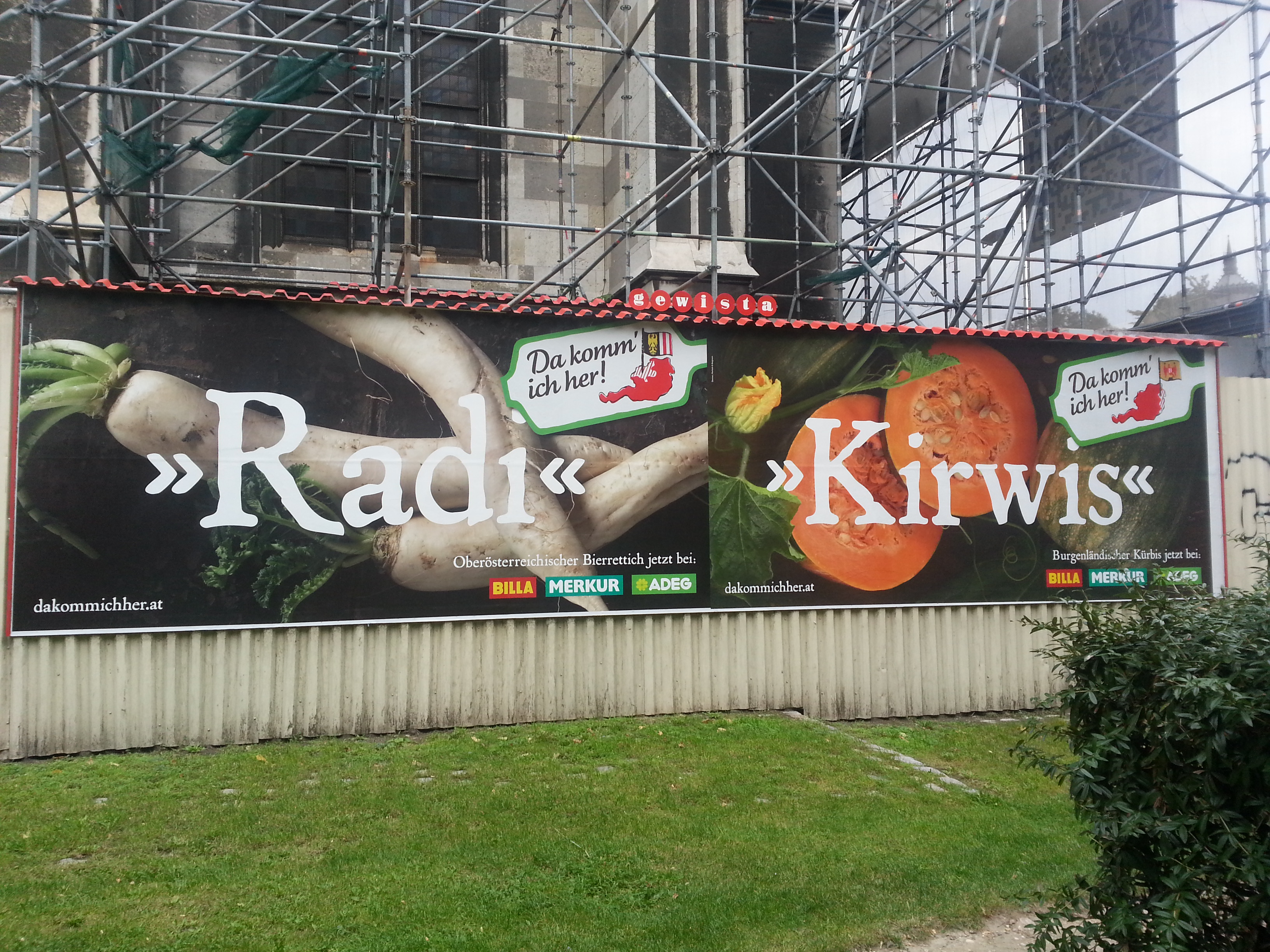
These billboards have been up for a couple of weeks now. The word in quotation marks is local dialect for the veg they’re showing. The map in the upper righthand corner (that little red squiggle) shows in white where in Austria the item comes from, accompanied by the proud statement, “This is where I’m from”.

I wasn’t aware that Austrians needed advertising to eat their own, relatively locally-grown food. After all, we’re talking about a people who consistently eat butter, for example, from their own country–in contrast to the Brits, who, it seems, will eat any kind of butter (mostly Danish or Irish) but their own.

eat local food

Beginning of the semester

29 Sep

I can really tell, where I live, that the semester started today (always much later here than in the USA). Suddenly there aren’t any seats free on the tram, the supermarket is packed at lunch time, and the free newspaper is gone before I get to the tram stop. I still remember my first two months in Vienna, August and September 1988. I thought I had found the perfect city–a spectacular selection of concerts and museums and no need to make one’s way through masses of people. That illusion ended at the beginning of October, when the universities started up again. 😉

Weinwandertag (~wine hike day)

28 Sep

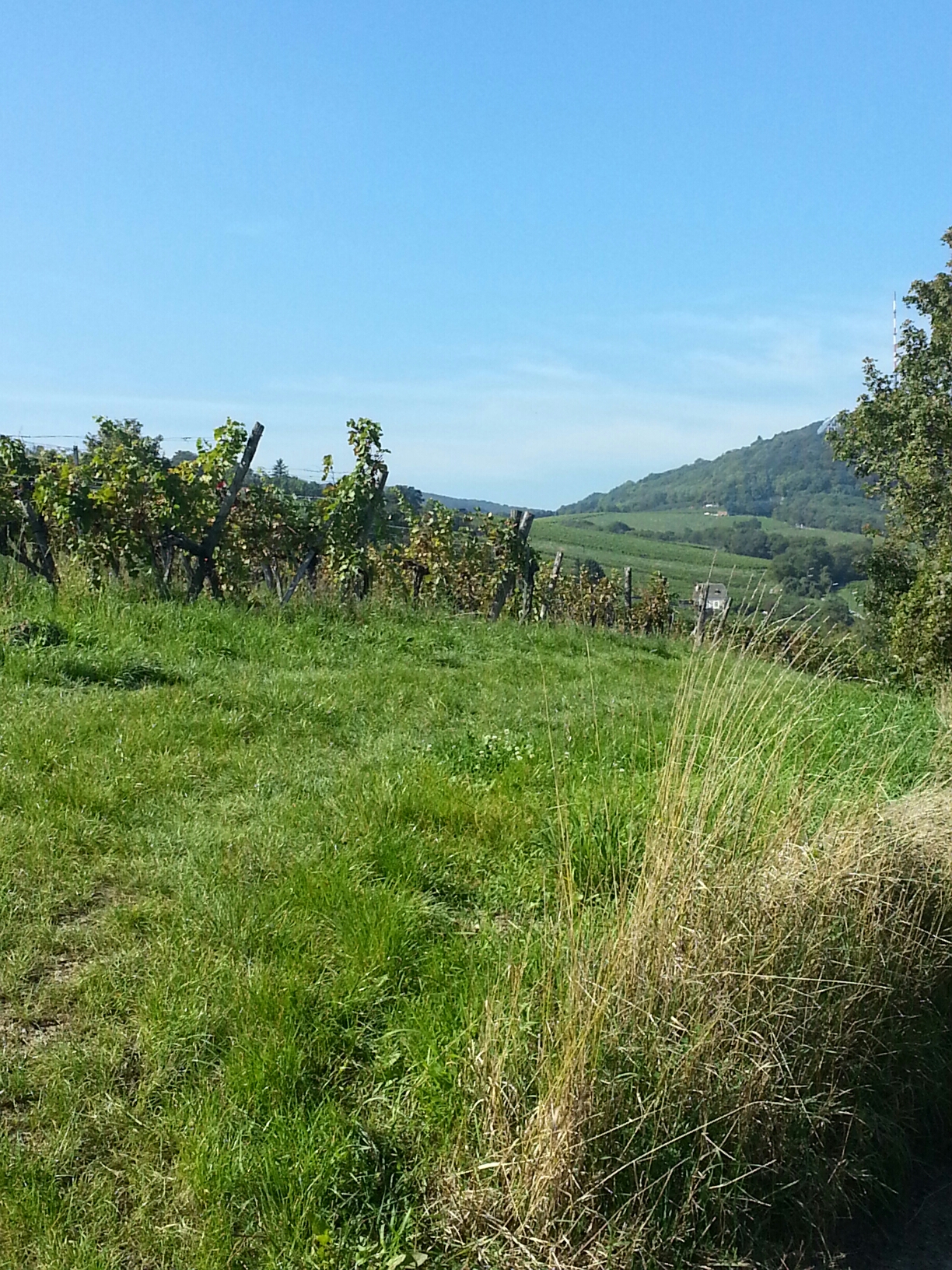
It is perfect early fall weather here so Maylo and I expected crowds on Nussberg today. What we hadn’t reckoned on was that today is the annual Weinwandertag, when all the usual Heurigen are open and are supplemented by additional stands along the way. It must be pretty much a record turn out.

image

Seeing this Maylo and I took the low road and enjoyed a perfect walk for introverts. 😉

image

“Wie geht’s?”

22 Sep

One of the first phrases one learns in any beginning German course, “Wie geht’s?” means “How are you?” Simple, it seems. And yet it is important to know that there is no one-to-one correlation in how those phrases are used in Germany / Austria and the U.S.A.

First of all, in German “Wie geht’s?” by itself is quite informal. Ideally, you remember whether you are “per du” with someone or “per Sie”, the former being the informal you (like “tu” in French) and the latter being the formal you (like “vous”). If you are “per Sie” then the correct phrase is “Wie geht’s Ihnen?”–a German lesson in and of itself including relatively advanced concepts like the dative. If you are “per du” then “Wie geht’s?” by itself is acceptable or you could say “Wie geht’s dir?”

That’s the language lesson associated with that simple phrase. Then there are the intercultural aspects. In German, you only ask the question if you really want to know. This usually means you only ask people you know well, where you are prepared to hear a relatively long and truthful account of their current state of being (no “Fine, thanks, and you?” when someone’s back hurts or life is falling apart). It is acceptable to ask a stranger if there has been some kind of accident and you want to make sure the person is all right, but the general use of “Wie geht’s” simply does not exist here. For example, you would never find a salesperson asking you as you come into the store, even though “Schönen Tag!” (“Have a nice day!”) does seem to have crept into the language.

For years, I had a not entirely earned reputation of being a nice person, because I asked colleagues and clients alike “Wie geht’s” and listened patiently as they chronicled their aches and pains. The danger should one ask and then not listen to the answer is that one is labeled “superficial”–a grave allegation in this relationship-oriented culture.

Because I asked, though, I have also found some answers that have always intrigued me and that are, I believe, typically Viennese. One is “Lei’wand” (short for “Leinwand” or movie screen), which is generally interpreted to mean “Great!” The other goes deeper into the Viennese mindset. Sometimes people, especially those lower down on the socio-economic scale, answer, “Wie die Anderen wollen” or “As the others would have it”, expressing a sense that they do not control their destiny, are subject to the whims of others. So much for “I am the master of my fate, I am the captain of my soul.”