I was talking over the weekend with a friend who was visiting from London and mentioned that Carnival (Fasching) starts on November 11th. I’ve so internalized this, still remember having a member of the seminar hotel waitstaff bring a bottle of bubbly into the seminar room in the middle of a session, that I was surprised that he was surprised that this should be the case. I decided to explore.
After a quick search and skimming articles, I see that often Carnival really doesn’t start until Shrovetide starts, although there is a bit of disagreement as to when that is. (Some sites say Shrove Saturday, or the Saturday before Ash Wednesday, and some say Shrove Sunday — three days before Ash Wednesday.)
Fasching, however, is a different story. According to the website feiertage-osterreich (or Austrian holidays), Fasching does really start on November 11th at 11:11 a.m. Legend has it that on November 11th, the fools are woken up. The partying isn’t supposed to start until January 7th — the day after Three Kings — but time is needed for the preparations. It’s interesting to know that on November 11th the Head Fool (Obernarr) traditionally was given the key to the city and took over the government. (Some would argue that the Head Fool rarely leaves!)
Apparently this tradition comes from the Rhineland and didn’t make it to Austria until the middle of the 20th century. It certainly has become embedded (see hotel story above) since then, possibly because it aligns with St. Martin’s Day, which has long been a part of Austrian culture!
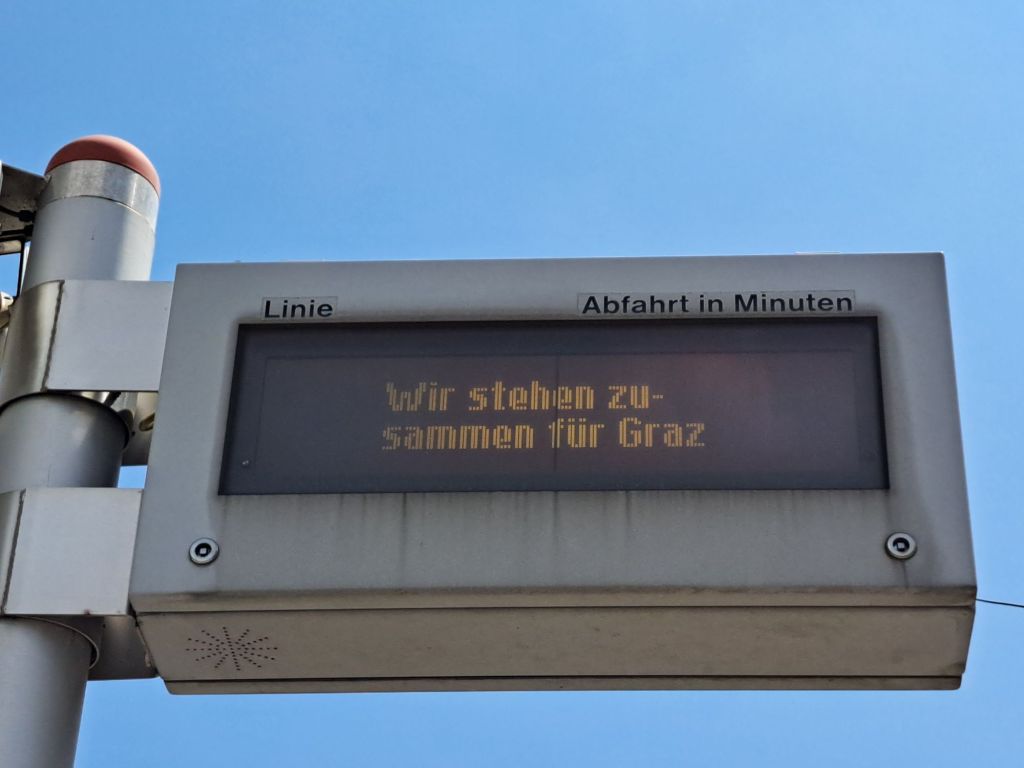
The info screen on the tram is telling me that the Wiener Staatsoper reopened on this day in 1955. It was bombed in the final days of World War II. The auditorium and backstage area were completely destroyed. The Viennese are said to have wept openly in the streets as they watched it burn.
The opera chosen for the opening of the rebuilt house was “Fidelio” by Ludwig van Beerhoven, a story about unlawful imprisonment, courage, and justice.
As women’s rights are once again endangered, it is encouraging to me to see that some long-past wrongs are being righted. (The painting that led to this re-assessment was discovered in the collection of the Kunsthistorisches Museum [museum of fine arts] in Vienna.)
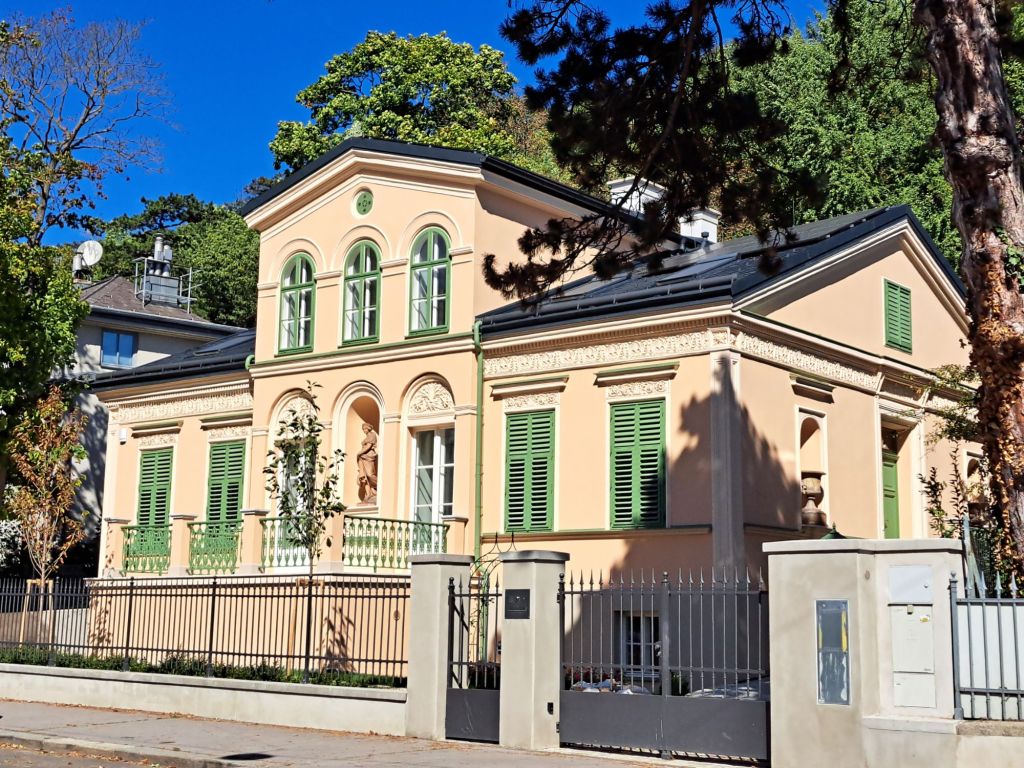
A friend and I have been keeping an eye on this villa in Neuwaldegg. We’ve seen too many treasures over the years been allowed to decay to a point when they could legally be torn down. Invariably, they were replaced with faceless, cement structures that were, possibly, quite nice to live in but brought no joy to the folks out front.
This one sat on a construction site for about two years, and for a while it wasn’t clear which way the project was going to go. Then it started to look promising. This time when I walked by I was treated to the fully renovated version.
If the person who invested the time, money, and care into restoring this property ever reads this — thank you! Not only did you save a beautiful piece of Viennese history. You restored a tiny bit of my hope in people.
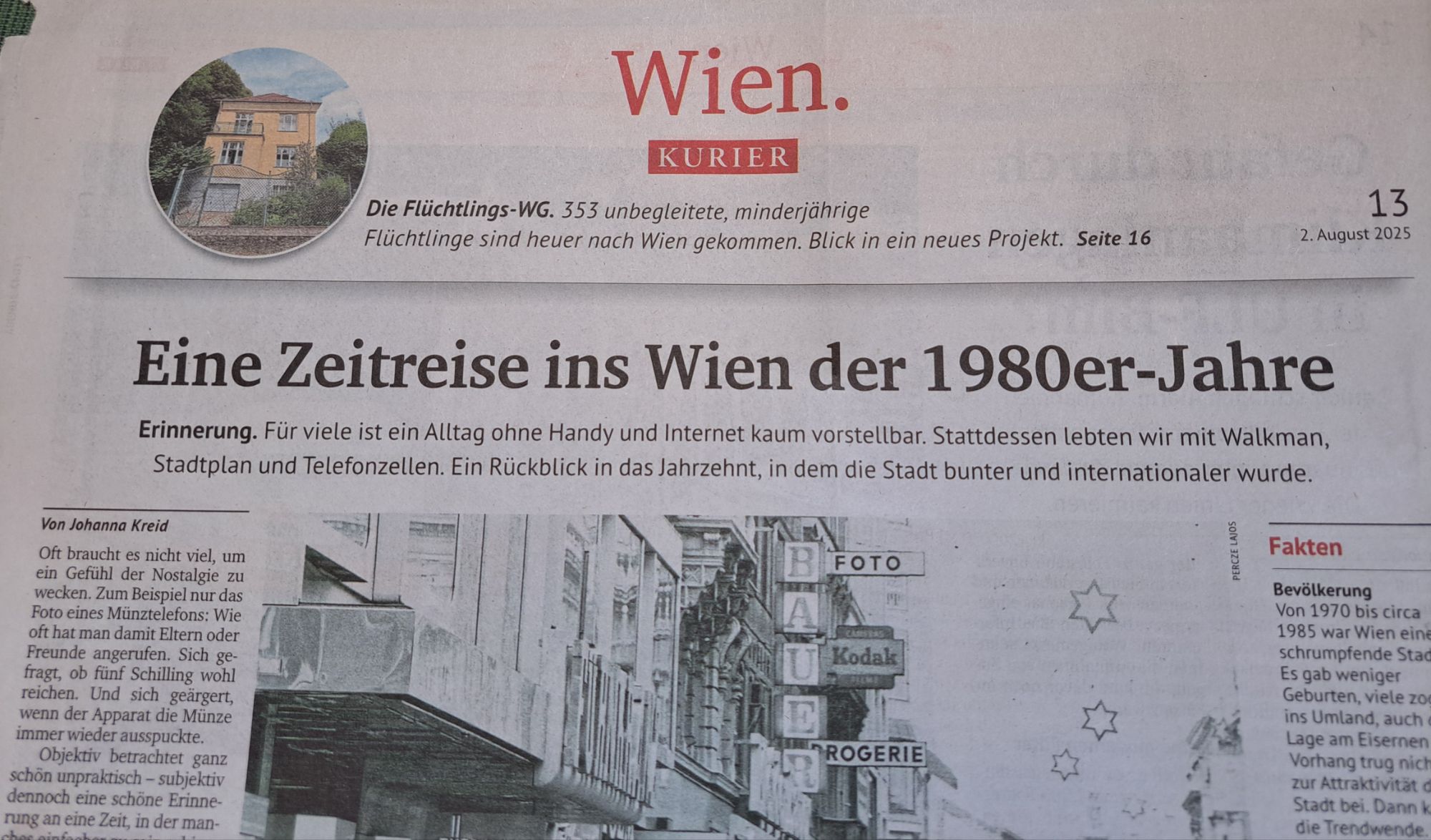
The Kurier today had an article about Vienna in the 1980s — a trip back in time. (Thanks, Kurier. That is very good way to make someone who was already an adult at that time feel rather old.) I arrived in Vienna in 1988 (had my 37th anniversary yesterday, celebrated, appropriately, at a Heuriger) and have seen significant changes, I thought it would be fun to write about some of the points mentioned.
For one thing, they write about pay phones, which reminded me of two things.
One of my first mornings in Vienna, after my German course at the Goethe Institut, I was out with my mother, who had accompanied me to help settle me in. We needed to phone the couple who became my Viennese parents to make arrangements, so we found a pay phone (they were plentiful then ;-)), put our money in, and dialed. When my Viennese father answered, he probably realized it was us calling because he couldn’t hear anything and said “Den roten Knopf drücken.” (“Press the red button.”) My mother did this, we heard the coin drop and were connected. That red button was called the “Zahlknopf” (zahlen = to pay) and released the money so that the connection could be made. Even in the late 80s, not all phones had a Zahlknopf anymore, but that one did and the Viennese had learned to give the necessary instructions.
The other phone story is much shorter. I saw a sign on a phone booth that said something about “retten”. I was familiar with the word (probably from the opening scene of “The Magic Flute” when Tamino rushes onstage pursued by the monster and sings “Save me! Save me!”) but couldn’t figure out what that had to do with a telephone. My mother translated the sign for me: This telephone can save lives. Do not destroy it. (“Dieses Telefon kann Leben retten. Zerstör es nicht.” Oddly enough, I don’t think they used the “Sie” form there.)
The article also reminded me of the men (I think it was always men) who used to sell newspapers on the street after the Trafiken had closed, which they do to this day. Vienna — thank goodness in my opinion — still has clear opening hours and very little at all is open on Sundays. You could get your news there truly hot off the press, and people often bought the next day’s paper on their way home from a ball, late opera night, or late shift. People who were looking for apartments or jobs would wait for these men and the newspapers to show up so that they could get a headstart on the search. And a tip for these men who worked long hours, in all sorts of weather, and for very little pay was obligatory.
The author also writes about Mariahilfer Straße — a very important shopping street in Vienna — and how even the part farther out, past the Gürtel, was a useful and relatively pleasant area 40 years ago. Currently, it is full of stores with really cheap goods and kebab take-out places although, apparently, there are plans to renew it. I remember, and still miss, the trams, the 52 and 58, that used to run along Mariahilfer Straße from the Ring to the Gürtel and beyond. Now we have the U3 line. Not so useful for a shopping street, I would argue. I do enjoy the kind-of pedestrian zone, though. “Kind-of” because it is what is called a “Fairness Zone,” which means you have pedestrians, bicyclists, e- and other scooter riders, and delivery trucks all in the same space without clear delineation of lanes. (What could possibly go wrong? ;-))
In addition, the author mentioned something I didn’t know. In 1988, when the Hungarians were already free enough to come to Vienna en masse, even though the Iron Curtain had not officially fallen, Mariahilfer Straße became their destination to buy things they couldn’t get at home and for a time was called “Magyarhilfer Straße” by the Viennese. My memory of this time was the truly old and stinking busses that they arrived in. We were very spoiled in Vienna with catalytic converters. These busses had no such thing and ran, I suspect, for the most part on diesel, making an ungodly noise and leaving huge black clouds behind them.
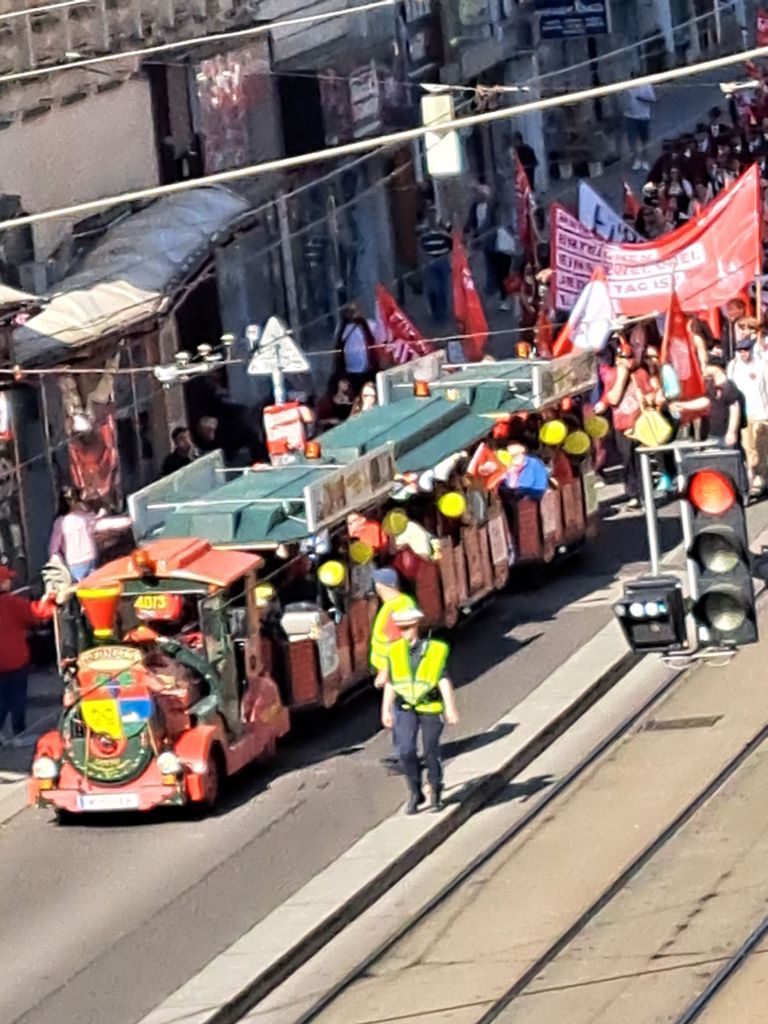
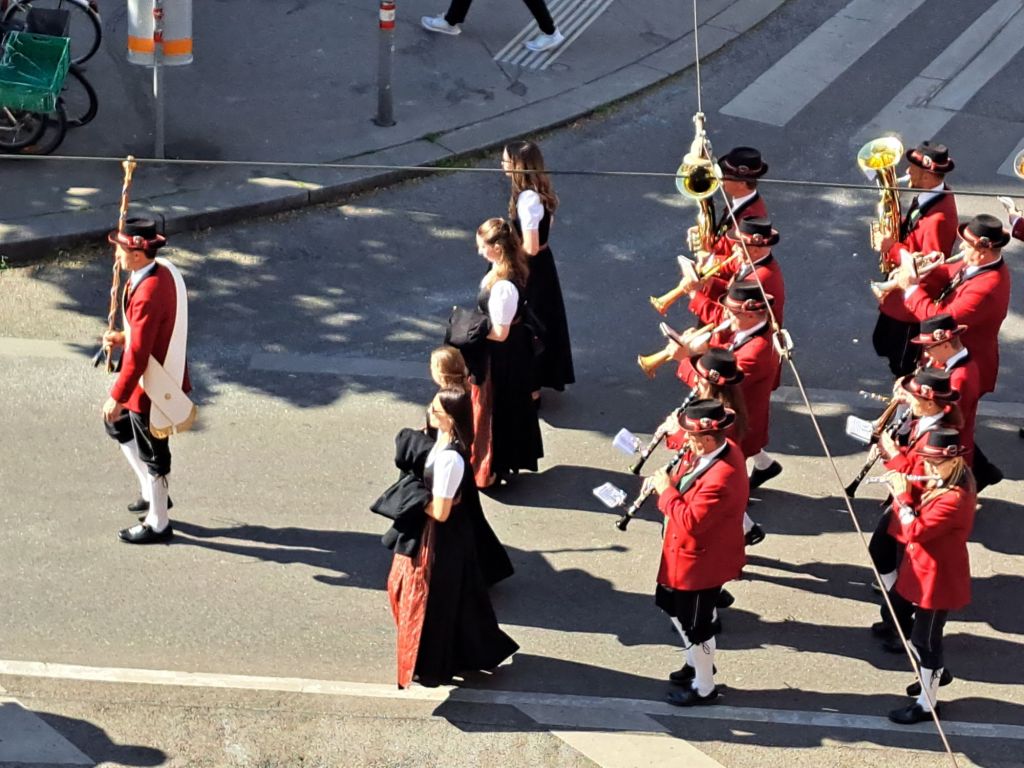
And the SPÖ (Social Democrats) are marching again. This year, the parade looks a little bigger than the past few years, perhaps because of their solid results in the elections last Sunday. Beautiful weather and a well-trained brass band are part of the tradition.
Not surprisingly, one of the banners called for solidarity. This took me back to an exercise I used to do with my U.S. American summer school students in Vienna.
To highlight one of the major differences in worldview that I see between the USA and Europe, I would ask my students for their associations with the word “solidarity.” This question was almost invariably met with confusion. What associations should they have with that word? Then I would give them examples of what my Austrian students of the same age would answer: Lech Walesa, of course, sticking together, and taking care of each other. Some Austrian students would even get into the political aspects and how solidarity is built into the systems here. I see the common use of and familiarity with the word “solidarity” as a cultural artifact for the more collectivist system here.
I’ve always known that ice cream parlors in Vienna officially close sometime in September or October and re-open in March. I didn’t realize until now that it’s the Chamber of Commerce that chooses the dates. (I always thought the ice cream sellers simply agreed on that.)
I knew something was up when I was in the First District yesterday and saw lots of people, still in their winter coats, leaning in to large ice cream cones before lunch. And I have to say I love that about the Viennese. In the meantime, you can get “Saloneis” — as opposed to “Supermarkteis” — any time of the year, but there is still a noticeably large number of people who celebrate the First Day of Ice Cream, even if the weather is distinctly March-like, with quite a cutting wind.
The added attraction this year is that the ice cream artisans are among those contributing to the celebrations for the 200th anniversary of Johann Strauss’s birth. (The son, not the father, and therefore the composer of the “Blue Danube Waltz” and not, for example, the “Danube Songs”.) Apparently, there is already a Fledermaus flavor (I have to try that one!) and a “Night in Venice” flavor that was inspired by tiramisu.
While the incumbent in the White House in Washington, DC, was blaming Ukraine for the war and calling Zelensky a dictator, Caritas in Vienna was organizing an event to express solidarity especially with the children of Ukraine. Next Monday it will, unbelievably, be three years since Russia’s invasion of Ukraine.
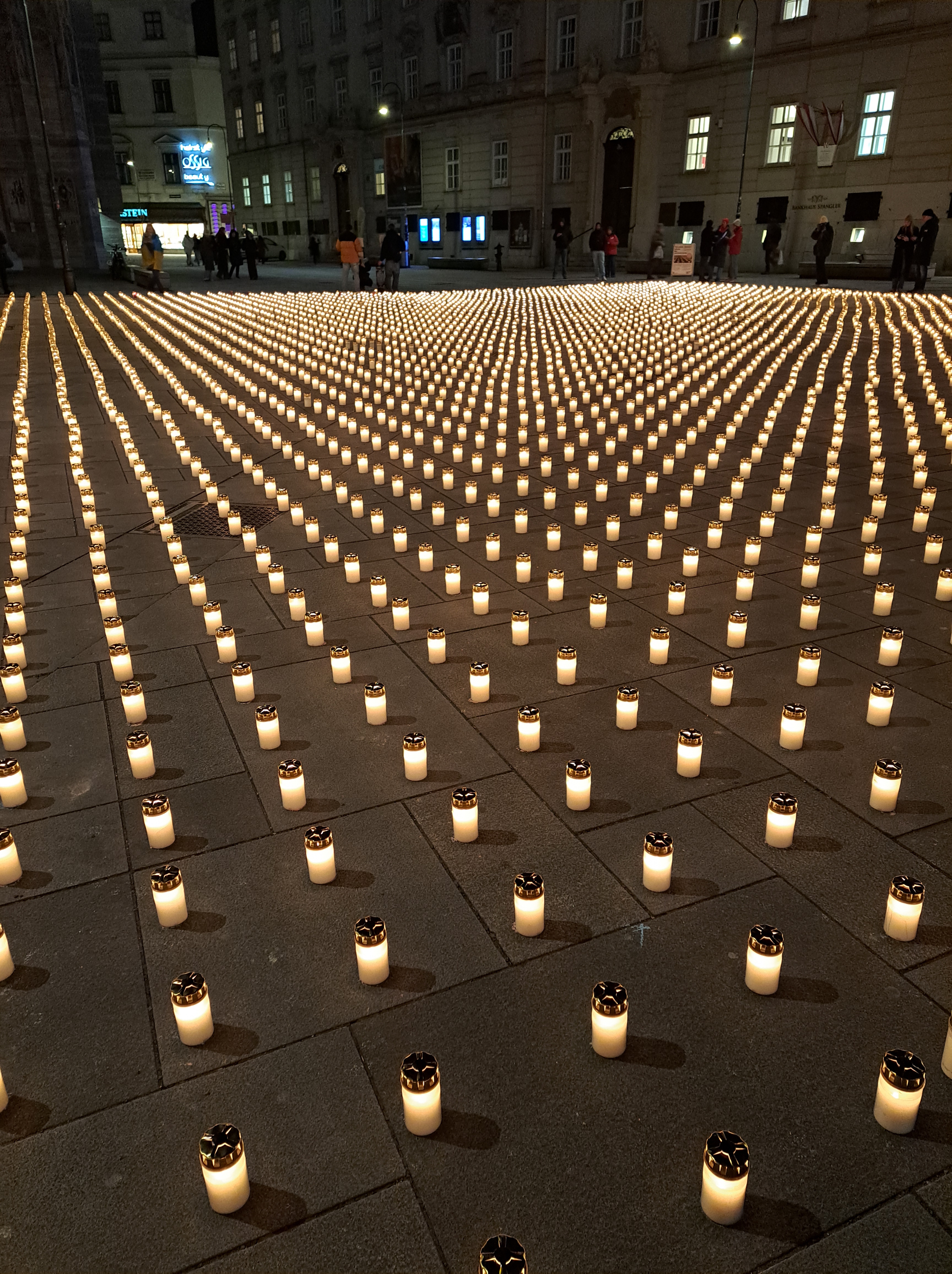
The Sea of Light wasn’t as big or moving as I thought it would be (fewer people, although a good number of candles carefully laid out). It started at Stephansplatz at 5 p.m. today and I worked until 5:30. Still, I thought it would at least go until 7 p.m. or so and went off with my candle to join those already there. I arrived a few minutes after 6 p.m. to find a medium-sized crowd and a Ukrainian women’s choir just finishing their last song. The organizers then thanked us for attending and started to dismantle the sound system and the small stage.
I stayed for a bit and then went home. It was somehow discouraging that all around us people were just going about their business, and I decided not to stay. But I’m glad I went and was counted.
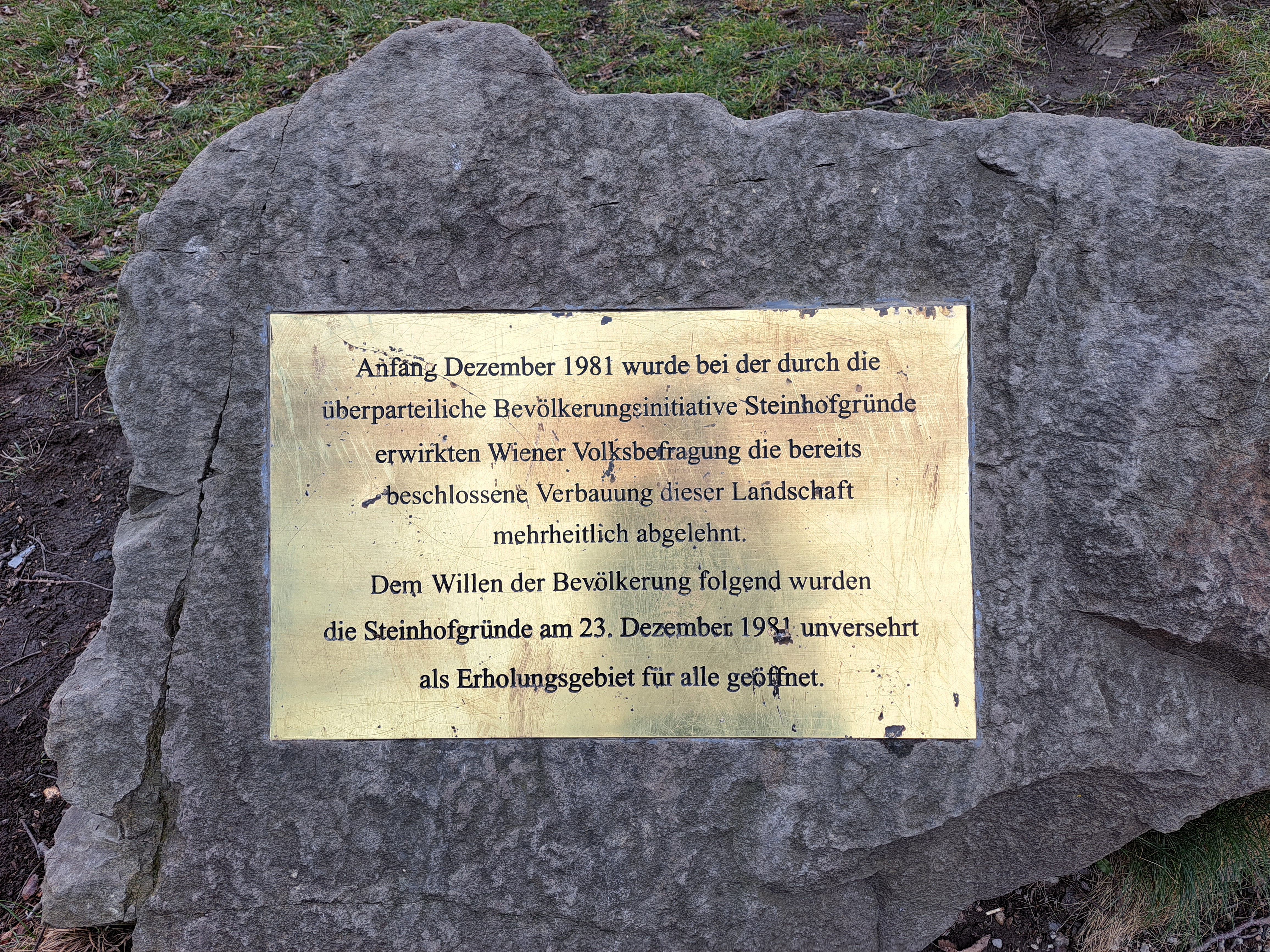
My translation of the plaque at Steinhof: At the beginning of December 1981, a Vienna-wide referendum initiated by the non-partisan citizen group Steinhofgründe rejected the construction that had already been approved for this site.
In accordance with the will of the people, the Steinhof area, in its untouched state, was opened to the public as a recreational space on December 23rd, 1981.
(Nice Christmas present! ;-))
How is it that I have now lived over 36 years in Vienna and only last Sunday discovered this part of Steinhof? I have an excuse for 11 of those years as dogs are not allowed in the area. This does however leave 25 years for which I cannot account. And how did I come to discover it now?
An answer to the first question first. All that time, whenever I heard the name Steinhof I thought of the hospital complex designed by Otto Wagner and Carlo von Boog and devoted largely to the treatment of the (wealthy!) mentally ill. (In Viennese, the area was also referred to as Baumgartner Höhe and had become a kind of shorthand for the psychiatric clinic, much the way “McLean’s” is used in Boston.) I had even taken a tour of the hospital complex once. I’m sorry to say that the only thing that sticks in my mind, other than the beauty of the Jugendstil buildings, is that the church, designed by Otto Wagner, was lined with tiles to quite a height. Taller than me, as I remember, and the reason given was that patients were more or less required to attend services but could not always control their bodily functions. The tiles made it possible to hose down the building after the services.
How did I come to discover it last Sunday? I wanted to go to Wilhelminenberg in the 16th district for a walk and on the bus up from the Ottakring S-Bahn station decided to get off at the Feuerwache am Steinhof stop, rather than the Savoyenstraße one, and then walk towards Dehnepark in the 14th. I was planning to walk around the outside of the grounds, as I had often done with Maylo, and enjoy the beautiful houses out that way. When I got off the bus, though, with an astonishing number of people, I realized I didn’t have to walk around the outside. I could go in. And I’m very glad I did. It is one more beautiful place to walk more or less in the Vienna Woods and will, I think, make a really nice place for picnics when the weather is warmer.
By the way, this being Vienna, I actually ran into someone I know on my walk. (“Wien ist ein Dorf” we often say. Vienna is a village.)
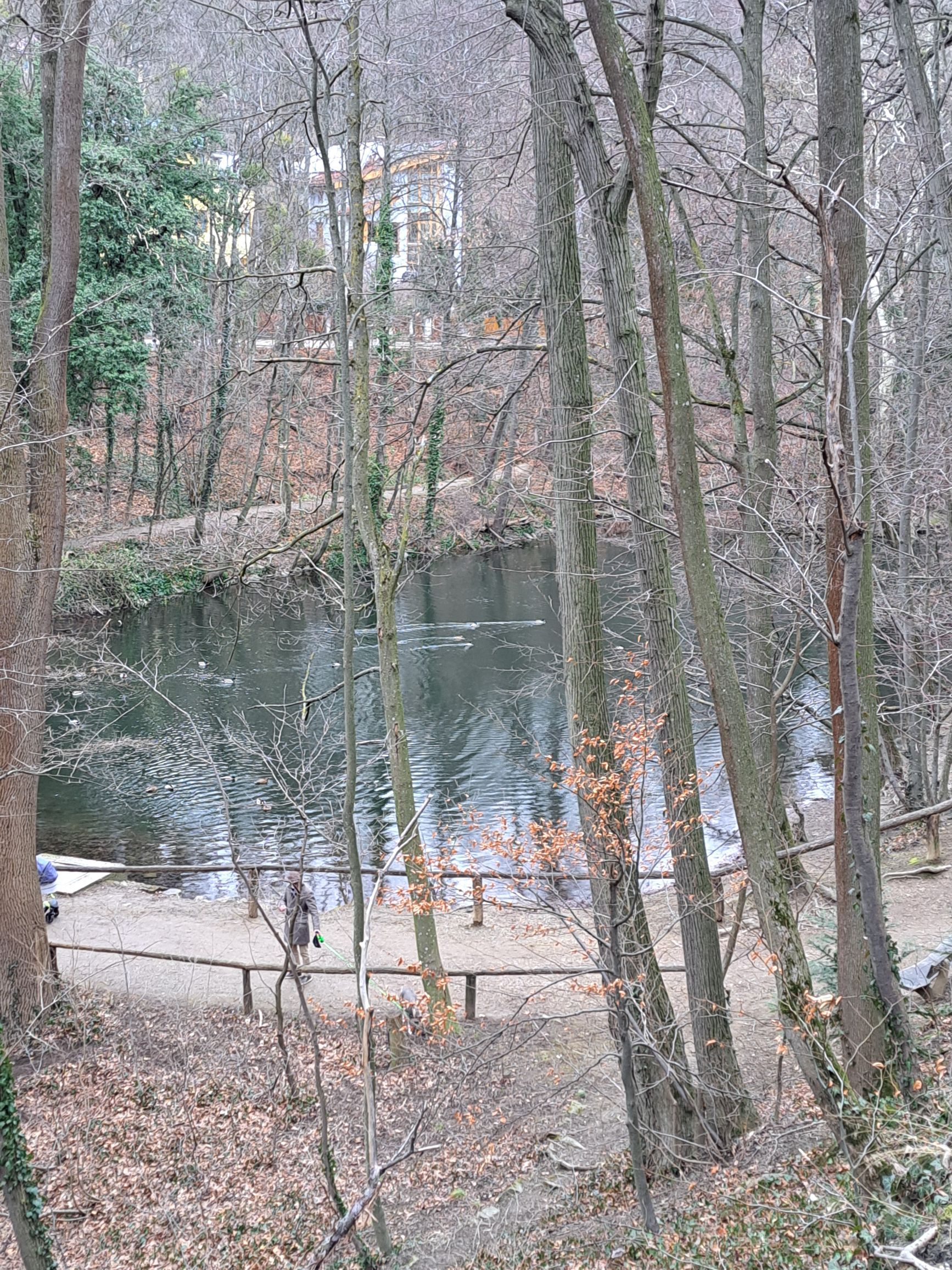
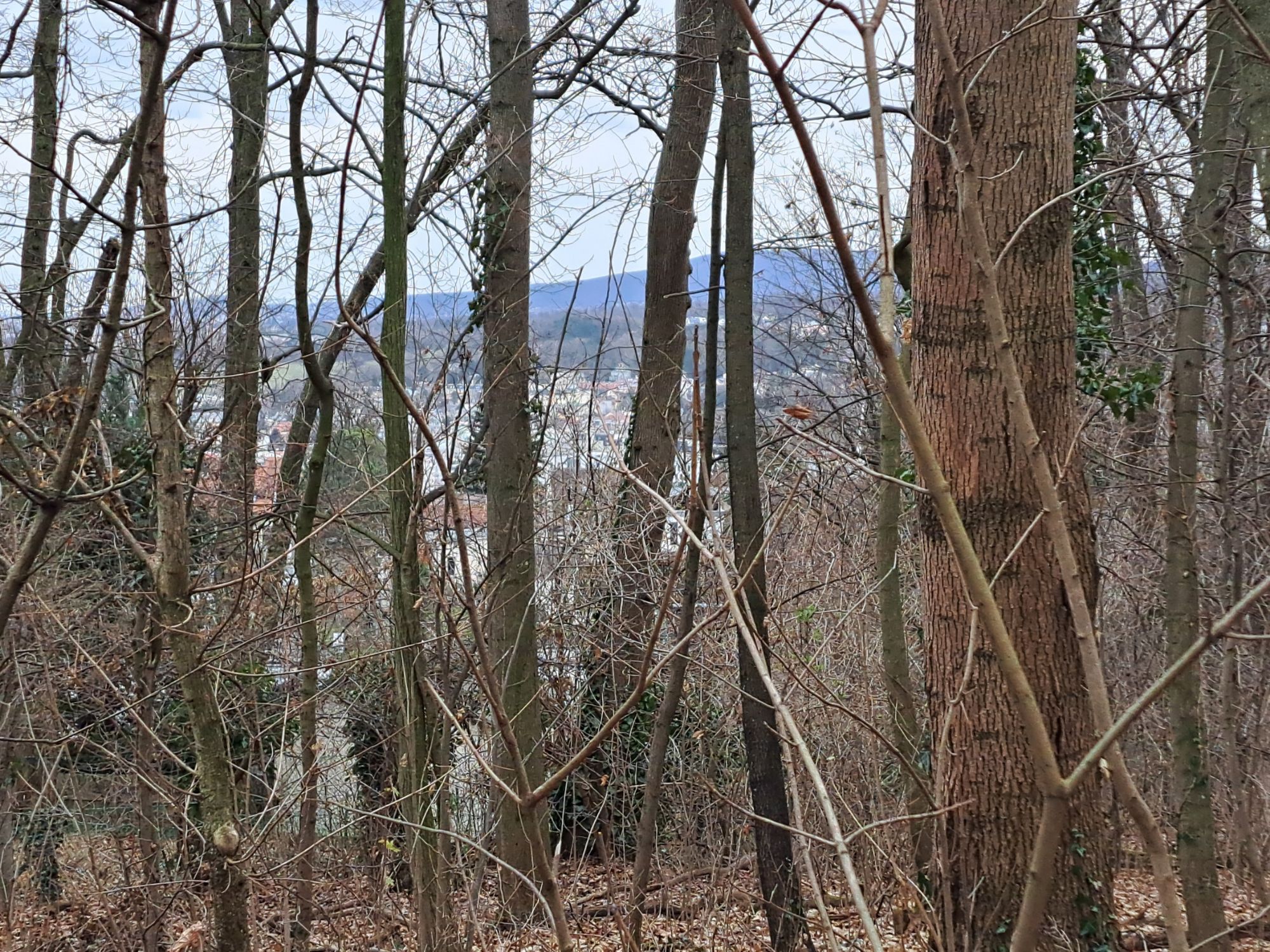
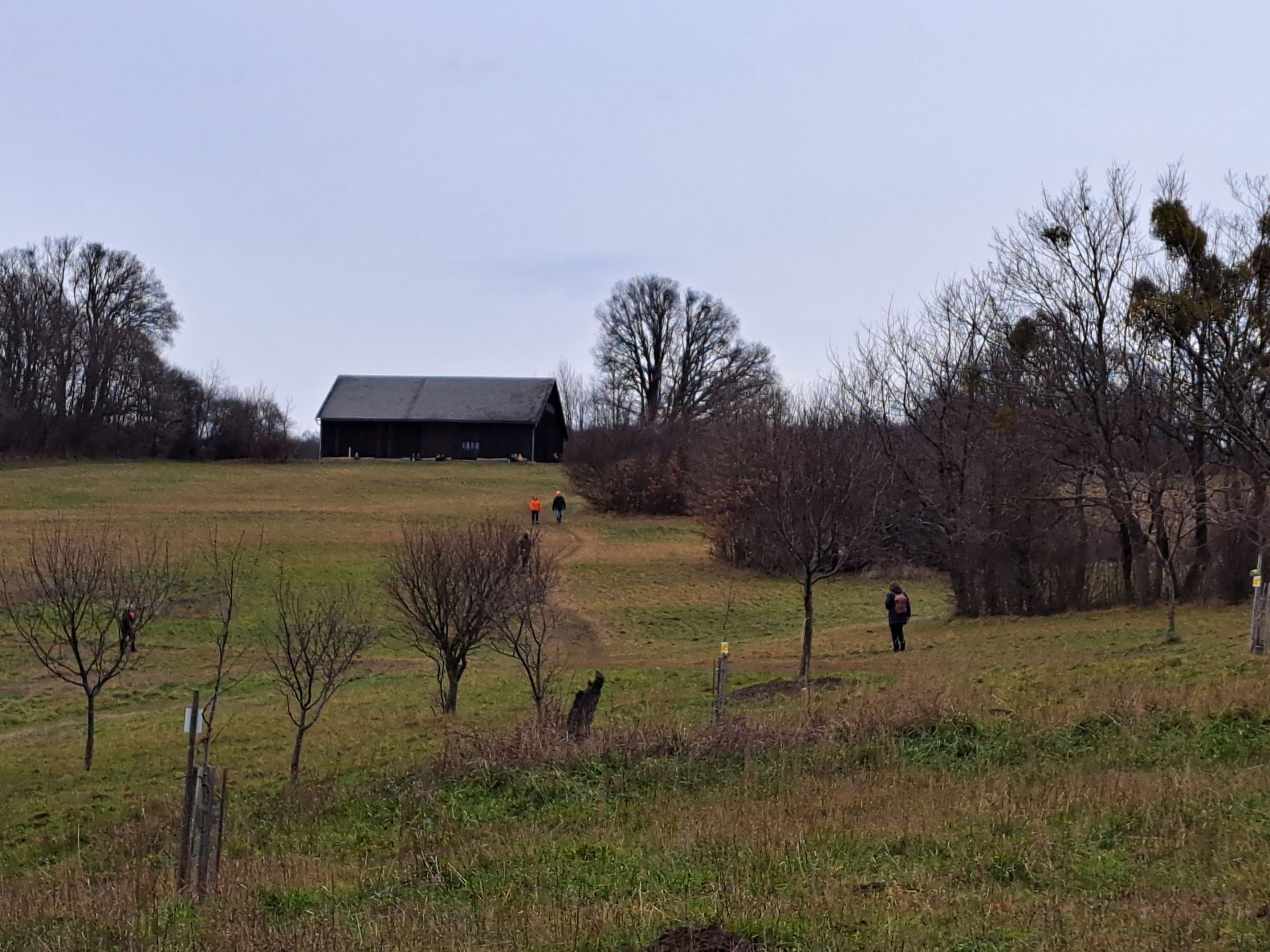
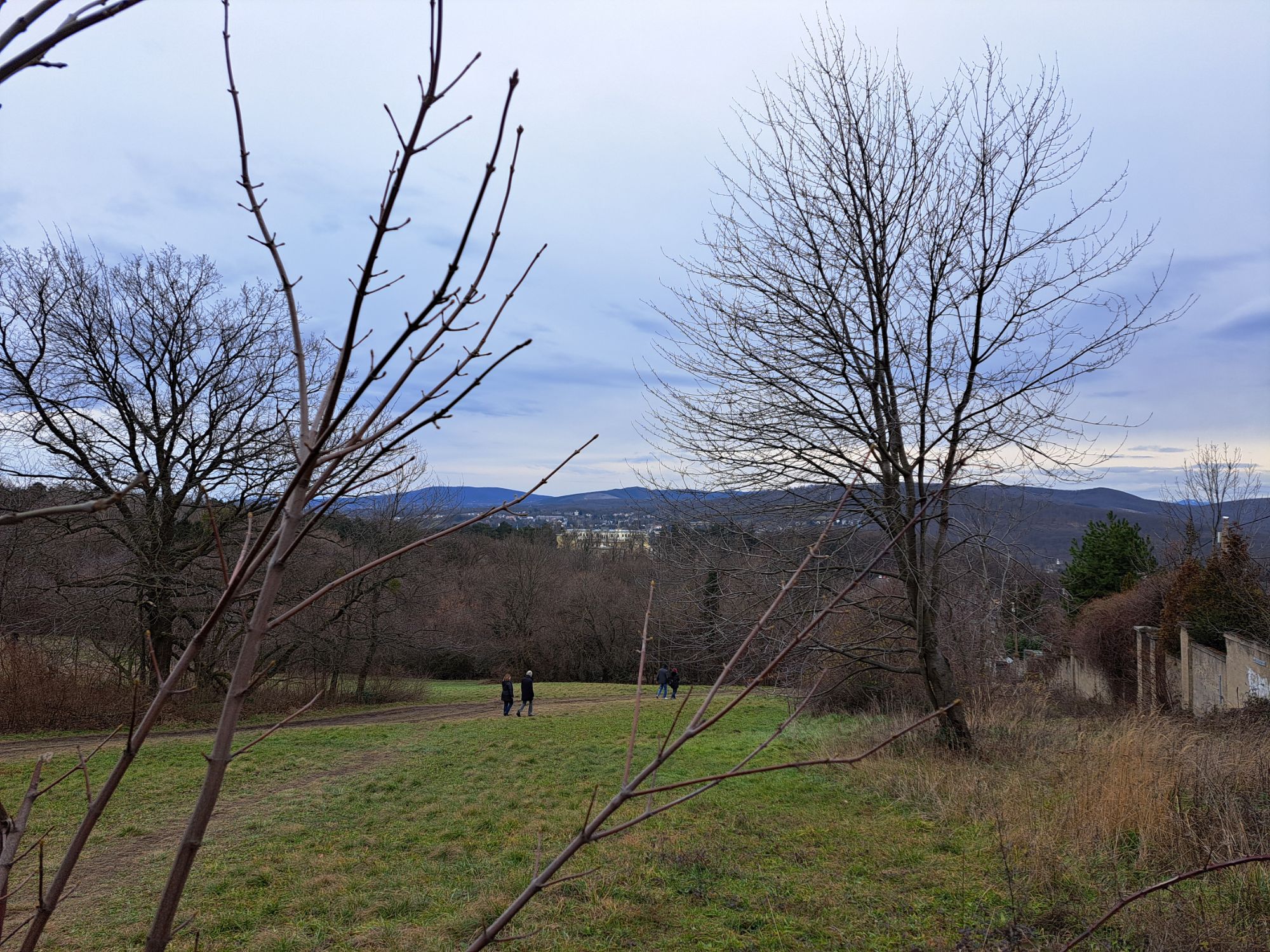
Here are a few more photos.
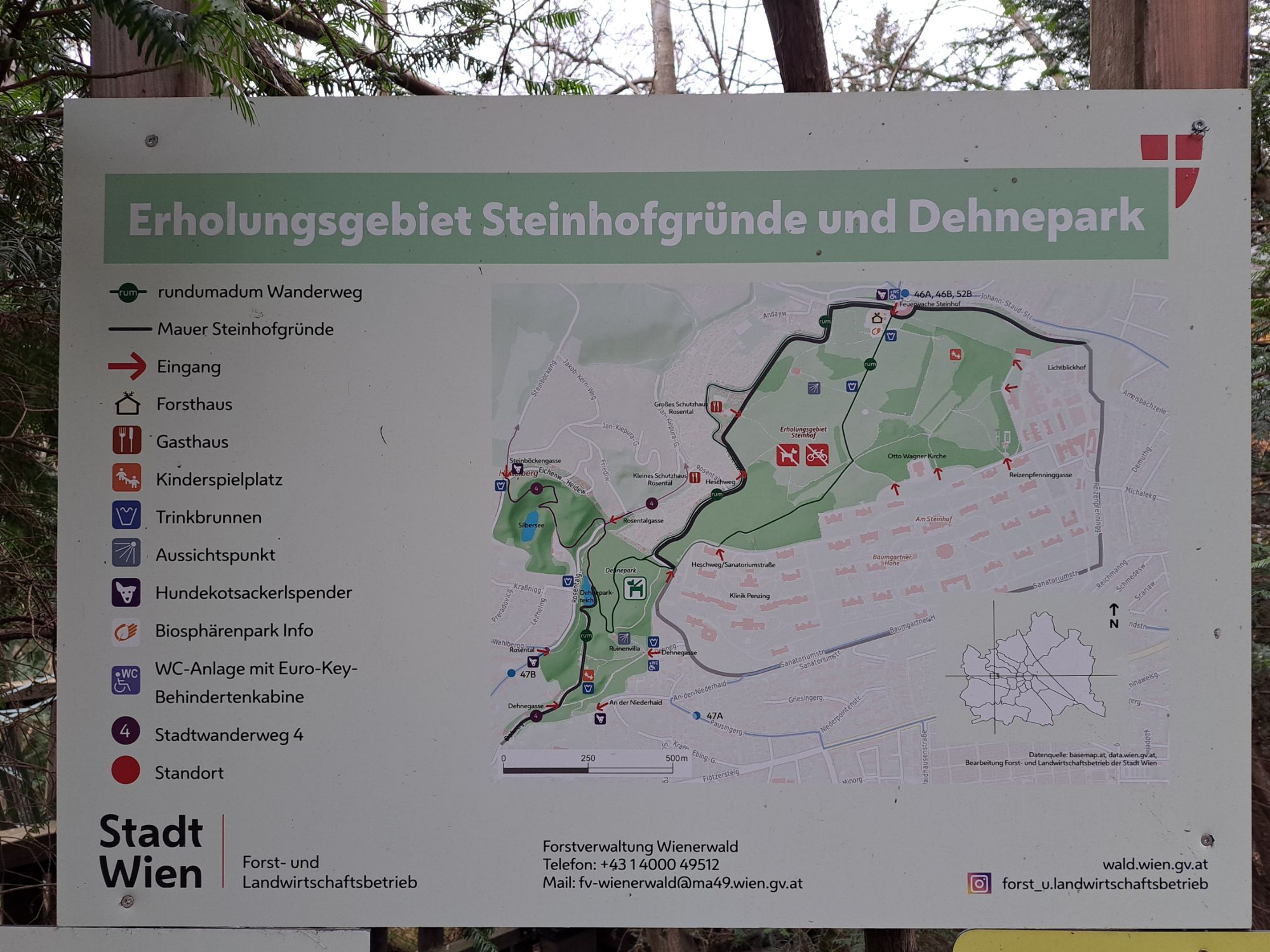
Walking time from Feuerwache am Steinhof to Hütteldorferstraße this time around (I got a little lost) was probably about an hour and a half. Below you can see the map.
 ecbinvienna