The info screen on the tram is telling me that the Wiener Staatsoper reopened on this day in 1955. It was bombed in the final days of World War II. The auditorium and backstage area were completely destroyed. The Viennese are said to have wept openly in the streets as they watched it burn.
The opera chosen for the opening of the rebuilt house was “Fidelio” by Ludwig van Beerhoven, a story about unlawful imprisonment, courage, and justice.
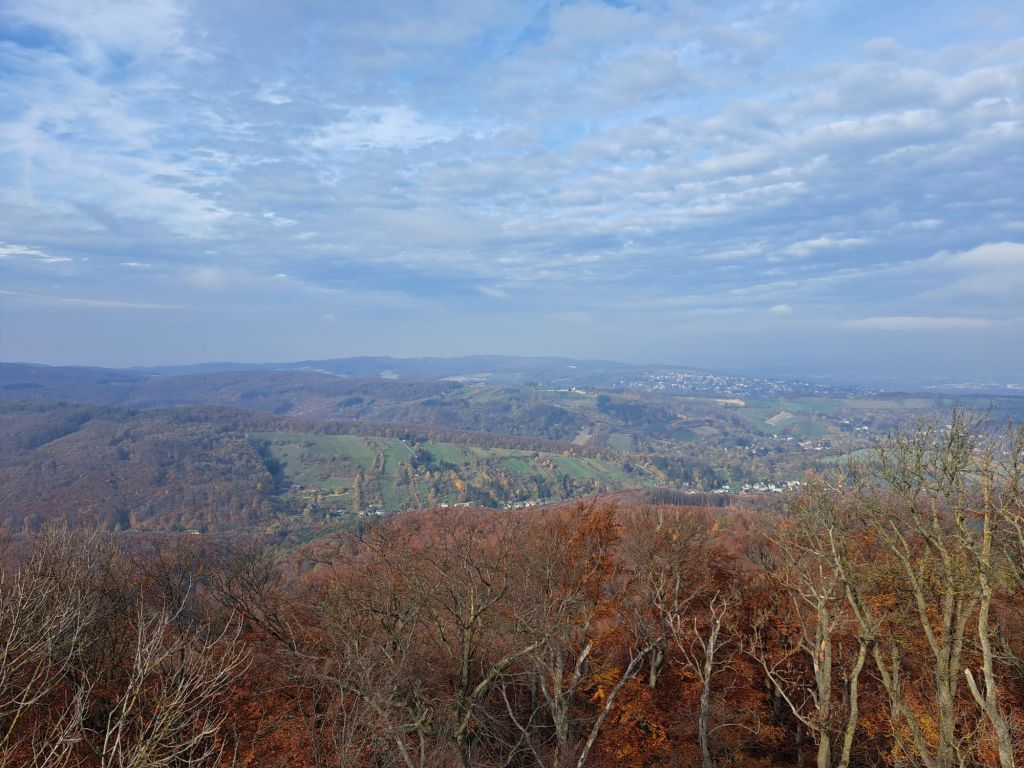
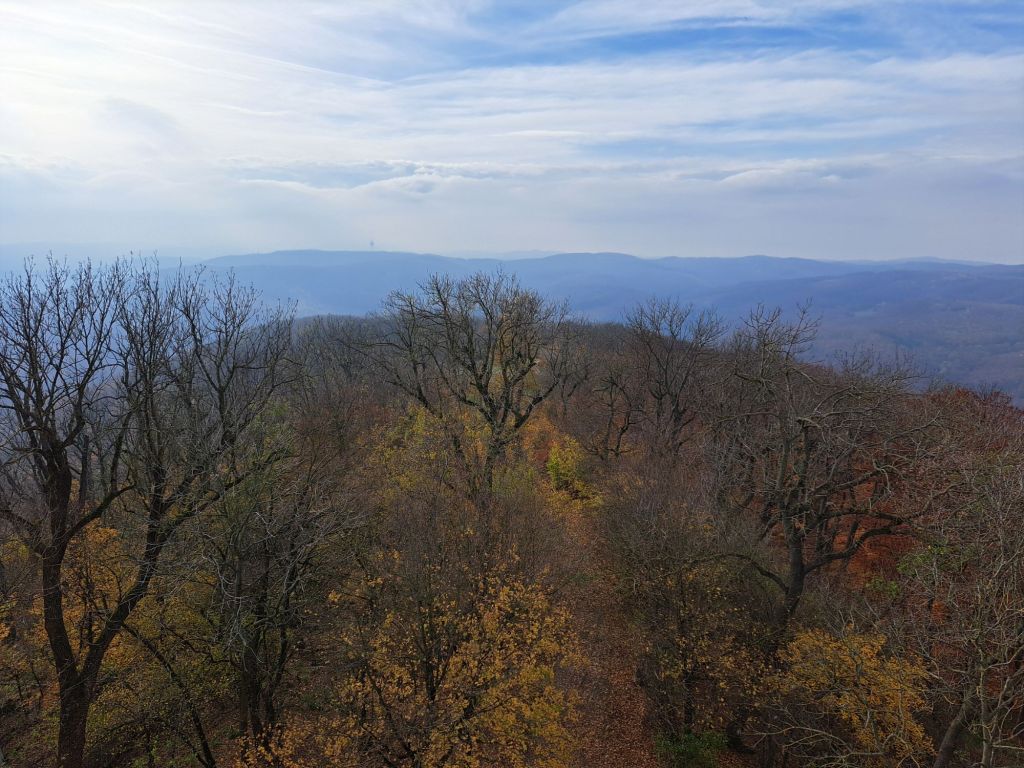
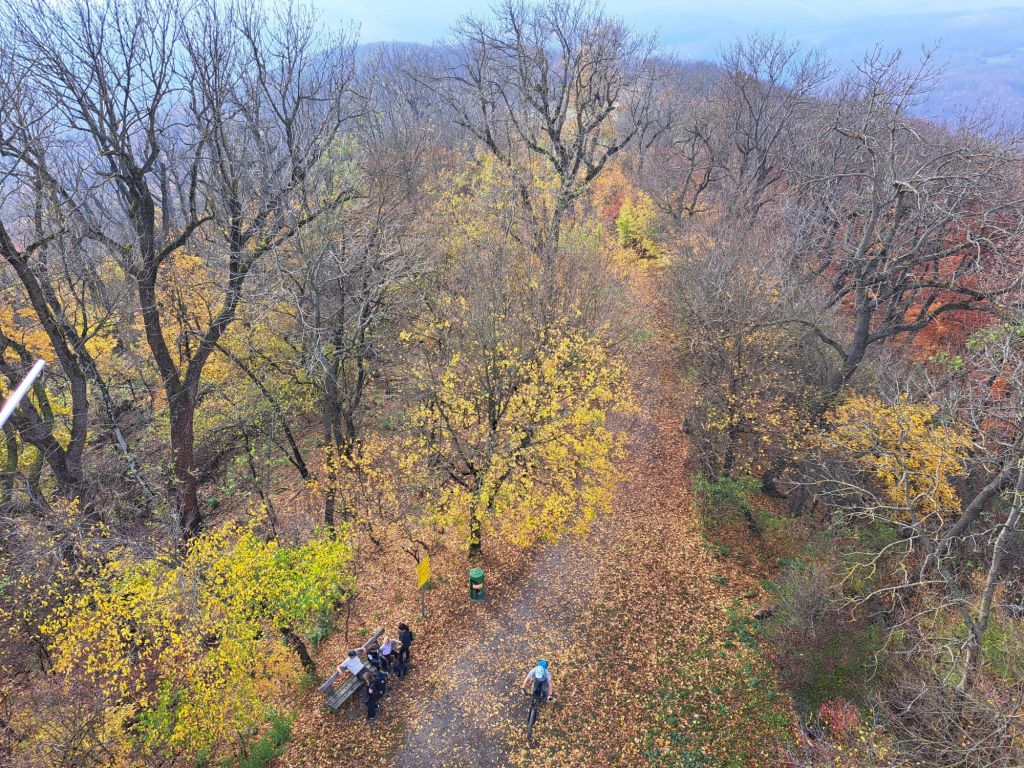
A mild November Sunday and I took a walk with friends to the highest point in Vienna, the Habsburgwarte in the 19th district. Altitude: 542 m. I’d been to the Warte before but never when it was open. This time, I was able to climb the tower and admire the view from the top. What an amazing city! ❤️
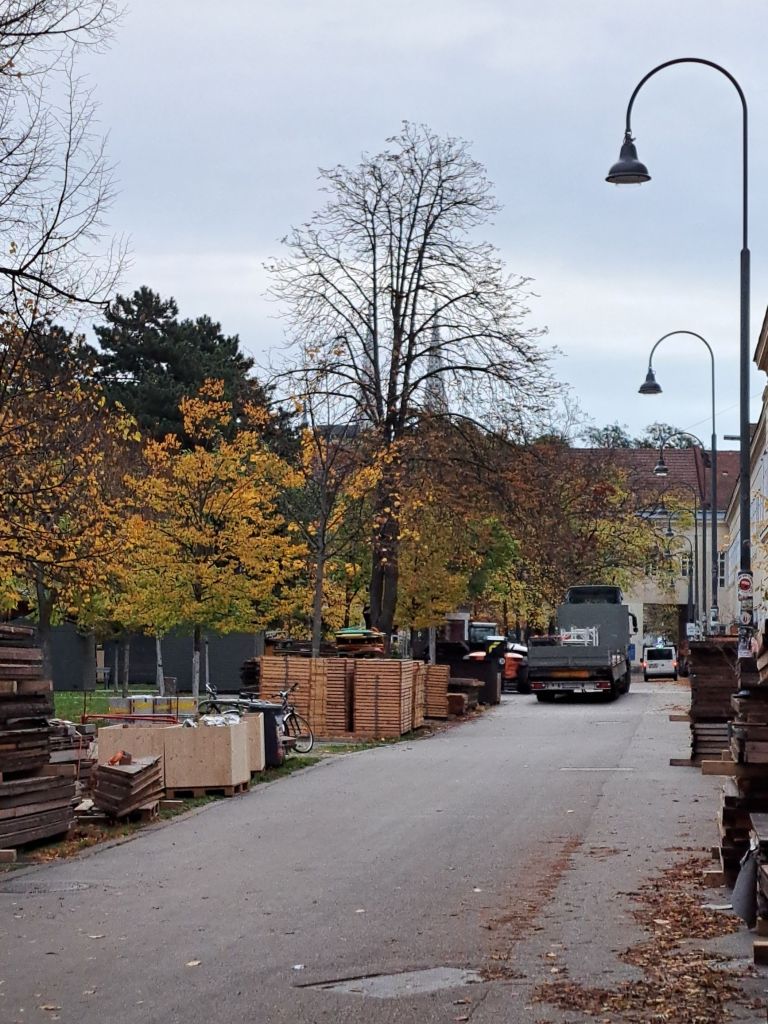
Why am I grumpy? Because that, ladies and gentlemen, is a photo of a Christmas market to be. When I arrived in Vienna, many years ago, granted, there wasn’t a Christmas market in every corner of the city and, if I remember correctly, they didn’t open until the First Sunday in Advent. At last, I thought, I’ve found a land unmoved by the consumerism of free-market capitalism.
Well, it was too good to be true. For a number of years, the Christmas markets have opened the middle of November. This year they seem almost to be striving for a pre-Halloween date.
The magazine Condé Nast Traveller has released the results of their survey on the friendliest city in Europe. (We beat out Lisbon!?!) I hardly know what to say. Friendliness is fine, but the famous “Grant” (grumpiness) in Vienna also had something.
Makes me think of the Boston Globe (New York Times?) headline when the Red Sox finally won the World Series after well over 70 years of not winning it: Now just a team like any other?
As women’s rights are once again endangered, it is encouraging to me to see that some long-past wrongs are being righted. (The painting that led to this re-assessment was discovered in the collection of the Kunsthistorisches Museum [museum of fine arts] in Vienna.)
This one in Tokyo (the World Championships). Julia Mayer, who was the first Austrian woman to cross the finish line in the Vienna City Marathon in 2023 and 2024, came in 33rd. Might not sound like much to a Kenyan or Ethiopian, but Mayer said afterwards that she was absolutely satisfied and could not have done any better. It sounds like quite a dramatic race for her on a hot and muggy day. At the 20-kilometer mark, she was 46th (already better than her results in the World Championships in Budapest two years ago) and worked her way up slot by slot.
I’ll be very curious how she does in the VCM 2026, if she runs it.
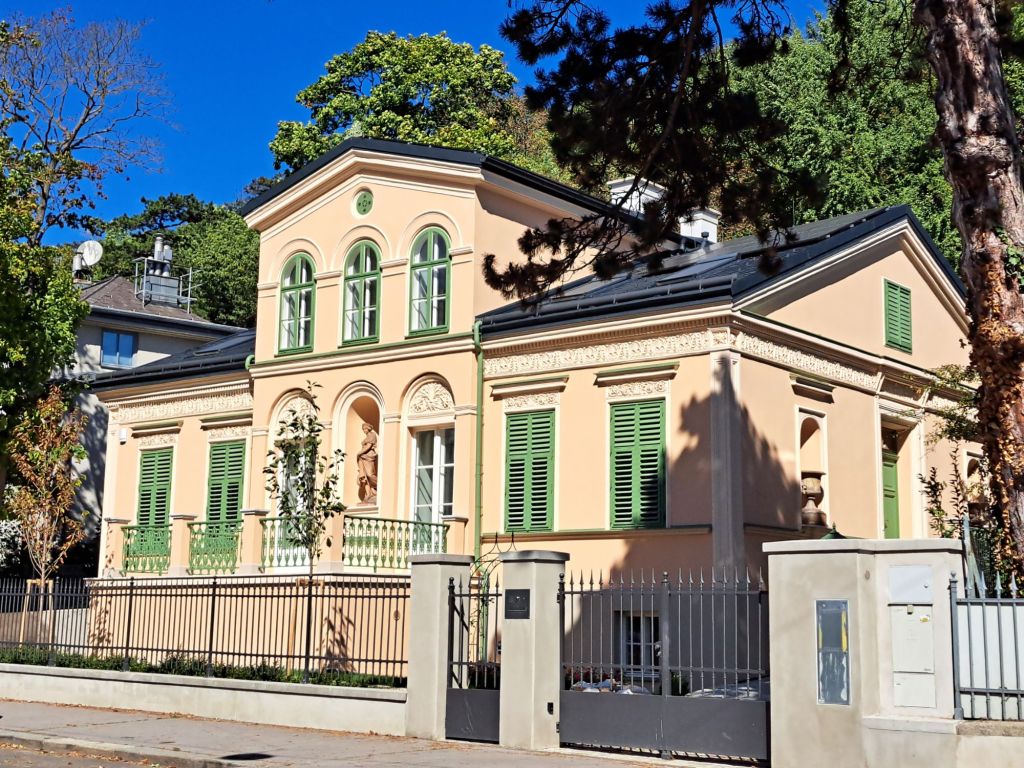
A friend and I have been keeping an eye on this villa in Neuwaldegg. We’ve seen too many treasures over the years been allowed to decay to a point when they could legally be torn down. Invariably, they were replaced with faceless, cement structures that were, possibly, quite nice to live in but brought no joy to the folks out front.
This one sat on a construction site for about two years, and for a while it wasn’t clear which way the project was going to go. Then it started to look promising. This time when I walked by I was treated to the fully renovated version.
If the person who invested the time, money, and care into restoring this property ever reads this — thank you! Not only did you save a beautiful piece of Viennese history. You restored a tiny bit of my hope in people.
The Awful German Language or What do these three things have in common?
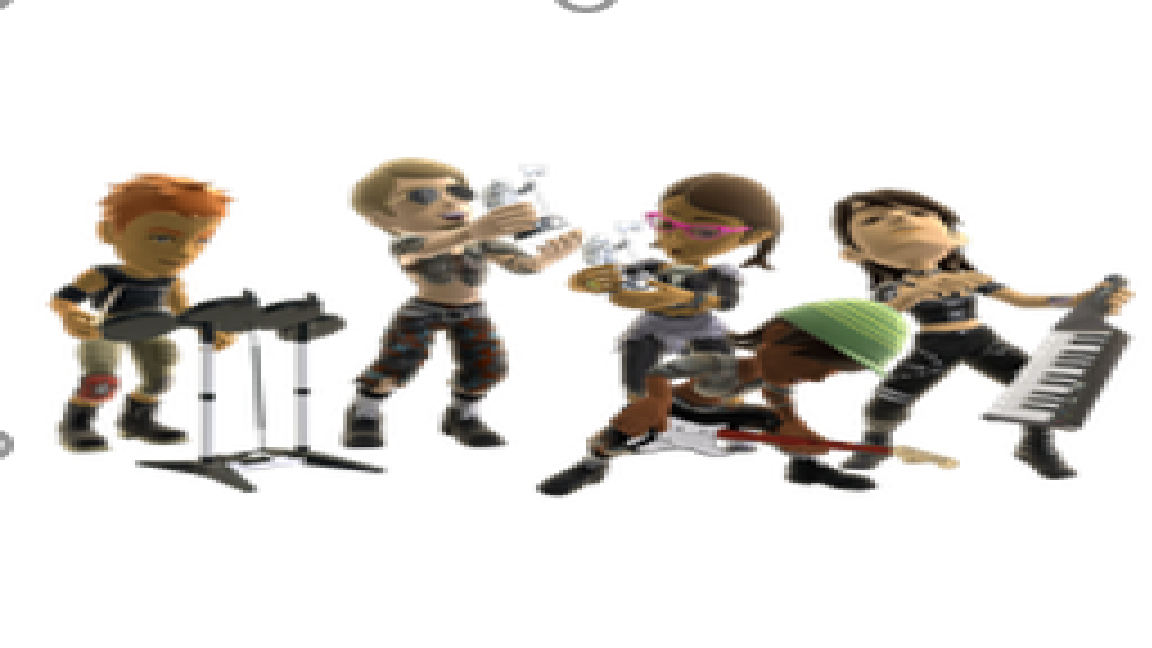
German speakers will realize immediately that they are all translated into German using the word “Band” — but the first one is neuter (das Band), the second one is feminine (die Band, which seems to be borrowed from the English and tends to be pronounced more in the English way), and the third one is masculine (der Band). In addition, they all have different forms in the plural — die Bänder (the ribbons), die Bands (the [rock] bands), and die Bände (the books, the volumes, in case you have more than one volume of Goethe, for example).
The good news is that you can tell them apart — if you’ve managed to internalize the above rules.
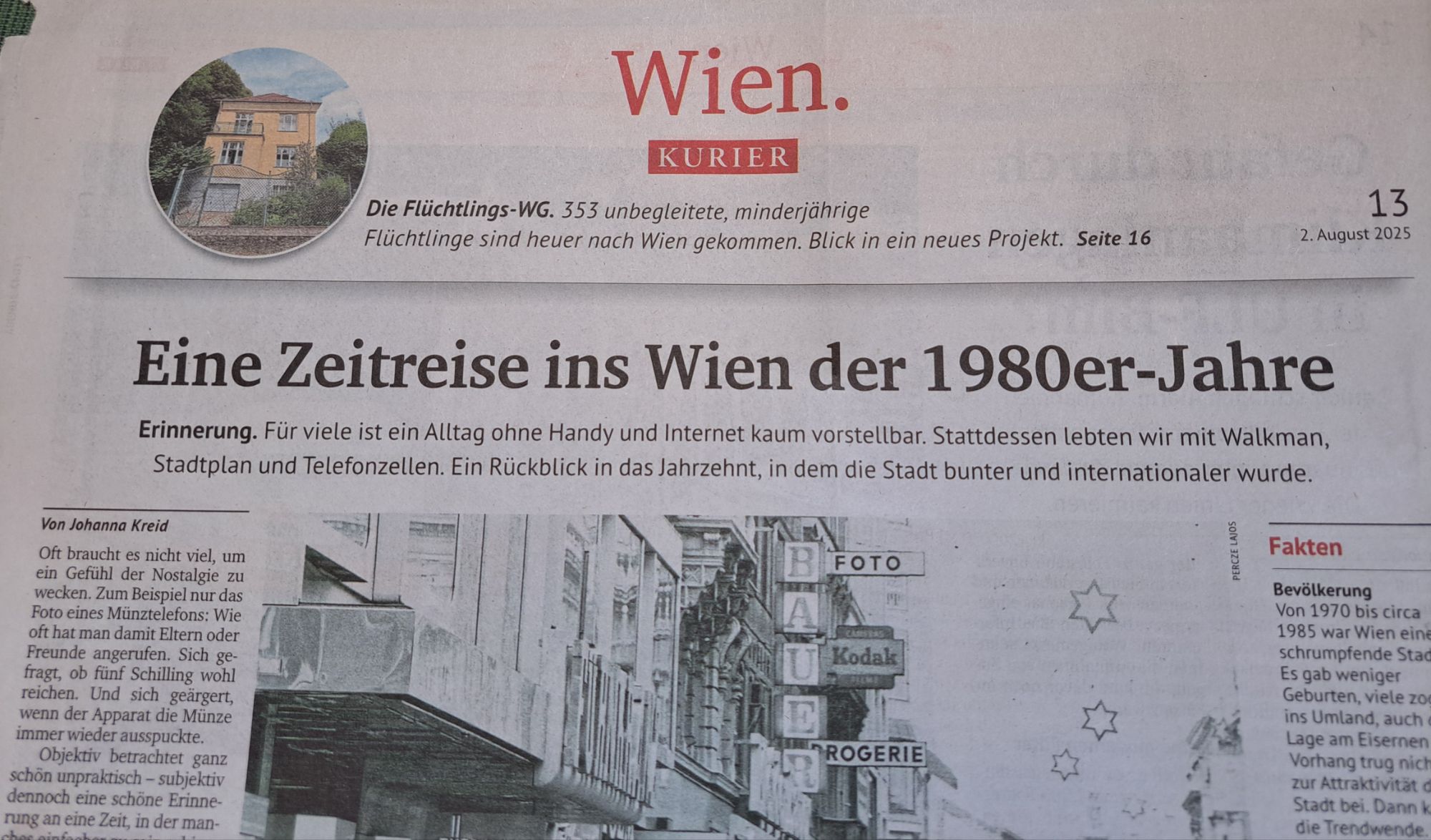
The Kurier today had an article about Vienna in the 1980s — a trip back in time. (Thanks, Kurier. That is very good way to make someone who was already an adult at that time feel rather old.) I arrived in Vienna in 1988 (had my 37th anniversary yesterday, celebrated, appropriately, at a Heuriger) and have seen significant changes, I thought it would be fun to write about some of the points mentioned.
For one thing, they write about pay phones, which reminded me of two things.
One of my first mornings in Vienna, after my German course at the Goethe Institut, I was out with my mother, who had accompanied me to help settle me in. We needed to phone the couple who became my Viennese parents to make arrangements, so we found a pay phone (they were plentiful then ;-)), put our money in, and dialed. When my Viennese father answered, he probably realized it was us calling because he couldn’t hear anything and said “Den roten Knopf drücken.” (“Press the red button.”) My mother did this, we heard the coin drop and were connected. That red button was called the “Zahlknopf” (zahlen = to pay) and released the money so that the connection could be made. Even in the late 80s, not all phones had a Zahlknopf anymore, but that one did and the Viennese had learned to give the necessary instructions.
The other phone story is much shorter. I saw a sign on a phone booth that said something about “retten”. I was familiar with the word (probably from the opening scene of “The Magic Flute” when Tamino rushes onstage pursued by the monster and sings “Save me! Save me!”) but couldn’t figure out what that had to do with a telephone. My mother translated the sign for me: This telephone can save lives. Do not destroy it. (“Dieses Telefon kann Leben retten. Zerstör es nicht.” Oddly enough, I don’t think they used the “Sie” form there.)
The article also reminded me of the men (I think it was always men) who used to sell newspapers on the street after the Trafiken had closed, which they do to this day. Vienna — thank goodness in my opinion — still has clear opening hours and very little at all is open on Sundays. You could get your news there truly hot off the press, and people often bought the next day’s paper on their way home from a ball, late opera night, or late shift. People who were looking for apartments or jobs would wait for these men and the newspapers to show up so that they could get a headstart on the search. And a tip for these men who worked long hours, in all sorts of weather, and for very little pay was obligatory.
The author also writes about Mariahilfer Straße — a very important shopping street in Vienna — and how even the part farther out, past the Gürtel, was a useful and relatively pleasant area 40 years ago. Currently, it is full of stores with really cheap goods and kebab take-out places although, apparently, there are plans to renew it. I remember, and still miss, the trams, the 52 and 58, that used to run along Mariahilfer Straße from the Ring to the Gürtel and beyond. Now we have the U3 line. Not so useful for a shopping street, I would argue. I do enjoy the kind-of pedestrian zone, though. “Kind-of” because it is what is called a “Fairness Zone,” which means you have pedestrians, bicyclists, e- and other scooter riders, and delivery trucks all in the same space without clear delineation of lanes. (What could possibly go wrong? ;-))
In addition, the author mentioned something I didn’t know. In 1988, when the Hungarians were already free enough to come to Vienna en masse, even though the Iron Curtain had not officially fallen, Mariahilfer Straße became their destination to buy things they couldn’t get at home and for a time was called “Magyarhilfer Straße” by the Viennese. My memory of this time was the truly old and stinking busses that they arrived in. We were very spoiled in Vienna with catalytic converters. These busses had no such thing and ran, I suspect, for the most part on diesel, making an ungodly noise and leaving huge black clouds behind them.


 ecbinvienna