Tag Archives: politics

Good job, Austrian Airlines!

15 Jun

I’m sitting at the airport in Vienna waiting for a flight and am actually enjoying the commercial for Austrian Airlines that keeps flashing across the screen.

It’s informing us that Austrian is the official airline of the Austrian national football / soccer team and shows members of the men’s national team kicking a soccer ball around a hangar and a pilot joining in. Then a red shoe, a pump, stops the ball. The camera pans up to show the owner of the shoe — a middle-aged(!) female flight attendant — who winks at the men and then kicks the ball through the open door of a plane. Tor! High fives all around.

For me, this is typical of state-owned (or, more accurately, formerly state-owned) companies in Austria. Diversity, yes, but with a light touch. Which is a good way to get past people’s defenses.

In any case, as a middle-aged woman who played soccer competitively for her school for six years, it was really enjoyable.

Vienna is taking its job as a climate leader seriously : NPR

14 May

https://www.npr.org/2025/05/13/nx-s1-5339958/climate-laws-solutions-vienna-solar-geothermal

One of the reasons I am still so happy to live in Vienna.

May Day 2025

1 May

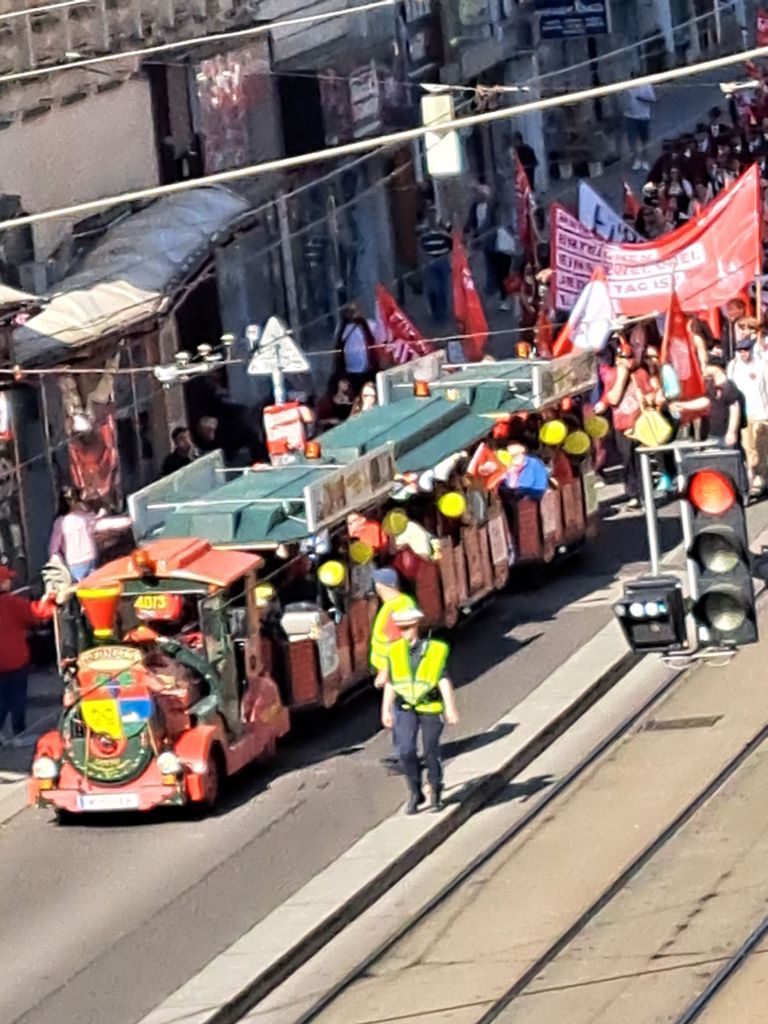
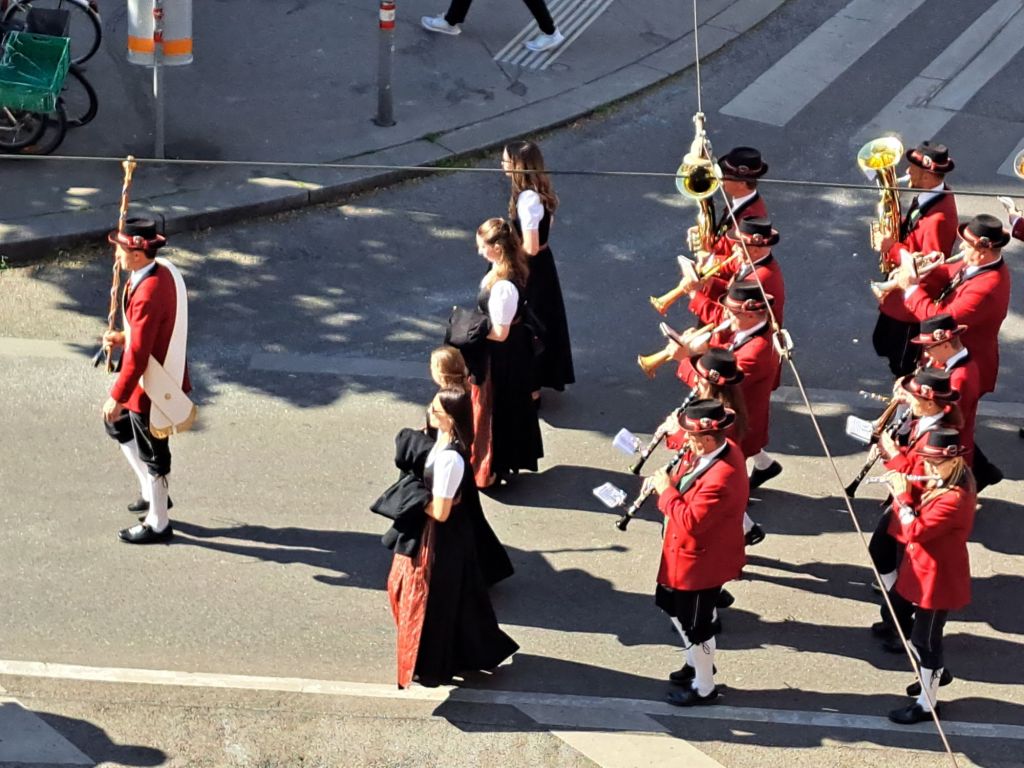
And the SPÖ (Social Democrats) are marching again. This year, the parade looks a little bigger than the past few years, perhaps because of their solid results in the elections last Sunday. Beautiful weather and a well-trained brass band are part of the tradition.

Not surprisingly, one of the banners called for solidarity. This took me back to an exercise I used to do with my U.S. American summer school students in Vienna.

To highlight one of the major differences in worldview that I see between the USA and Europe, I would ask my students for their associations with the word “solidarity.” This question was almost invariably met with confusion. What associations should they have with that word? Then I would give them examples of what my Austrian students of the same age would answer: Lech Walesa, of course, sticking together, and taking care of each other. Some Austrian students would even get into the political aspects and how solidarity is built into the systems here. I see the common use of and familiarity with the word “solidarity” as a cultural artifact for the more collectivist system here.

My little intercultural comment for today. 😉

A typically Austrian story

16 May

I just heard from a colleague who is currently in Vienna with a group of U.S. American students that two of his group were walking around yesterday and ended up chatting with the Austrian president, Alexander van der Bellen.  They even got a selfie with him! (With or without his shelter dog I don’t know. )

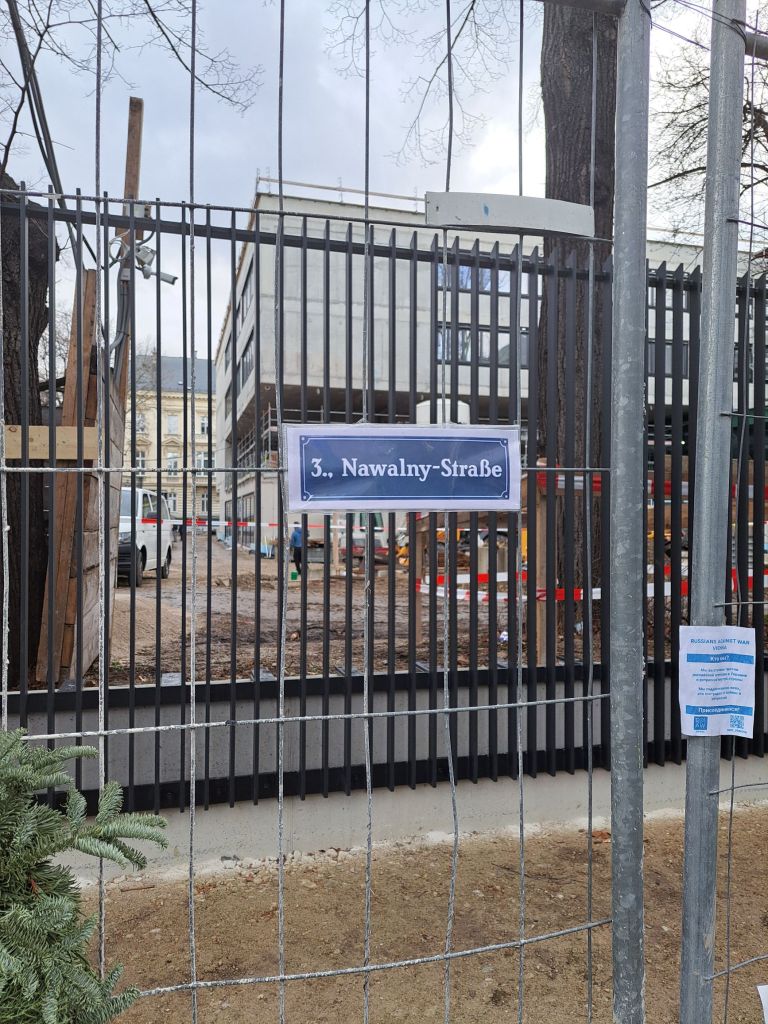
Navalny (or “Nawalny” as it is spelled in German)

19 Feb

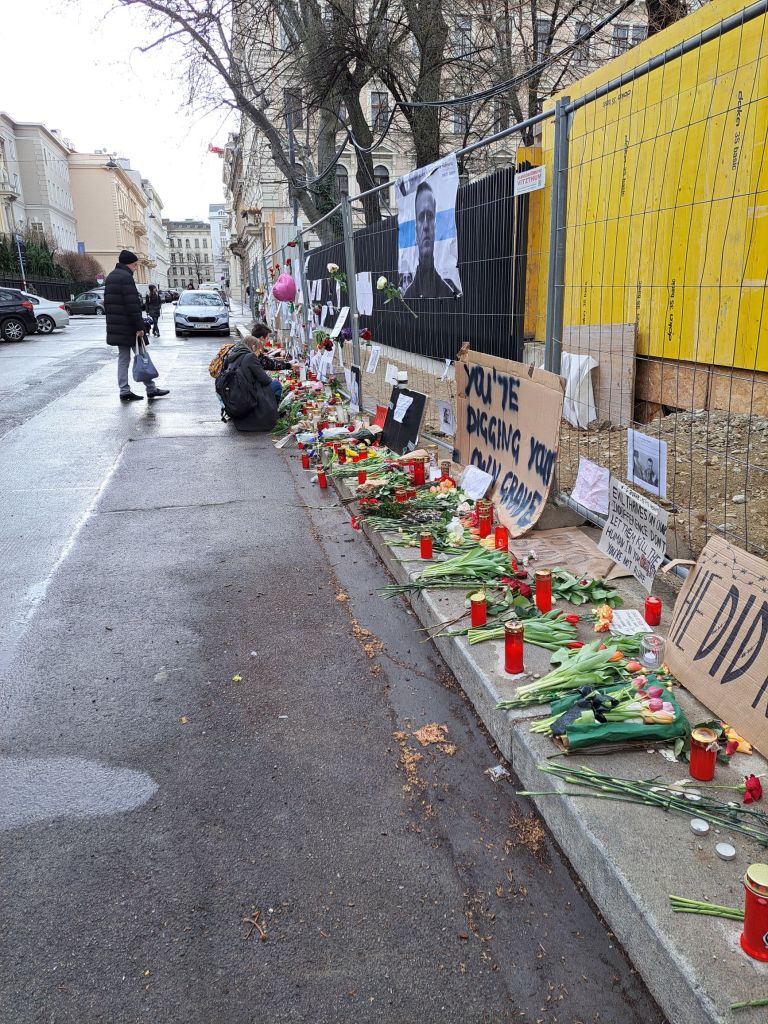
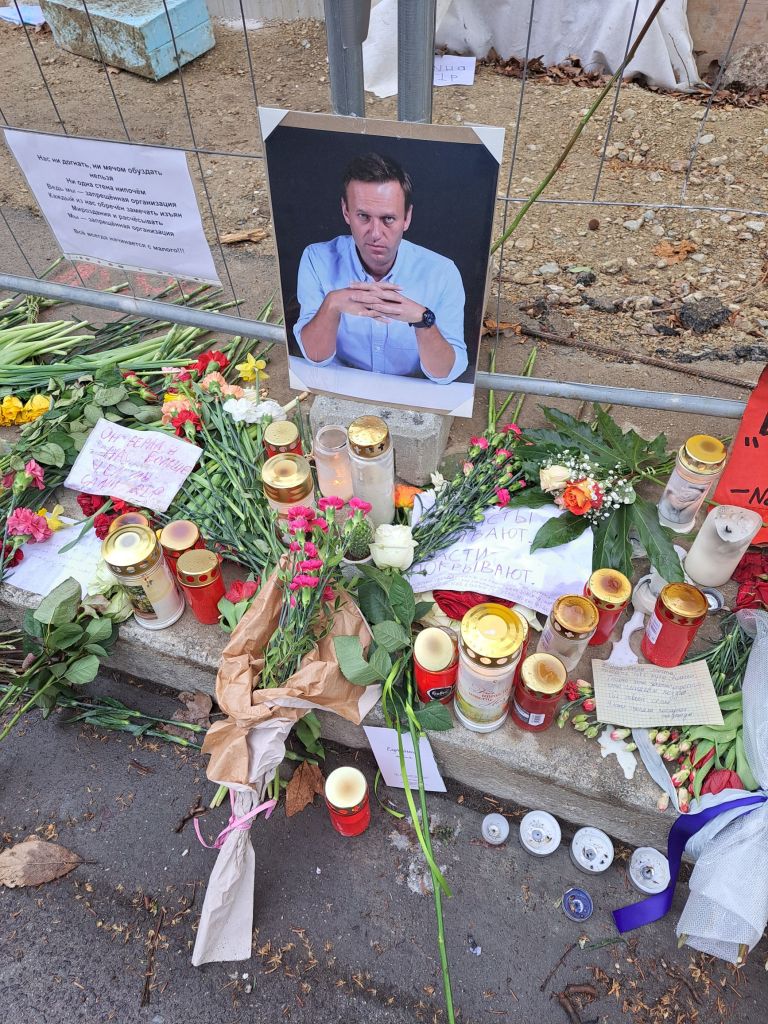
There is an impromptu memorial to Alexei Navalny right across the street from the Russian embassy.

It is good to have somewhere to go to commemorate him. He was very brave and, apparently, had a sense of humor and seemed to truly want nothing more than a better life for average Russians.

It was a bit scary to go and place a flower there. There were guards prowling about. (Mind you, I get quite unnerved by the Marines guarding the U.S. American embassy,  too.) There was no interference, though. I was able to leave my flower (a white rose, for those familiar with the student resistance in Nazi Germany) and look at and read what others had written.

It was a bit scary, yes, but also moving, and I’m glad I went.

The ORF on normality

21 Jul

Below is a link to a very interesting (and rather worrying) ORF article about the word “normal”. Recently, the governor of Lower Austria, Johanna Mikl-Leitner, used the phrase “people who think normally” (“normal denkende Menschen”) repeatedly in an interview in the newspaper the “Standard”. She is a member of the conservative People’s Party (ÖVP) and, the ORF tells us, was only following the party line, which has also been embraced, as you might expect, by the right-wing, nationalistic Freedom Party (FPÖ).

The Vice-Chancellor, Werner Kogler, of the Green Party (“die Grünen”), as might be expected, sharply criticized that use of the word and called the “normal” rhetoric “prefascist” (“präfaschistoid”) in an interview in the news magazine “Profil”.

In my opinion, Kogler has some justification for doing so. The problem is, of course, who gets to decide what “normal” is — and then what happens to those who are considered “not normal”. In a country that has a not-so-distant history of labeling anyone who criticized the government “asocial” (“asozial”) and sending them, often, to concentration camps sometimes to be murdered, it does feel as if we are on a slippery slope. (link to recent ORF article on this below)

I accept that there is bound to be (always has been?) backlash and that as diversity, inclusion, and belonging initiatives make headway (I’m not so sure “equity” plays a big role in the discussion in Austria at the moment) there will be pushback against people who want inclusive language (one of Mickl-Leitner’s hobby horses) or reject schnitzel or cars as central to their lives (Chancellor Nehammer’s [ÖVP] examples). I also think we need to tread very carefully and always remember where this kind of language has led in the past and could still lead in the present and future.

What is, after all, normal?

https://orf.at/stories/3324510/ (in German, on “normal denkende Menschen”)

https://topos.orf.at/Vergessene-NS-Opfer100 (in German, on “asoziale”)

Presidential election

9 Oct

According to projections, the incumbent, Alexander van der Bellen, has gotten an absolute majority — and that in a field with seven candidates. I guess I’m not the only one who thinks he’s doing a good job.

Lillehammer 1994

2 Apr

Today’s Kurier has an interview with Oksana Baiul, the 1994 Ukrainian gold medalist in women’s figure-skating. (She beat Nancy Kerrigan in the final seconds of her routine, as I remember it, by adding a rotation to a jump.)

Just seeing her name and the photo of her with her pink costume and frizzy 1980s hairstyle reminded me of how, in those days, no one except Ukrainians knew the Ukrainian anthem. The way I remember it, the award ceremony was delayed because they were searching backstage for the music so the anthem could be played. In the interview, Baiul says it was because the organizers couldn’t find a Ukrainian flag.

We are now all familiar with the anthem and the flag. I wish it for different reasons.

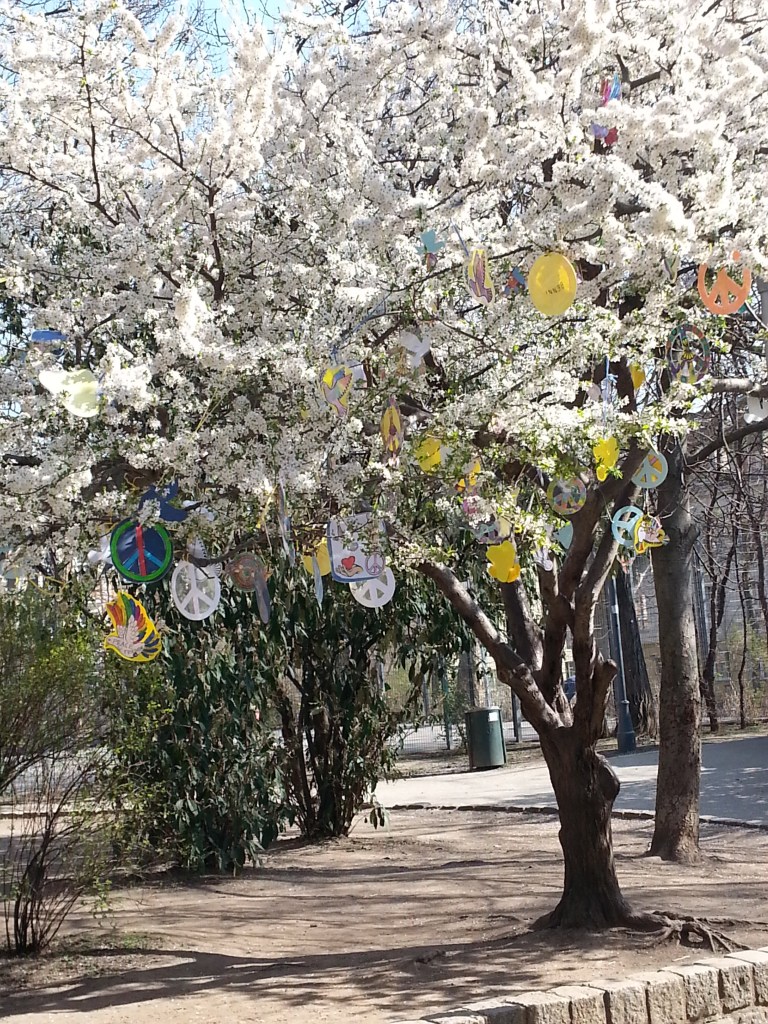
A peace tree

27 Mar
In front of a school in the 18th district

As spring comes in full force to Vienna we continue to keep our Ukrainian neighbors in our hearts as the war rages on. Schoolchildren in the 18th district were inspired to express their desire for peace and their solidarity with Ukraine in this way.

With many thanks to my friend Petra for the photo.

Heading into the 4th week

17 Mar

A number of years ago, I started a gratitude practice I call my gratitude session. I sit at my breakfast table and, before I take a bite or sip, I get into a slightly meditative state and ask myself: What am I especially grateful for right now?

Often the answer is simple and quick — the sunshine, the flowers in the park, my central heating, or the food on my table. Sometimes it takes longer and says more, like in 2015 when I had been helping distribute food to largely Syrian refugees at Westbahnhof. Then it was that I have some control over my life.

The last few days the answer has been the same: that I am still here in this city I love, that I can still practice my profession and earn a living, and, today, that I can still meet friends for a drink in the evening.