So, 2014 must have been the last time I watched the Eurovision song contest. I remember Conchita’s win and how fascinating it was. And now Tom Neuwirth is being written up in the NYT.
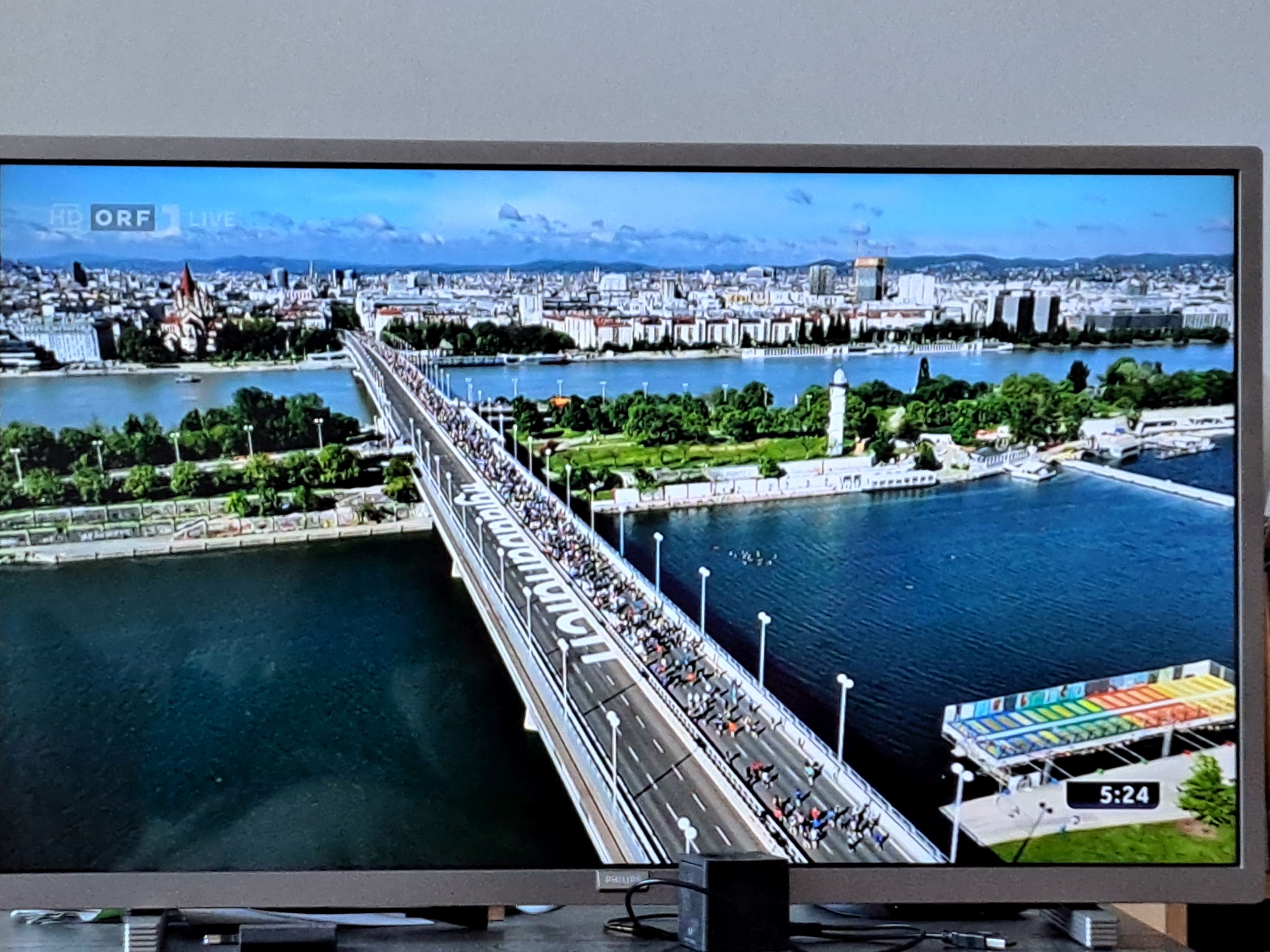
The Vienna City Marathon (VCM) 2024 has come and gone this sunny and cool day, good for running although perhaps a tad too windy. It seemed a bit uneventful this year.
No course records were broken as two were in 2023, when Samwel Mailu of Kenya very clearly broke the men’s course record and Julia Mayer, in a stunning display of tenacity and speed in the homestretch, broke the Austrian women’s course record by one second.
No pacemakers finished the race without their racers as Timon Theuer’s did in 2022, when Theuer fell at the 32-km mark and bowed out of the race. This year, Theuer was entered for the half marathon.
There were no neck-and-neck finishes, as there were in 2022 when Joyce Chepkirui, defending her title from the year before, just managed to maintain her lead and cross the finish line before Ruth Chebitok.
No one collapsed near the finish line and therefore none of the other runners had to dodge an ambulance on their way to the end of the race as Chepkirui had to when she won on 2021.
None of the winners was disqualified for wearing the wrong shoes, as happened to Derera Hurisa of Ethiopia, heartbreakingly, also in 2021.
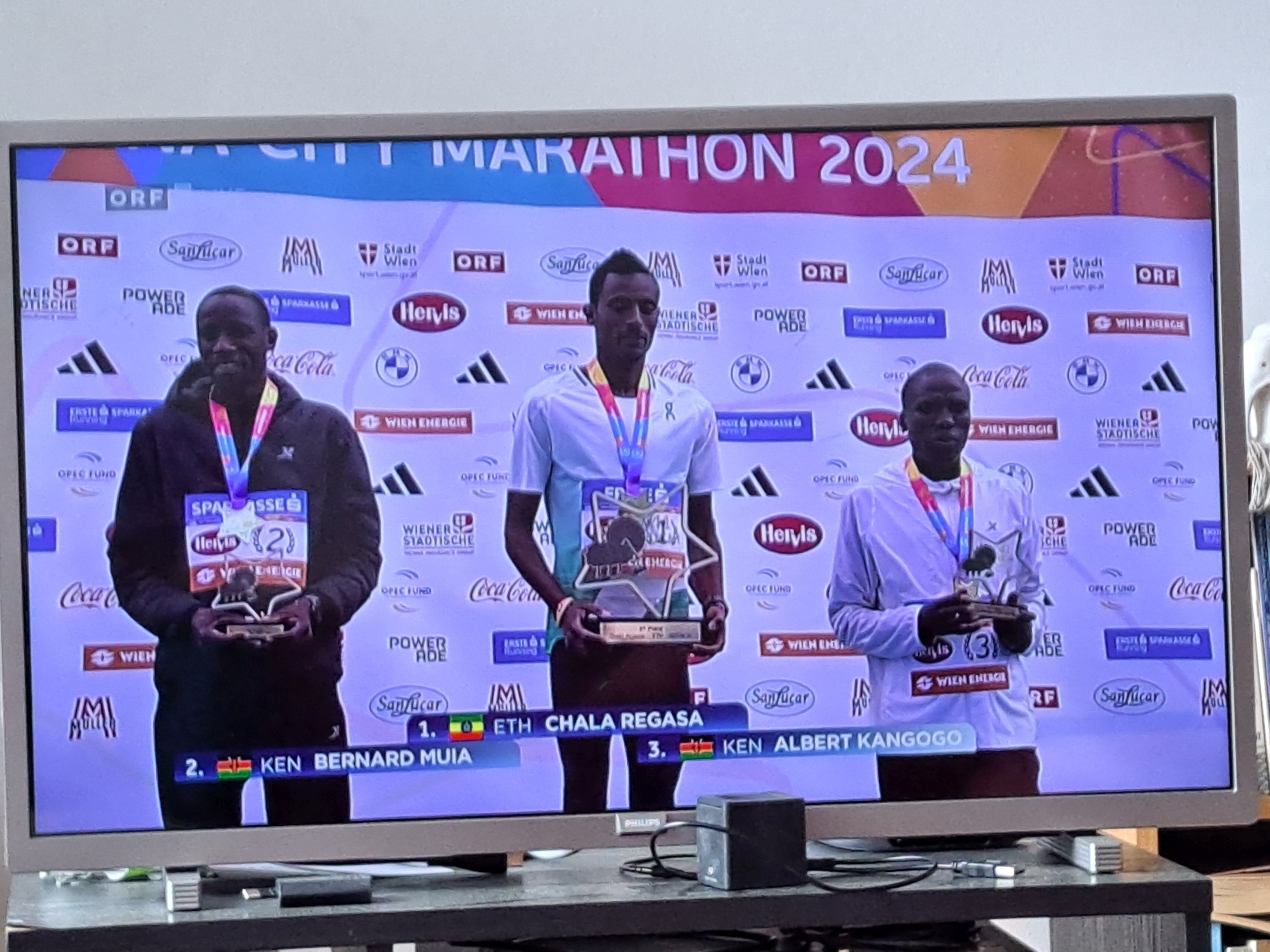
So, beautiful weather and clear wins by the leaders: Chala Regasa (ETH), Bernard Muia (KEN), Albert Kangogo (KEN), Mario Bauernfeind (AUT), Nazret Weldu (ERI), Faith Chepkoech (KEN), Rebbeca Tanui (KEN), and Julia Mayer (AUT).
In fact, coming into the homestretch Chala Regusa was so far ahead of the other men the VCM Twitter feed (I refuse to call it “X” and, in fact, only look at it to stay on top of what is happening in the marathon) had a post: Umdrehen muss er sich nicht, der erste Verfolger ist mehr als zwei Minuten hinter ihm. (He doesn’t have look over his shoulder – the nearest competitor is over two minutes behind him.)
In terms of diversity, just two interesting points from the interviews after the race. When Mario Bauernfeind, first Austrian man and on the police force in Vienna, was asked where he would go from here, he said he would have to go home, talk to the people close to him, and figure it out, that his children were getting older and needed more of his time. And Julia Mayer, first Austrian woman, mentioned that she had her period and so was really proud of her body for doing such a good job. To his credit, the ORF interviewer didn’t blink and later said something about how good that she felt free to mention that openly.
Once again, the Kenyan fans were out in force and showed great joy even though the first places were occupied by an Ethiopian (first time for the men since 2015) and an Eritrean (first time for the women ever, if I understood correctly).
After a few days in Baden with a friend, I got back to Vienna Friday evening. A good bit of Saturday was taken up with the usual household tasks, but yesterday evening I went to hear a bluegrass group I’ve known (about) for a long time at a wine bar in Grinzing. Yes, you read that correctly — bluegrass in Grinzing. A friend of mine from West Virginia and I go whenever we can and always leave feeling restored. The band itself has four regular members: one Austrian, one Slovak, one Czech, and, now, one Dutch. Constructive globalization in action. 🙂
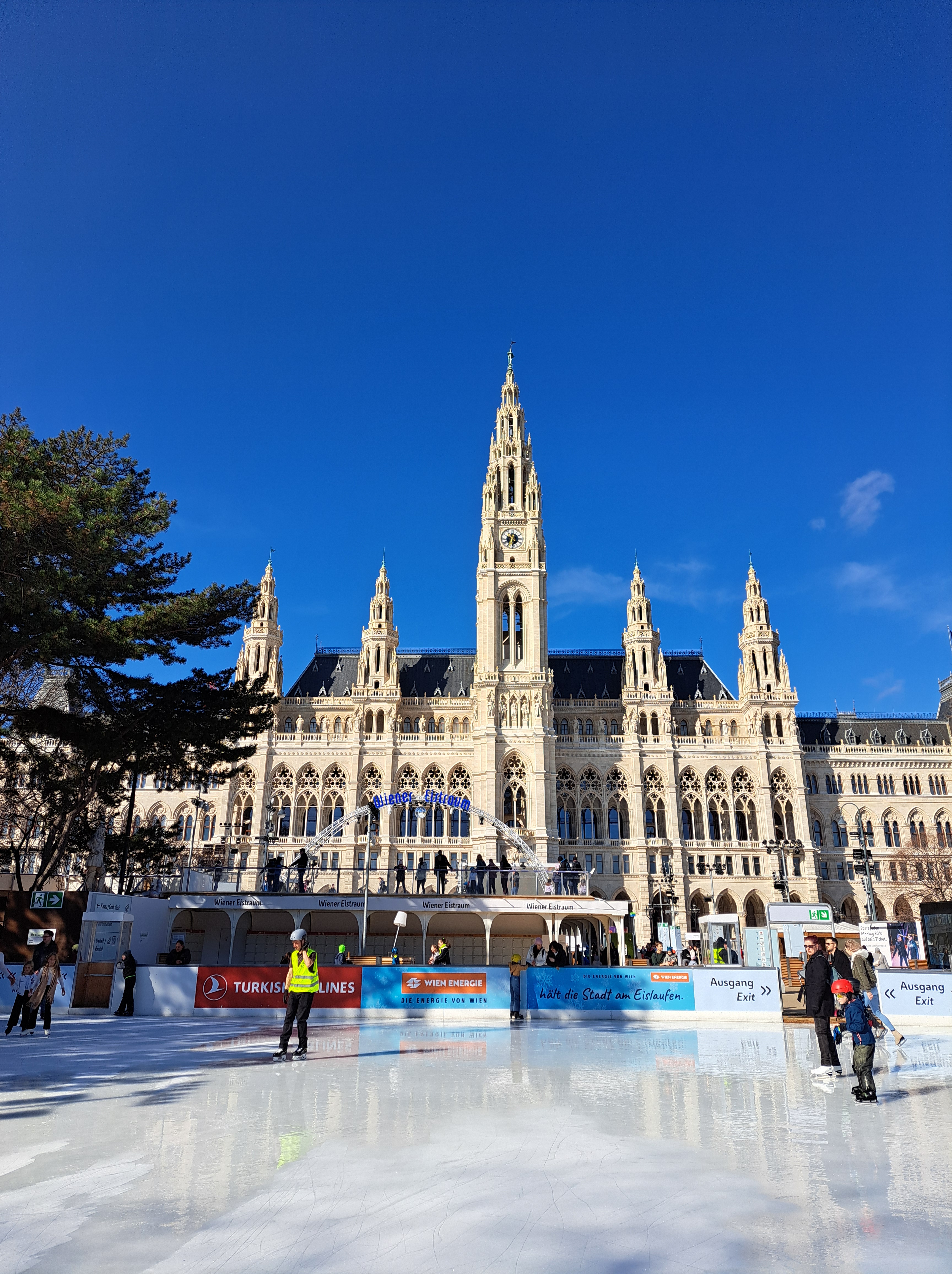
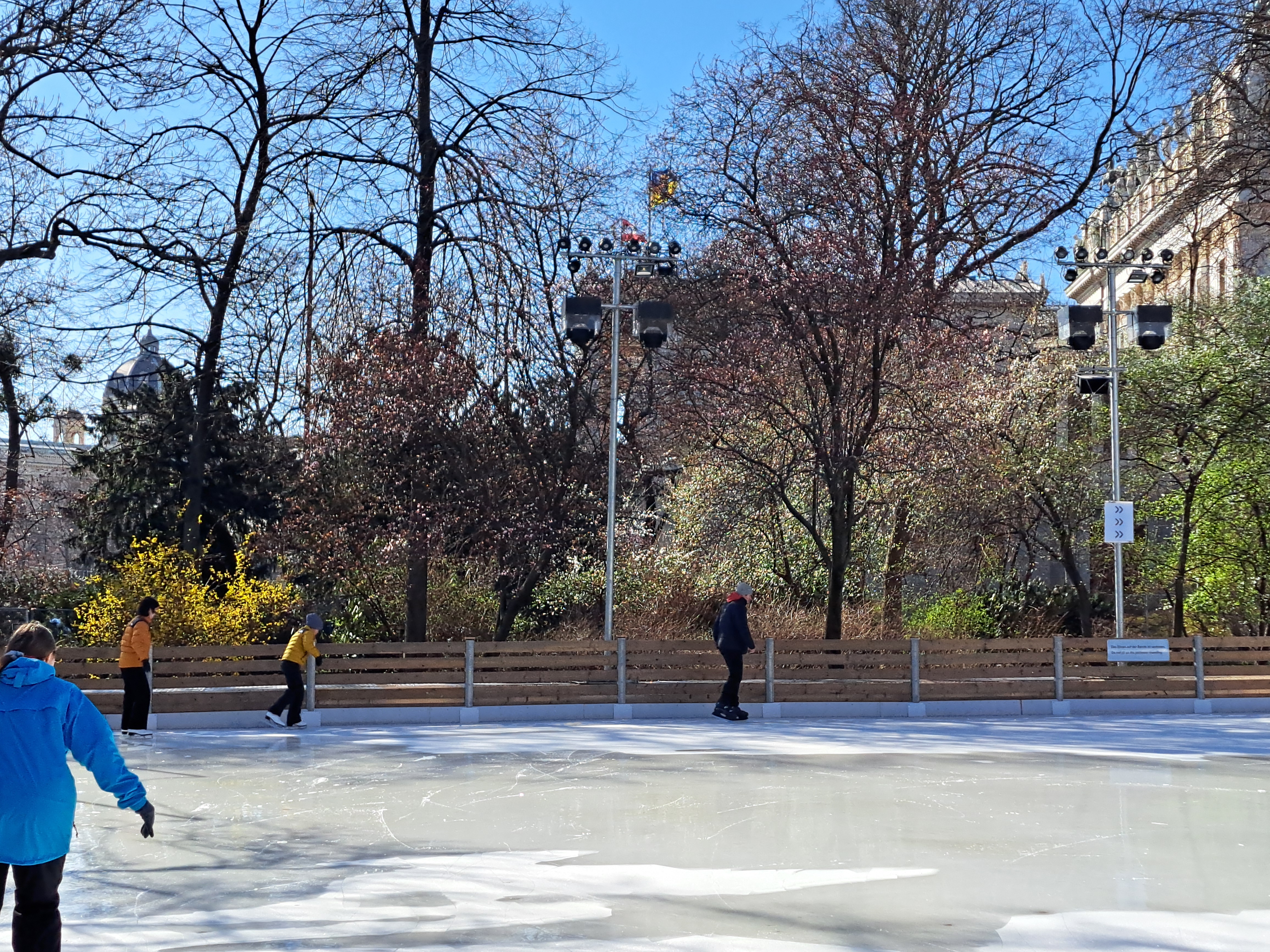
As for today, this is the last day the ice-skating rink in front of the Rathaus is open. (Actually it offers two levels — so probably one of the few places you can skate uphill and then down again — and paths through the park so “rinks,” plural, seems more appropriate.) Given that not only the forsythia is out but also the flowering trees, it is probably a good thing that today is that last day.
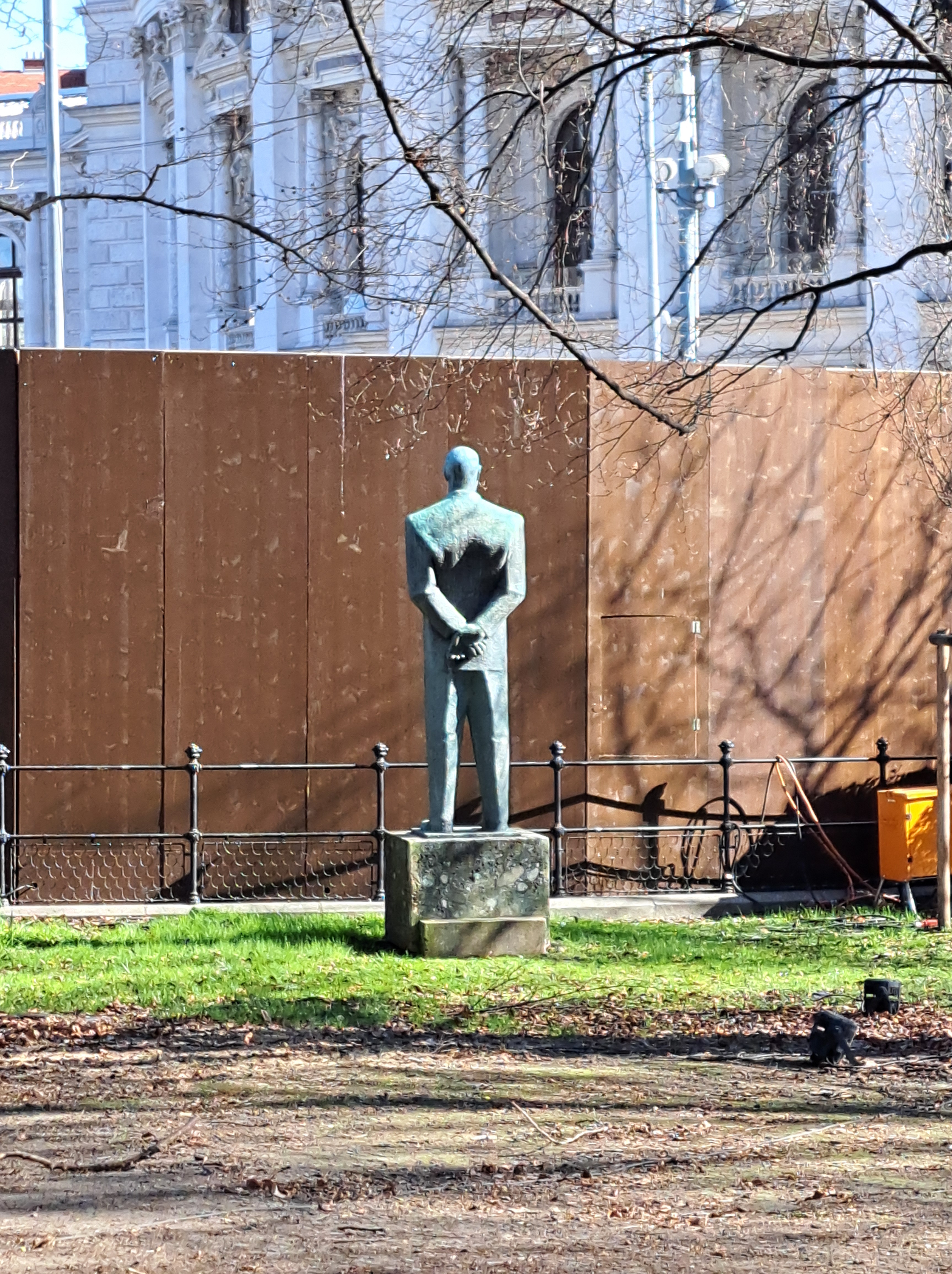
I hadn’t been yet this season so I went down at 10 a.m. just as they were opening and stayed for about an hour. After that, it got so full(!) it wasn’t as much fun anymore. The photos I took show the general flowering of everything as well as the statues that have been accommodated. Now I feel I need to go down once the rinks have been removed and see who those gentlemen are.
Now I slowly have to get back into a work state of mind. Luckily, I have most of the afternoon to do that. And I’ve had a lovely time so — as the old tenant says in the Gwyneth Paltrow “Emma” — mustn’t grumble.
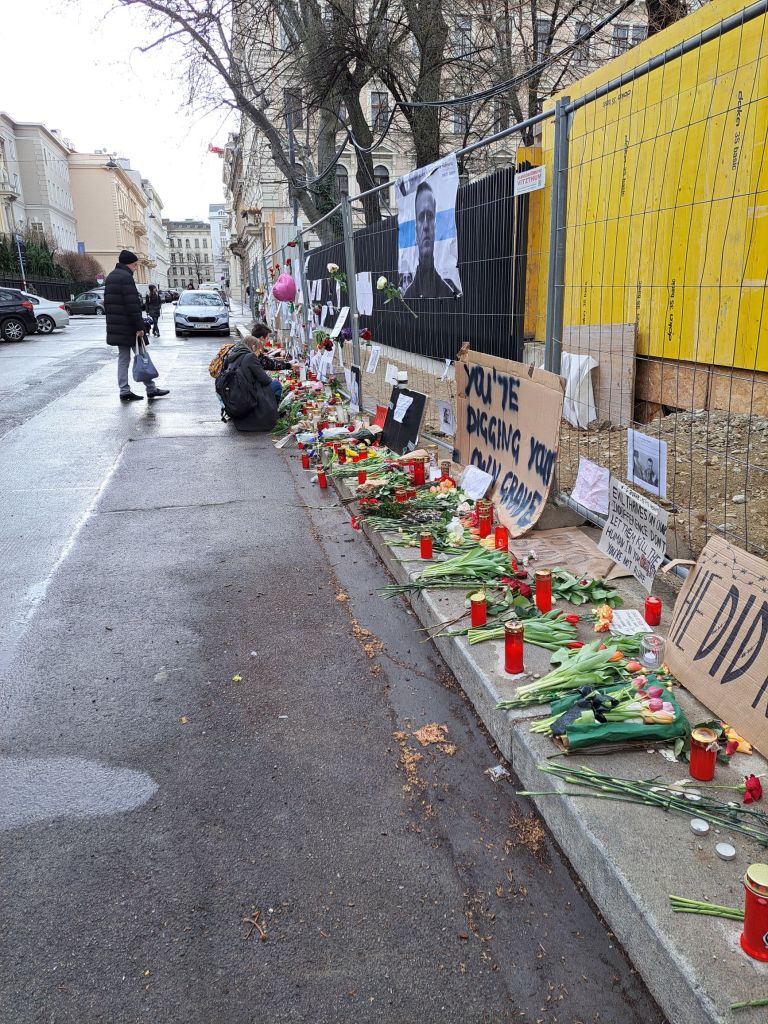
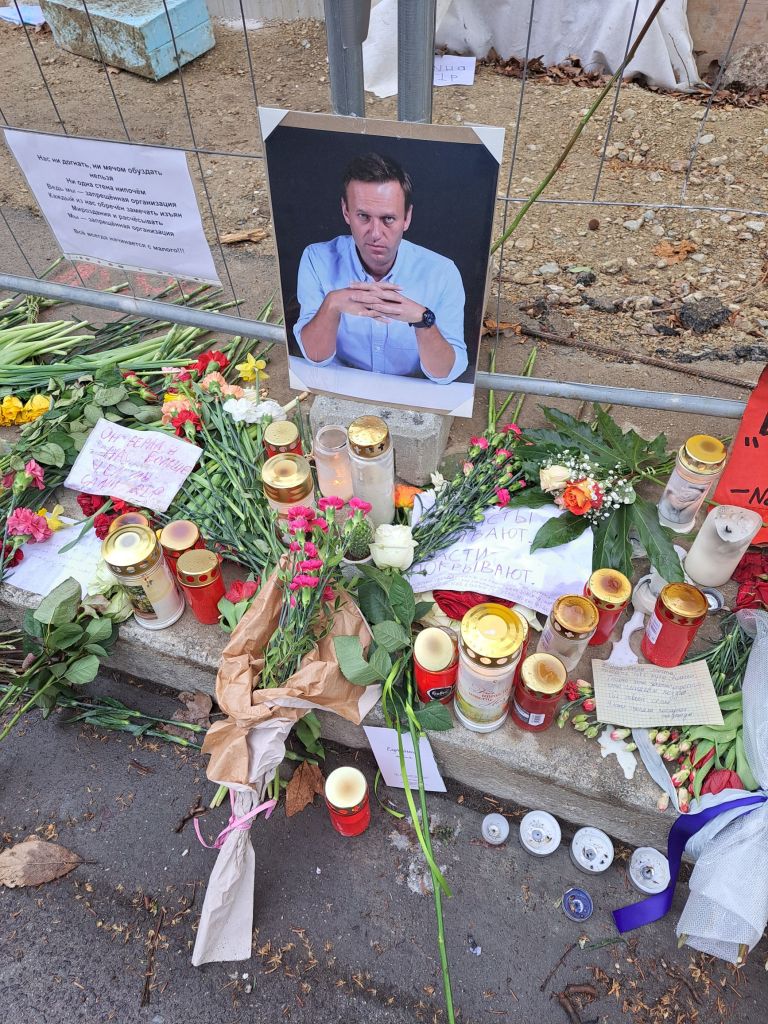
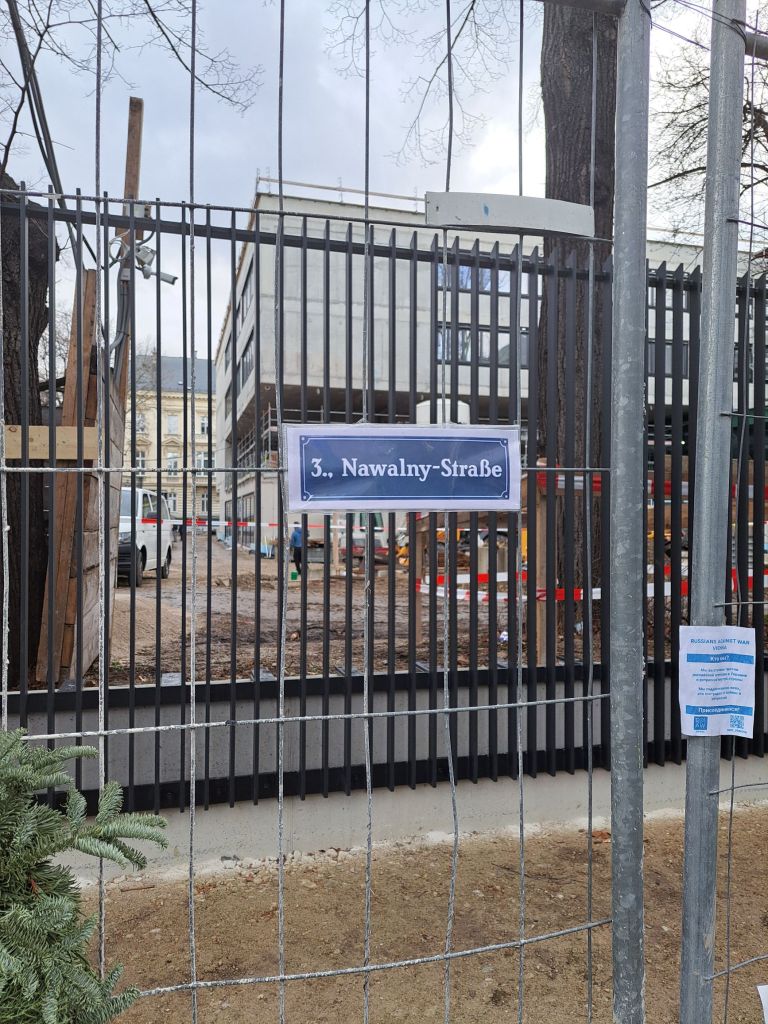
There is an impromptu memorial to Alexei Navalny right across the street from the Russian embassy.
It is good to have somewhere to go to commemorate him. He was very brave and, apparently, had a sense of humor and seemed to truly want nothing more than a better life for average Russians.
It was a bit scary to go and place a flower there. There were guards prowling about. (Mind you, I get quite unnerved by the Marines guarding the U.S. American embassy, too.) There was no interference, though. I was able to leave my flower (a white rose, for those familiar with the student resistance in Nazi Germany) and look at and read what others had written.
It was a bit scary, yes, but also moving, and I’m glad I went.
Today’s Kurier is reminding me that the only TV series I ever planned my life around, “Kommissar Rex”, is celebrating this year the 30th anniversary of its debut.
It seemed such a natural hit (Rex, Tobias Moretti, and Vienna) that I was surprised to read that the writer, Peter Hajek, tried for ages to get someone interested. Even when he found a director, Oliver Hirschbiegel, who had just won a prestigious prize for another crime show, it didn’t get much easier. Finally, a private network, SAT1, took it on. To think we might never have had it at all!
It was a show that not only appealed to the Viennese. It was shown in 120 countries around the world and inspired a Canadian version, “Hudson & Rex”.
And it gave work to some young actors who went on to international fame, notably Karl Markovics, who played the main role in “The Counterfeiters”, which won the Oscar for Best Foreign Language Film in 2008, and Christoph Waltz, who, with two Oscars for Best Supporting Actor, is practically a fixture in Hollywood at this point. He got a good start playing very sinister characters on Kommissar Rex when he played a doll maker who liked to dress women up as dolls, photograph them, and then murder them.
The episode that has stayed with me the longest was one in which someone was killing off little old Viennese ladies to get their hands on the apartments, leased until death at very low rents. (I would say “rent-controlled” but I think the system in New York, for example, is a little different from here.) That seemed quite realistic to me, and perhaps a bit worrying as I am now getting older, living in just such a flat (although without quite so low a rent).
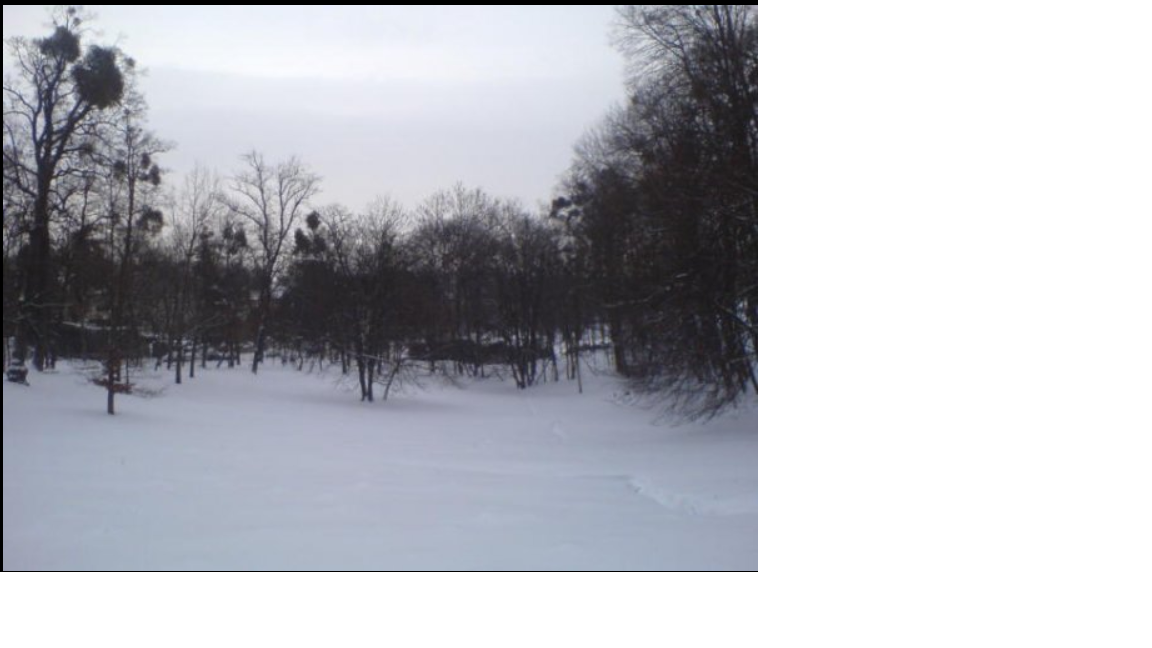
A very grainy photo from my first ever mobile phone
My Facebook memories just reminded me of an exchange with colleagues in January 2010 that gave me great pleasure.
First post I had to work late yesterday and missed going skating. So this morning I went for a walk even though it was snowing pretty heavily.
This haiku is the result (in German first): Viel Schnee ist heute In Pötzleinsdorfer Schlosspark Aber wenig Leut’
… which translates into English more or less like this: Lots of snow today In Pötzleinsdorfer Schlosspark Very few people
Later As I was waiting for the tram to make its way back into Vienna I sent it by text message to friends and colleagues. One of my colleagues challenged me to write a limerick and I came up with this (long tram ride!):
Eliza went out in the snow She had nowhere else to go She slipped on the ice Said something not nice And now when she goes she goes slow. 🙂
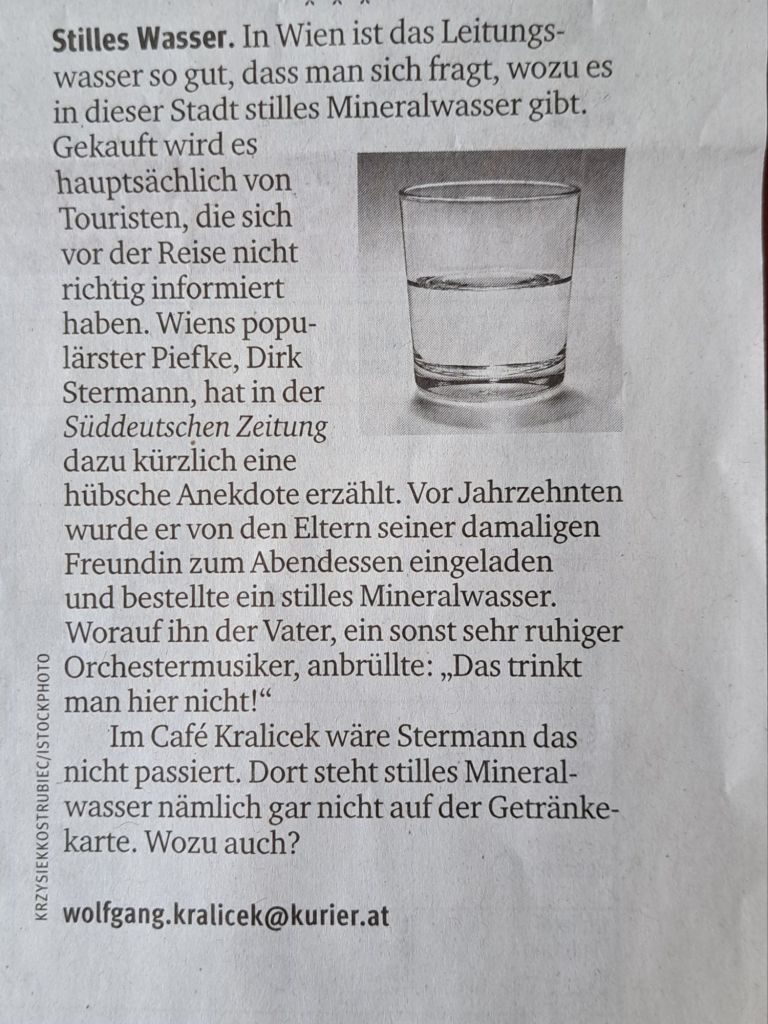
I’ve written about it before, but it’s a topic that just keeps cropping up. The tap water in (most districts in) Vienna comes from the mountains and is wonderful, not only safe to drink but also delicious. (My Viennese father used to say with pride, “We flush our toilets with the water other people buy in supermarkets.”)
Even some of our closest neighbors, the Germans, who can certainly drink their own tap water without any worries, aren’t in on the secret, as this story from today’s Kurier shows. When Dirk Stermann, German TV personality and longtime resident of Vienna, met the parents of his then girlfriend at dinner in a restaurant, he ordered still mineral water. The girlfriend’s father, apparently an otherwise quiet sort of man, shouted, “We don’t drink that here!”
As the year draws to a close, I would like to wish all my readers Happy Holidays, a good slide (as one says in German) into the New Year, and a peaceful and prosperous 2024. (And what would these wishes be without the annual haiku. 😉)
The Votivkirche was officially re-opened today with a celebratory mass. The extensive renovations, inside and out, have been going on for a quarter of a century.
With some interesting bird life I couldn’t get in the photo. Ducks and swans I’m used to but today I saw a goose and, from a distance, two birds who looked like cormorants. Exciting. 🙂