Even if you don’t speak German, at least the video is fun: https://topos.orf.at/vor-100-jahren-wiener-strassenleben100
Street Life in Vienna (a series of postcards)
8 Aug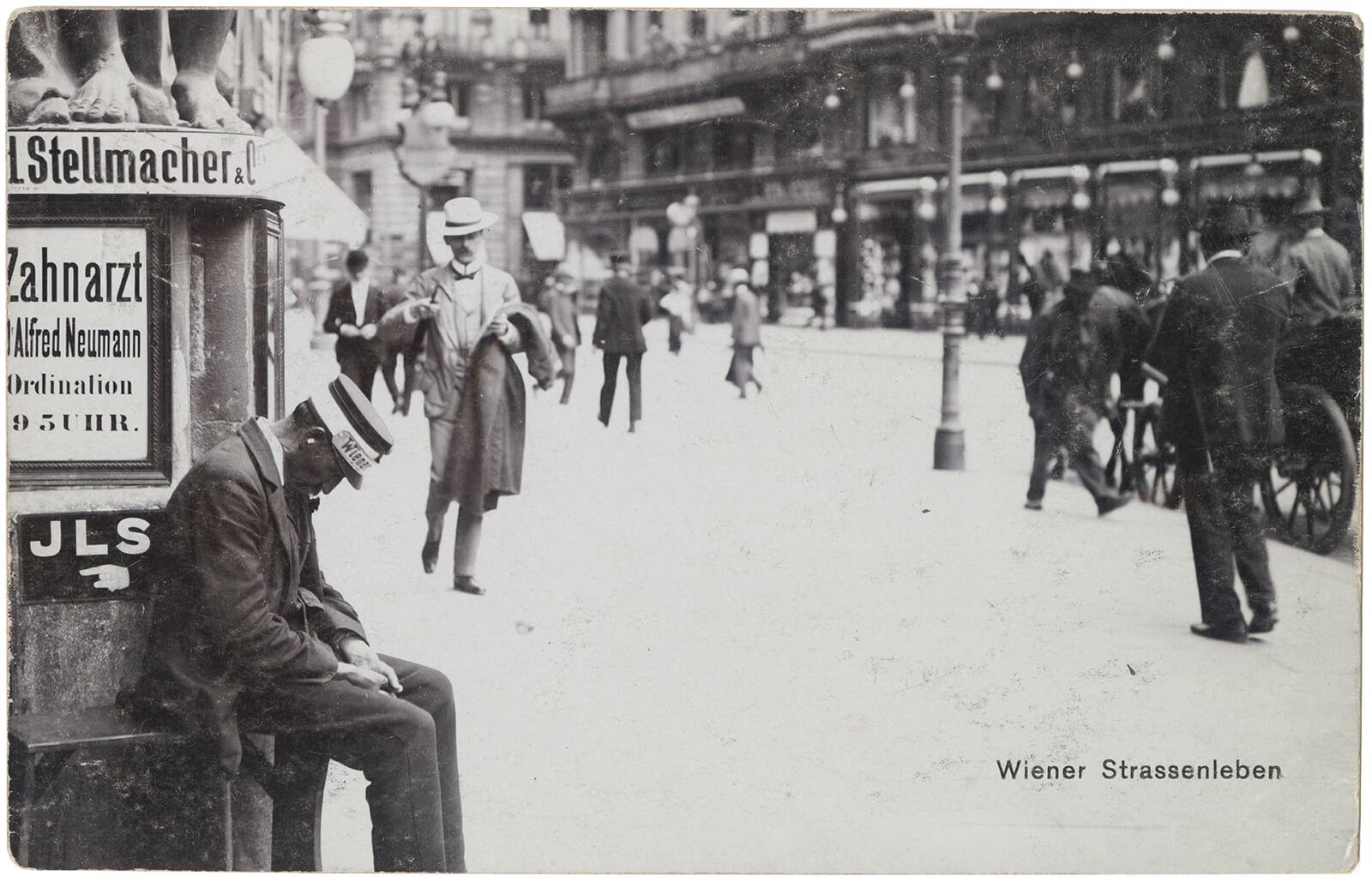
I think it was on the ORF (Austrian Broadcasting Corporation) site that I first saw a mention of a series of postcards showing everyday life on the streets of Vienna in 1905 / 1906. It is part of an exhibition at the Wien Museum (in one of their temporary quarters on Felderstraße) about postcards in general of Vienna.
What is special about this particular series? Postcards, of course, usually show us the important sights of a city — the Eiffel Tower in Paris, the Tower Bridge in London, Kiyomizu Temple in Kyoto, and Stephansdom in Vienna, to name a very few. The black-and-white postcards in the series referred to are in the form of snapshots and show people, often engaged in manual labor, going about their everday business. As the article (link below) from the Wien Museum’s magazine tells us the subjects of the photos are people who are offering their wares or services (for example as porters) on the streets and in the squares of the city, are driving vehicles or pulling carts or riding on public transportation or bikes, taking care of horses, cleaning up messes, working in public gardens, cleaning lanterns, working on building sites, maintaining tram tracks, strolling, striding, standing, cowering, sitting, sleeping, getting into mischief — and taking photographs. (my translation of part of the article) They give a real, one could say unvarnished, sense of life in Vienna at that time, which is precious to me.
I’ll want to be sure to make it to the exhibition “Grossstadt im Kleinformat” (“Big City / Small Format”), on until 24 September 2023.
The article from the Wien Museum specifically on this series (in German and showing some of the images): https://magazin.wienmuseum.at/fotopostkarten-wiener-strassenleben
The ORF on normality
21 JulBelow is a link to a very interesting (and rather worrying) ORF article about the word “normal”. Recently, the governor of Lower Austria, Johanna Mikl-Leitner, used the phrase “people who think normally” (“normal denkende Menschen”) repeatedly in an interview in the newspaper the “Standard”. She is a member of the conservative People’s Party (ÖVP) and, the ORF tells us, was only following the party line, which has also been embraced, as you might expect, by the right-wing, nationalistic Freedom Party (FPÖ).
The Vice-Chancellor, Werner Kogler, of the Green Party (“die Grünen”), as might be expected, sharply criticized that use of the word and called the “normal” rhetoric “prefascist” (“präfaschistoid”) in an interview in the news magazine “Profil”.
In my opinion, Kogler has some justification for doing so. The problem is, of course, who gets to decide what “normal” is — and then what happens to those who are considered “not normal”. In a country that has a not-so-distant history of labeling anyone who criticized the government “asocial” (“asozial”) and sending them, often, to concentration camps sometimes to be murdered, it does feel as if we are on a slippery slope. (link to recent ORF article on this below)
I accept that there is bound to be (always has been?) backlash and that as diversity, inclusion, and belonging initiatives make headway (I’m not so sure “equity” plays a big role in the discussion in Austria at the moment) there will be pushback against people who want inclusive language (one of Mickl-Leitner’s hobby horses) or reject schnitzel or cars as central to their lives (Chancellor Nehammer’s [ÖVP] examples). I also think we need to tread very carefully and always remember where this kind of language has led in the past and could still lead in the present and future.
What is, after all, normal?
https://orf.at/stories/3324510/ (in German, on “normal denkende Menschen”)
https://topos.orf.at/Vergessene-NS-Opfer100 (in German, on “asoziale”)
Maylo
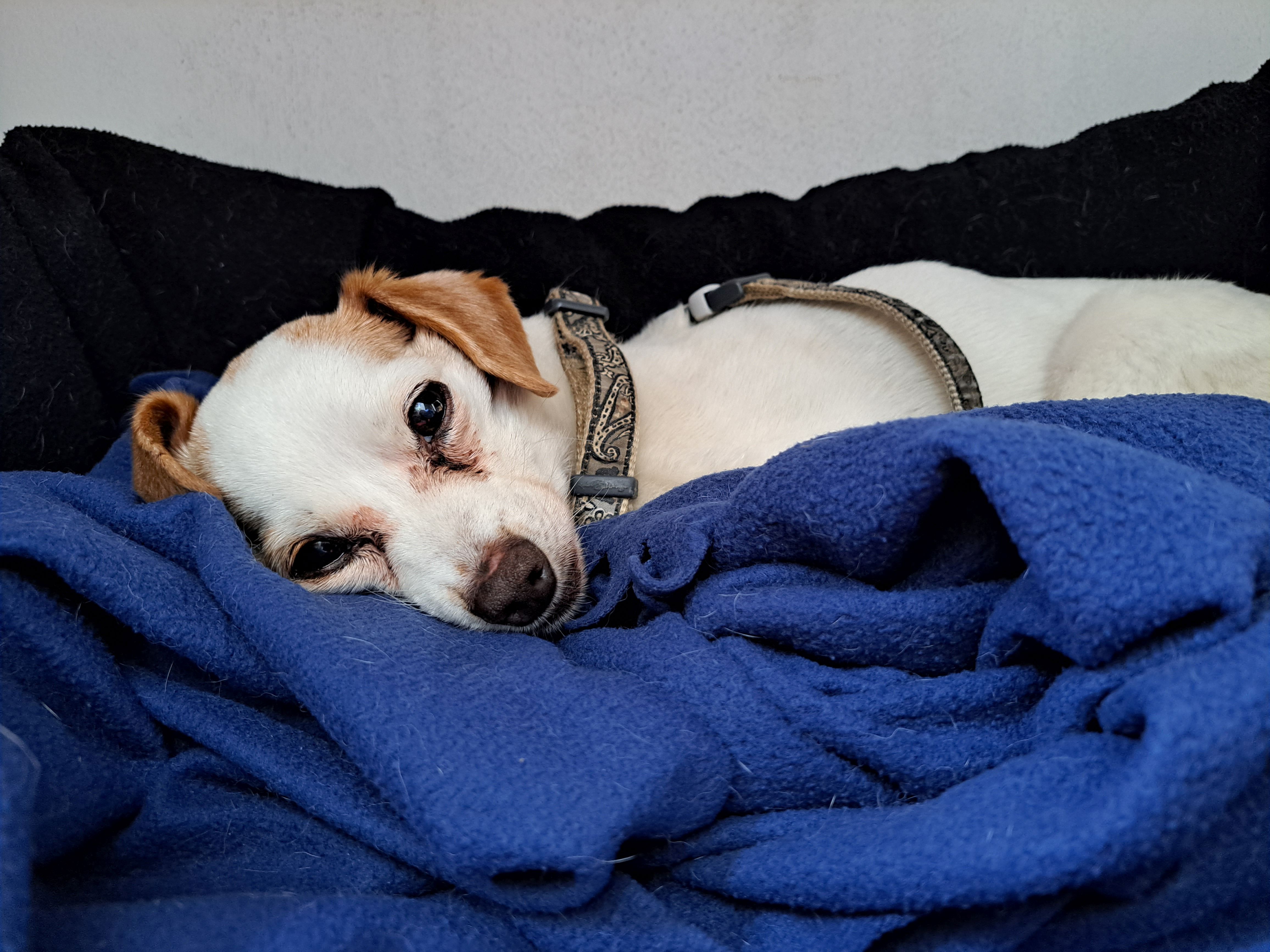
26 JunSome of my readers know from other sources that my darling dog, Maylo, is no longer with me. He got sick around Easter and all the vet and other care in the world didn’t make him better. Then he took a sudden turn for the worse, and his very kind vet came in especially on a Sunday (June 18) to end his suffering. He died peacefully in my arms. One word people have used a lot in sending their condolences is “companion” and, indeed, he was my wonderful companion in walks and more for over 11 years.
The linden trees are at it again
12 JunIn fact, they’ve been at it for the last 10 days or so, but I’ve been so busy trying to make my little dog comfortable that I haven’t thought to post.
A few mornings ago, though, he needed to go out at about 4:30. In that queer light of dawn, when it is still dark but you can start to see without streetlights, we headed to the nearest park. As we approached, the scent of the lindens and the songs of ecstatic birds washed over me and gave me joy.
Die Wiener Zeitung
12 MayI was introduced to the “Wiener Zeitung” (newspaper) by my former partner who is a lawyer and, like all lawyers, had to subscribe because certain official announcements, about new laws, for example, were published by requirement in the “Wiener Zeitung”. He also read the rest of the paper with interest and pleasure, finding it a wonderful source of edification. At some point, I did catch on to the interesting tidbit that it is the oldest daily paper still in print. That will end on June 30th this year after more or less 320 years. (To be precise, the first issue appeared on 8 August 1703 so it’s not a full 320 years, but what do the few weeks matter with a timeframe like that?)
What happened? In April, the National Assembly passed a law that did away with the requirement described thereby pulling the financial rug out from under their feet. It is the way of all things, and it is still sad. I wanted to commemorate it briefly here.
Vienna City Marathon 2023
23 Apr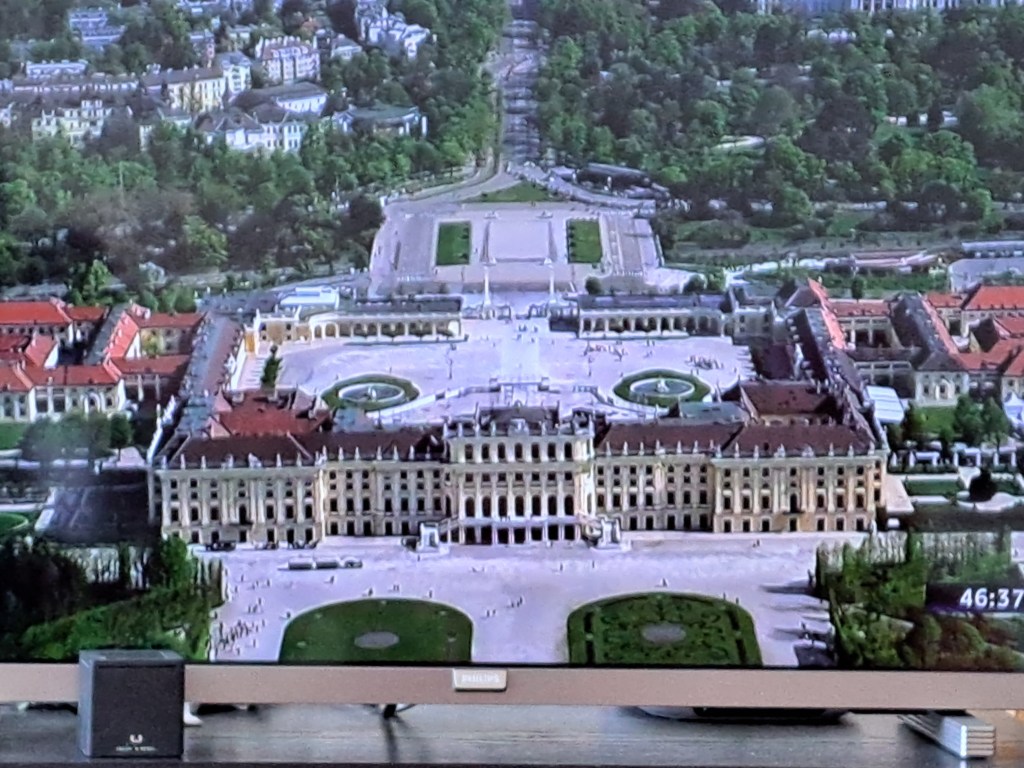
Today was the 40th anniversary of the Vienna City Marathon, although not the 40th race. (In 2020 the marathon was inexplicably 😉 canceled.) I wish I had time to really write about it and soak it up as in other years, but I am surfing a very big wave of work at the moment and nursing a sick dog so will have to keep it short.
Highlights: two course records were broken — for the men and for Austrian women, the former very clearly by Samwel Mailu of Kenya, who said it was a really big moment in his career, the latter by one (1!) second.
Julia Mayer, first Austrian woman today, said she was only able to dig deeper on the last 200 meters and so break the record because the fans were so supportive. Andreas Vojta, first Austrian man, who ran a much slower race than he had planned, also mentioned how the crowds helped him keep going in a race that at the 23-kilometer mark he realized wasn’t going to get any more comfortable.  Full marks for bravery, if you ask me.
The ORF did better than last year. They interviewed the two first women this year, not just the men.
And now, with regret, I have to turn you over to other sources for more information. The marathon organizers are on Twitter and report highlights in German and English: #ViennaCityMarathon And I am pretty you can find out more on sport.orf.at
Votivkirche
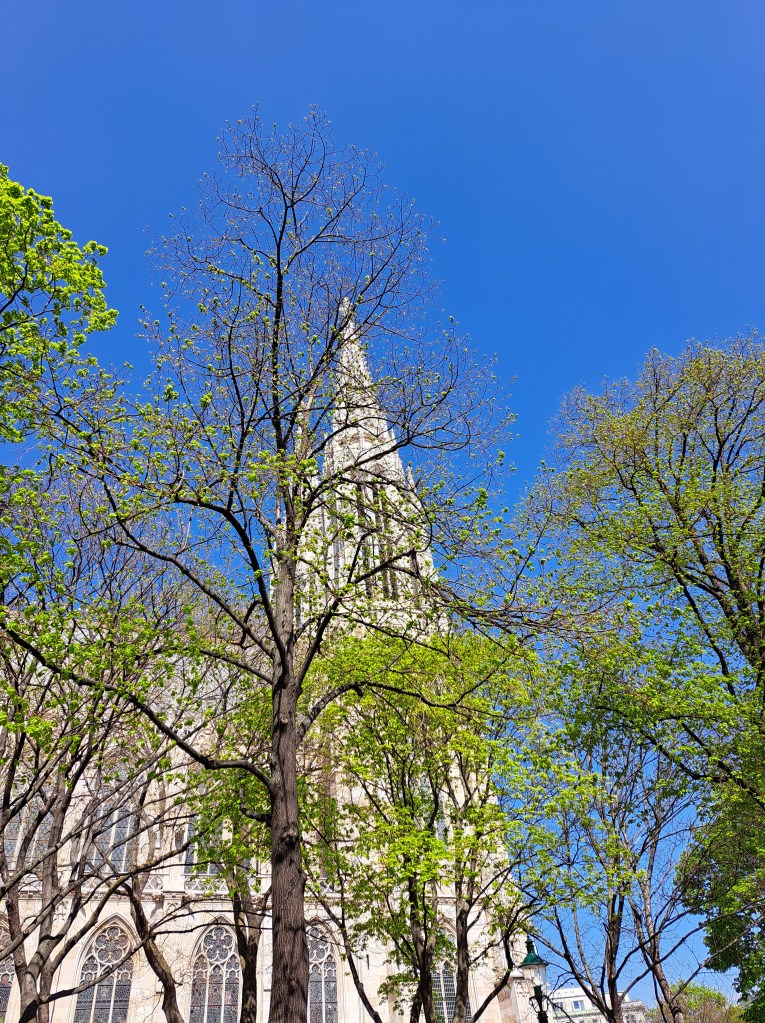
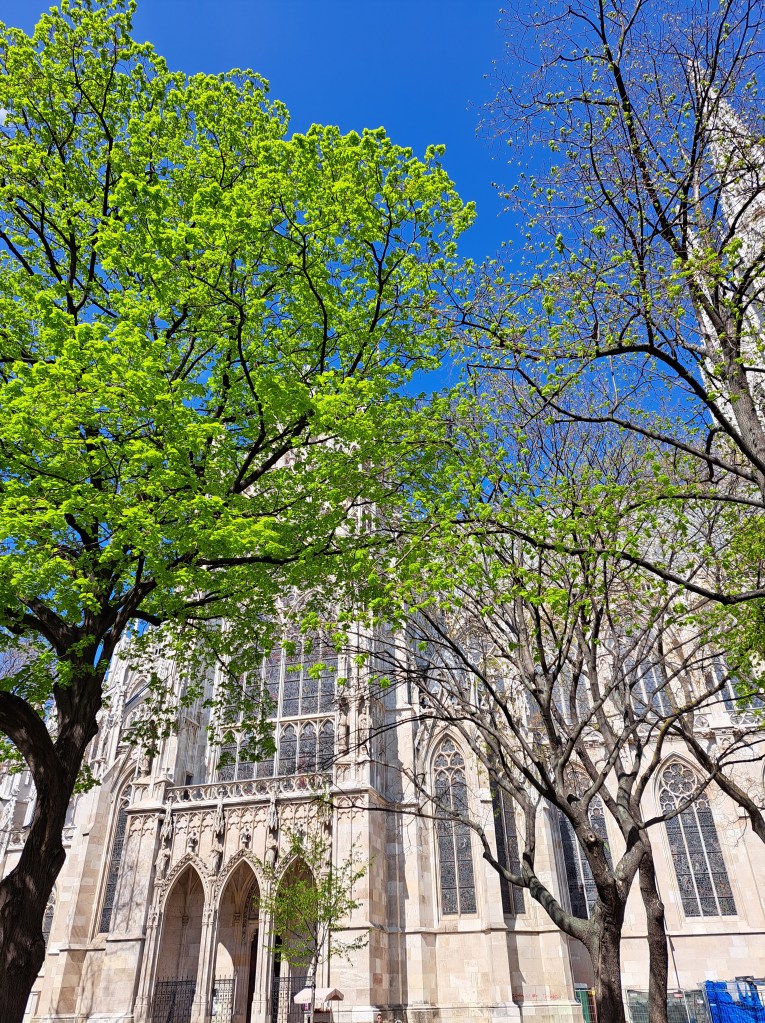
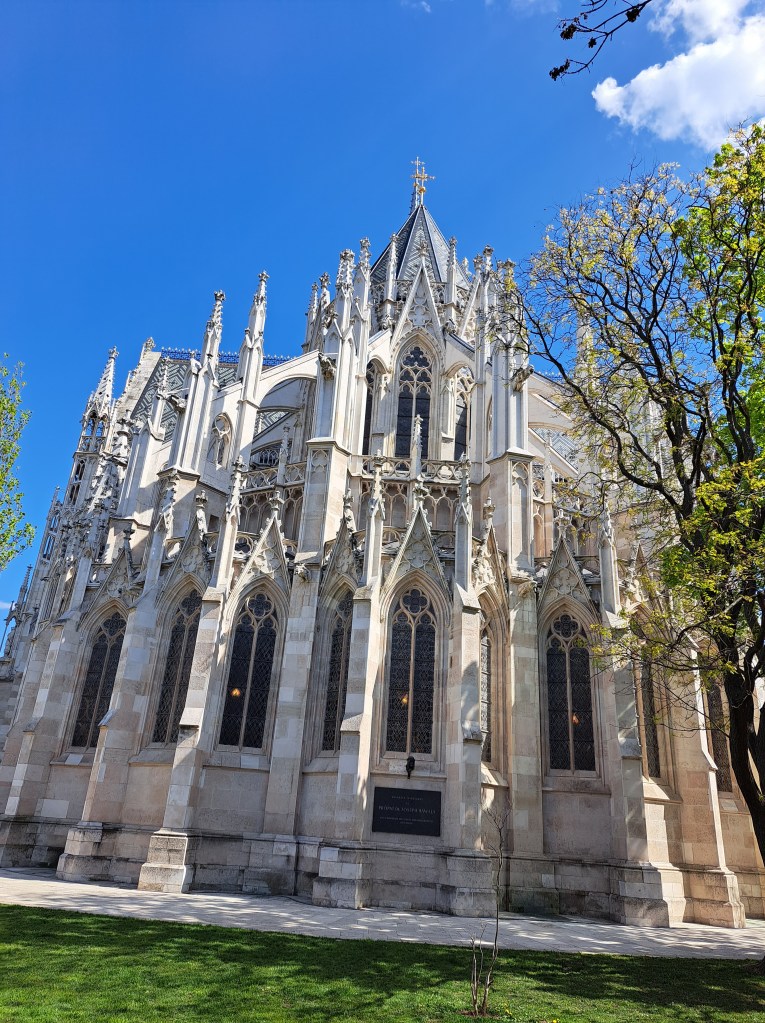
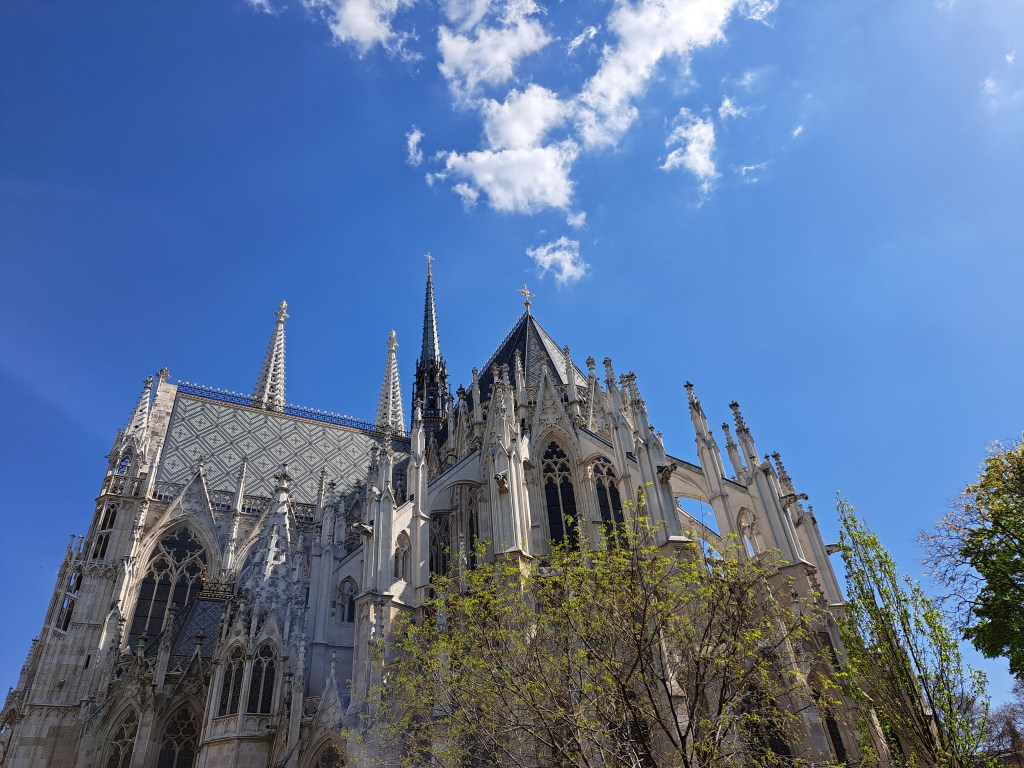
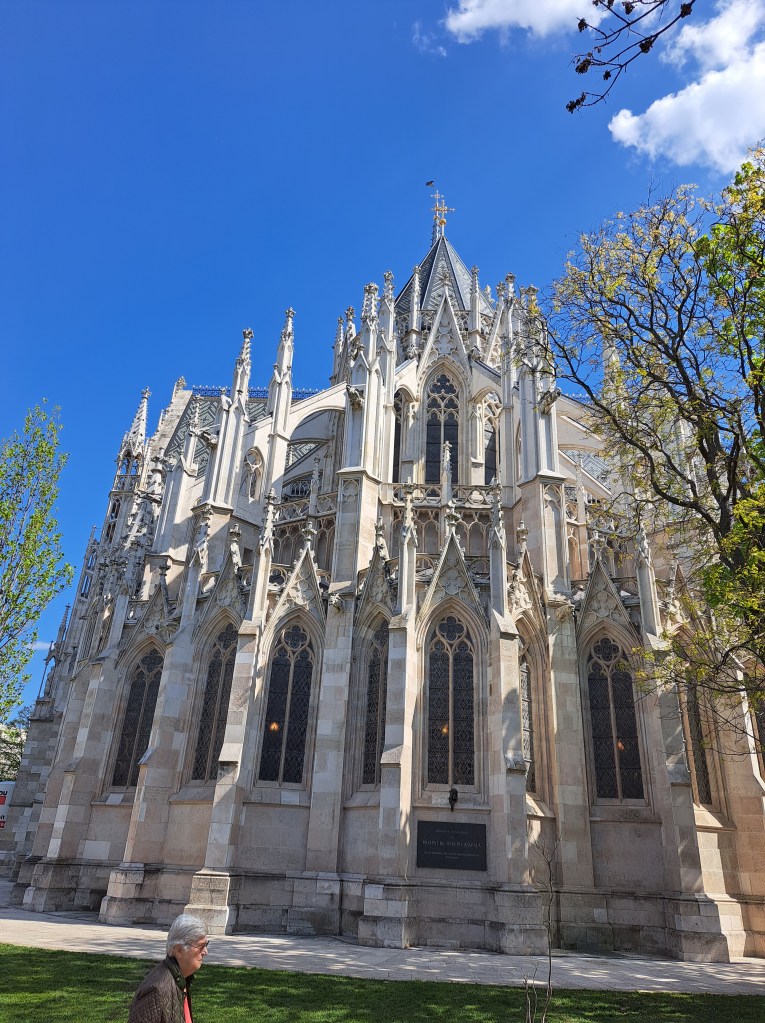
19 AprI was just standing at Schottentor and realized that for the first time in many years (10? 15? More?) we can see both towers (spires?) of the Votiv Church. They’ve been encased in scaffolding and swathed in advertising while they were being cleaned, which, as you can tell, took a very long time. Beautiful!!! 😊
April Fool’s Day Viennese Style
1 Apr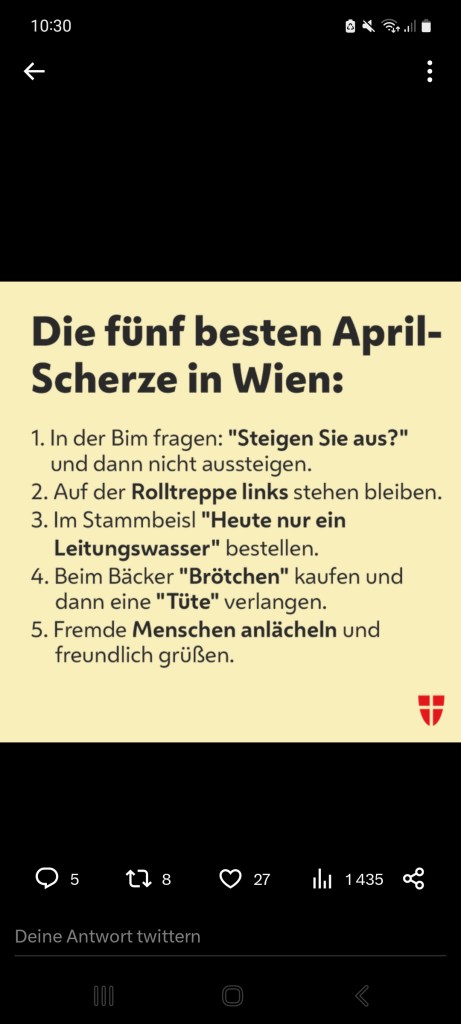
Seen on Twitter. The City of Vienna has a few ideas on how to discombobulate the Viennese this April Fool’s Day. 1: On the tram say “I’m getting off” [so that people make room for you to get out the door] and then stay on. 2: Stand on the left on the escalators. 3: In your regular neighborhood restaurant order “Just a glass of tap water today”. 4: (my favorite) At the bakery buy “Brötchen” (rolls) and then ask for a “Tüte” (bag) to put them in. Both those words are High German and sound really weird in this context. Viennese would probably say “Gebäck” and “Sackerl”. 5: (also good for anyone familiar with the grumpy side of the Viennese) Smile at complete strangers on the street and greet them in a friendly way.
Sorry, in some ways you had to be there, I think, but they made me laugh.
 ecbinvienna