The info screen on the tram is telling me that the Wiener Staatsoper reopened on this day in 1955. It was bombed in the final days of World War II. The auditorium and backstage area were completely destroyed. The Viennese are said to have wept openly in the streets as they watched it burn.
The opera chosen for the opening of the rebuilt house was “Fidelio” by Ludwig van Beerhoven, a story about unlawful imprisonment, courage, and justice.
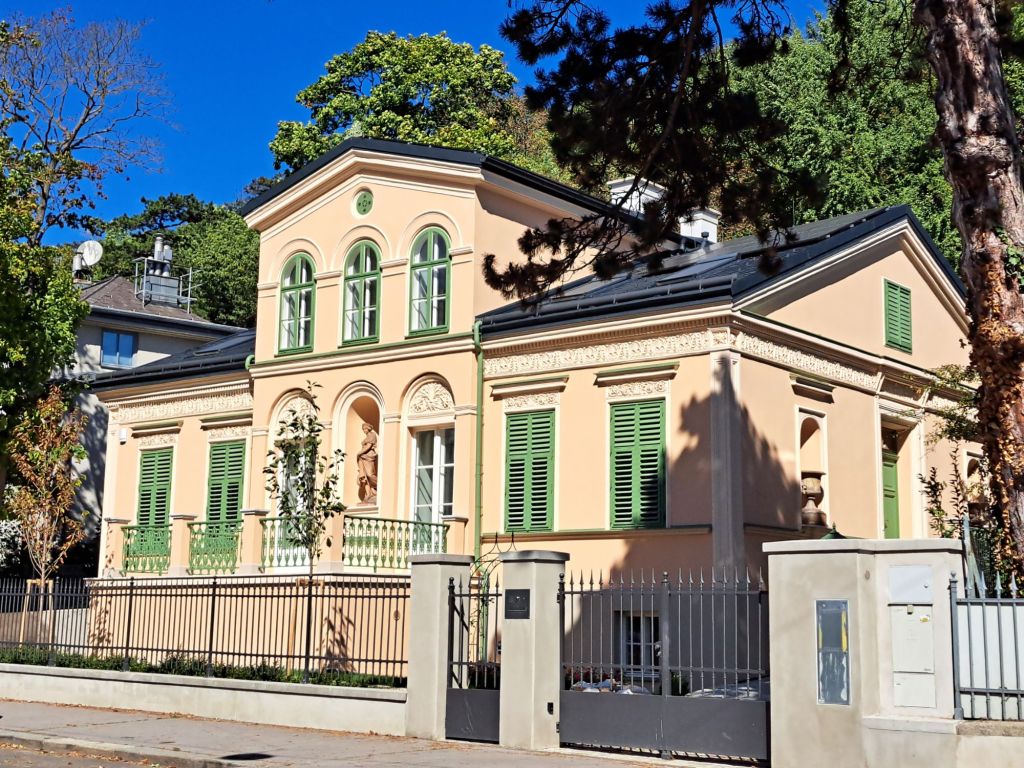
A friend and I have been keeping an eye on this villa in Neuwaldegg. We’ve seen too many treasures over the years been allowed to decay to a point when they could legally be torn down. Invariably, they were replaced with faceless, cement structures that were, possibly, quite nice to live in but brought no joy to the folks out front.
This one sat on a construction site for about two years, and for a while it wasn’t clear which way the project was going to go. Then it started to look promising. This time when I walked by I was treated to the fully renovated version.
If the person who invested the time, money, and care into restoring this property ever reads this — thank you! Not only did you save a beautiful piece of Viennese history. You restored a tiny bit of my hope in people.
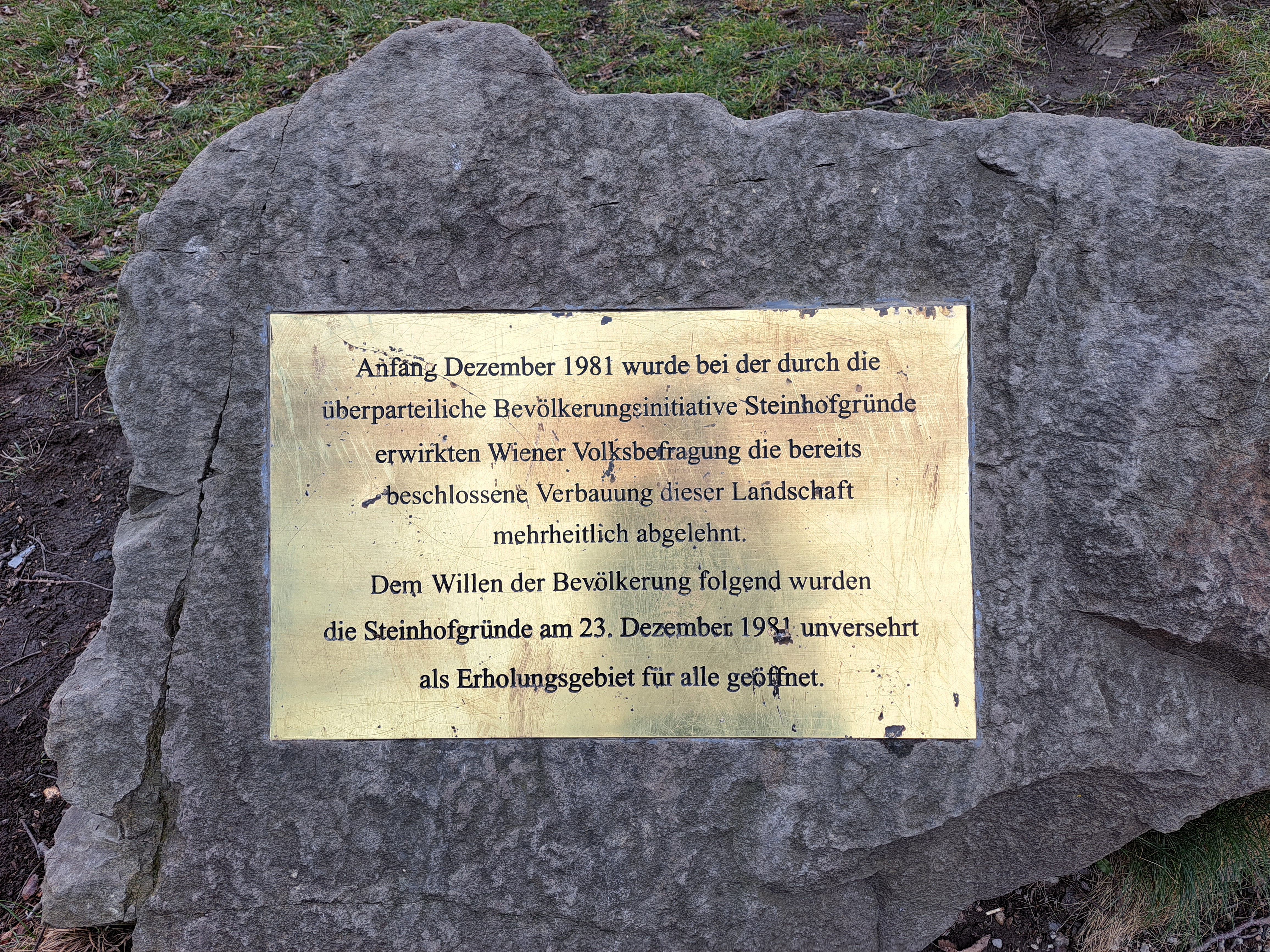
My translation of the plaque at Steinhof: At the beginning of December 1981, a Vienna-wide referendum initiated by the non-partisan citizen group Steinhofgründe rejected the construction that had already been approved for this site.
In accordance with the will of the people, the Steinhof area, in its untouched state, was opened to the public as a recreational space on December 23rd, 1981.
(Nice Christmas present! ;-))
How is it that I have now lived over 36 years in Vienna and only last Sunday discovered this part of Steinhof? I have an excuse for 11 of those years as dogs are not allowed in the area. This does however leave 25 years for which I cannot account. And how did I come to discover it now?
An answer to the first question first. All that time, whenever I heard the name Steinhof I thought of the hospital complex designed by Otto Wagner and Carlo von Boog and devoted largely to the treatment of the (wealthy!) mentally ill. (In Viennese, the area was also referred to as Baumgartner Höhe and had become a kind of shorthand for the psychiatric clinic, much the way “McLean’s” is used in Boston.) I had even taken a tour of the hospital complex once. I’m sorry to say that the only thing that sticks in my mind, other than the beauty of the Jugendstil buildings, is that the church, designed by Otto Wagner, was lined with tiles to quite a height. Taller than me, as I remember, and the reason given was that patients were more or less required to attend services but could not always control their bodily functions. The tiles made it possible to hose down the building after the services.
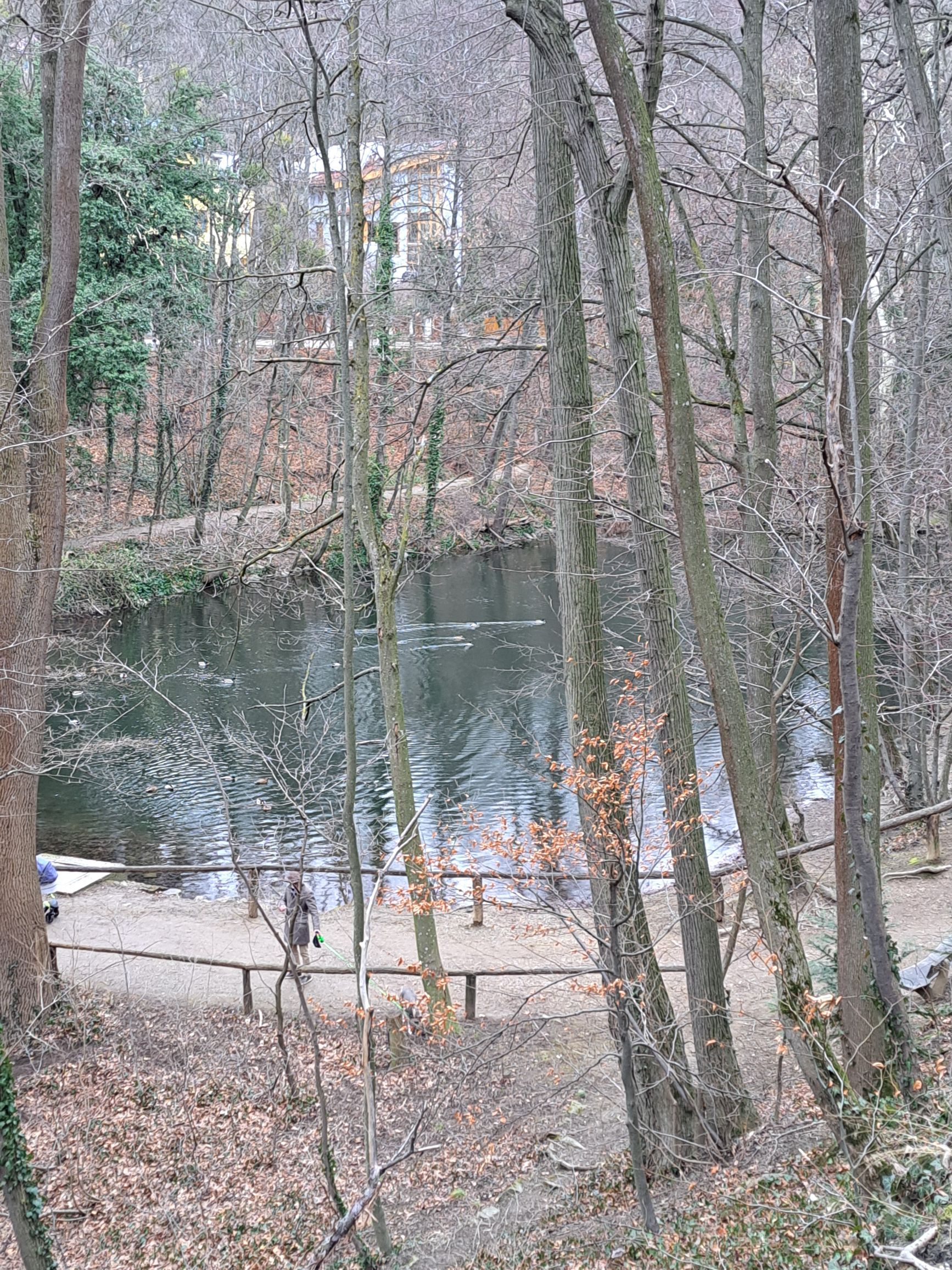
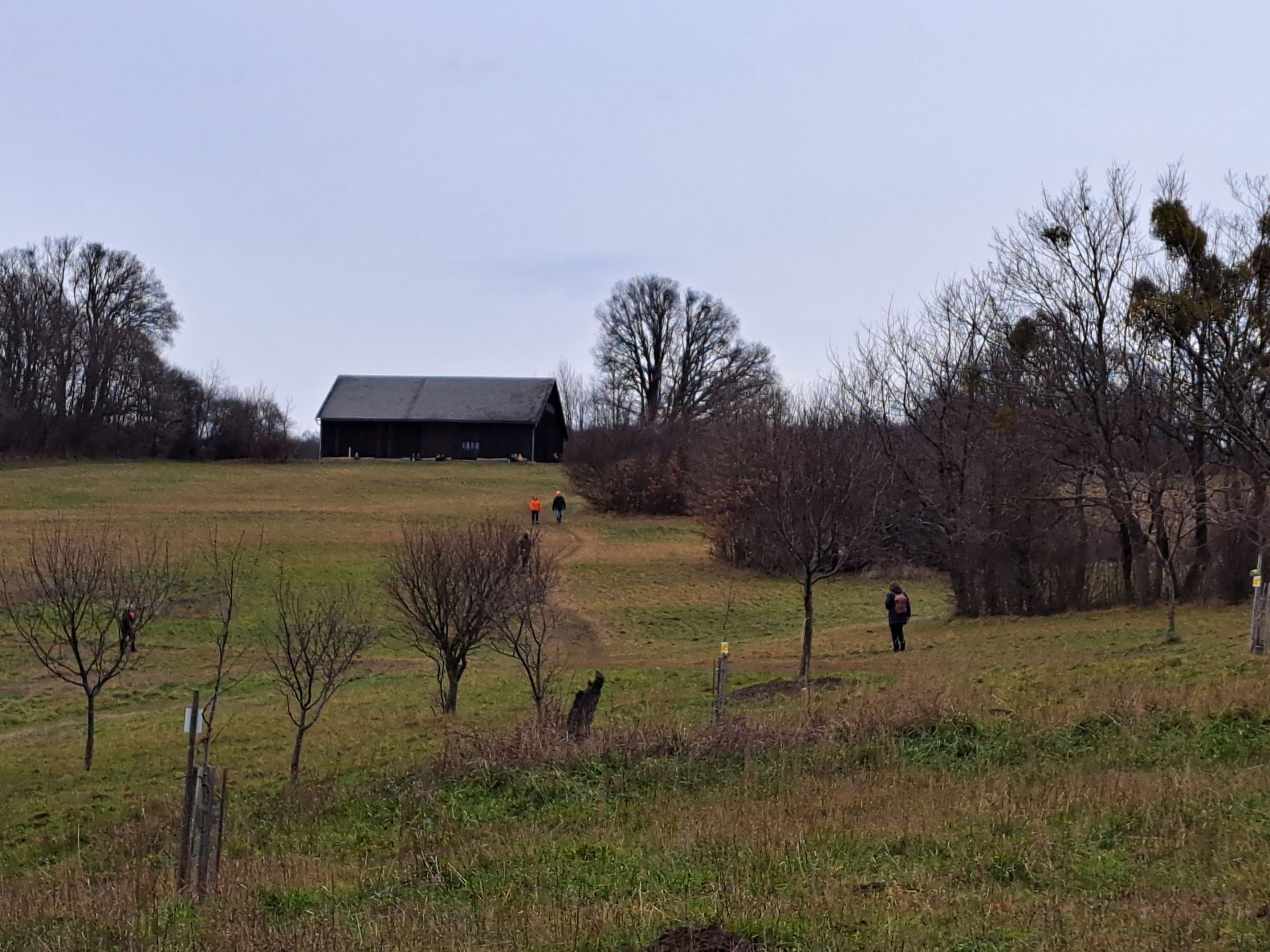
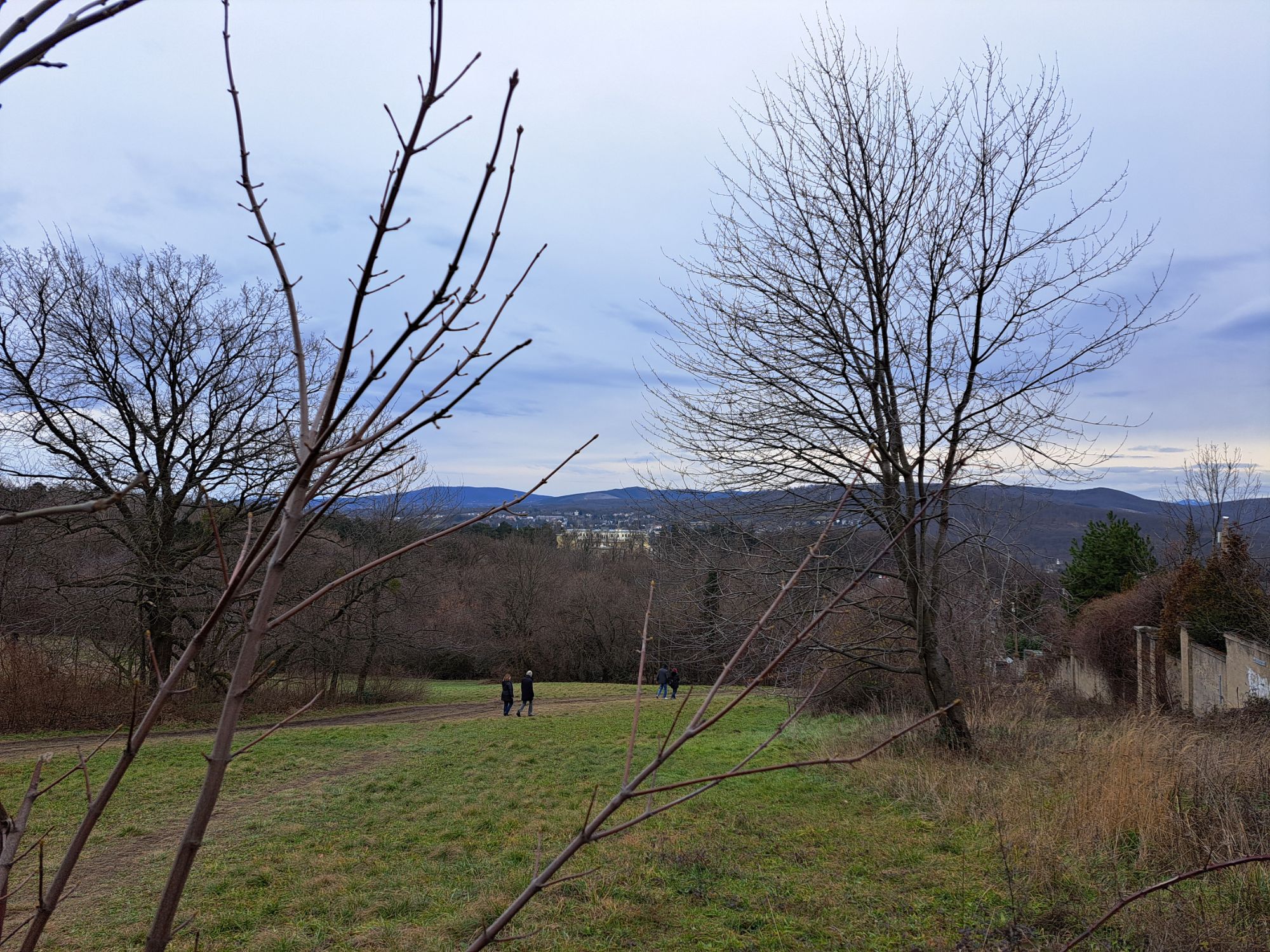
How did I come to discover it last Sunday? I wanted to go to Wilhelminenberg in the 16th district for a walk and on the bus up from the Ottakring S-Bahn station decided to get off at the Feuerwache am Steinhof stop, rather than the Savoyenstraße one, and then walk towards Dehnepark in the 14th. I was planning to walk around the outside of the grounds, as I had often done with Maylo, and enjoy the beautiful houses out that way. When I got off the bus, though, with an astonishing number of people, I realized I didn’t have to walk around the outside. I could go in. And I’m very glad I did. It is one more beautiful place to walk more or less in the Vienna Woods and will, I think, make a really nice place for picnics when the weather is warmer.
By the way, this being Vienna, I actually ran into someone I know on my walk. (“Wien ist ein Dorf” we often say. Vienna is a village.)
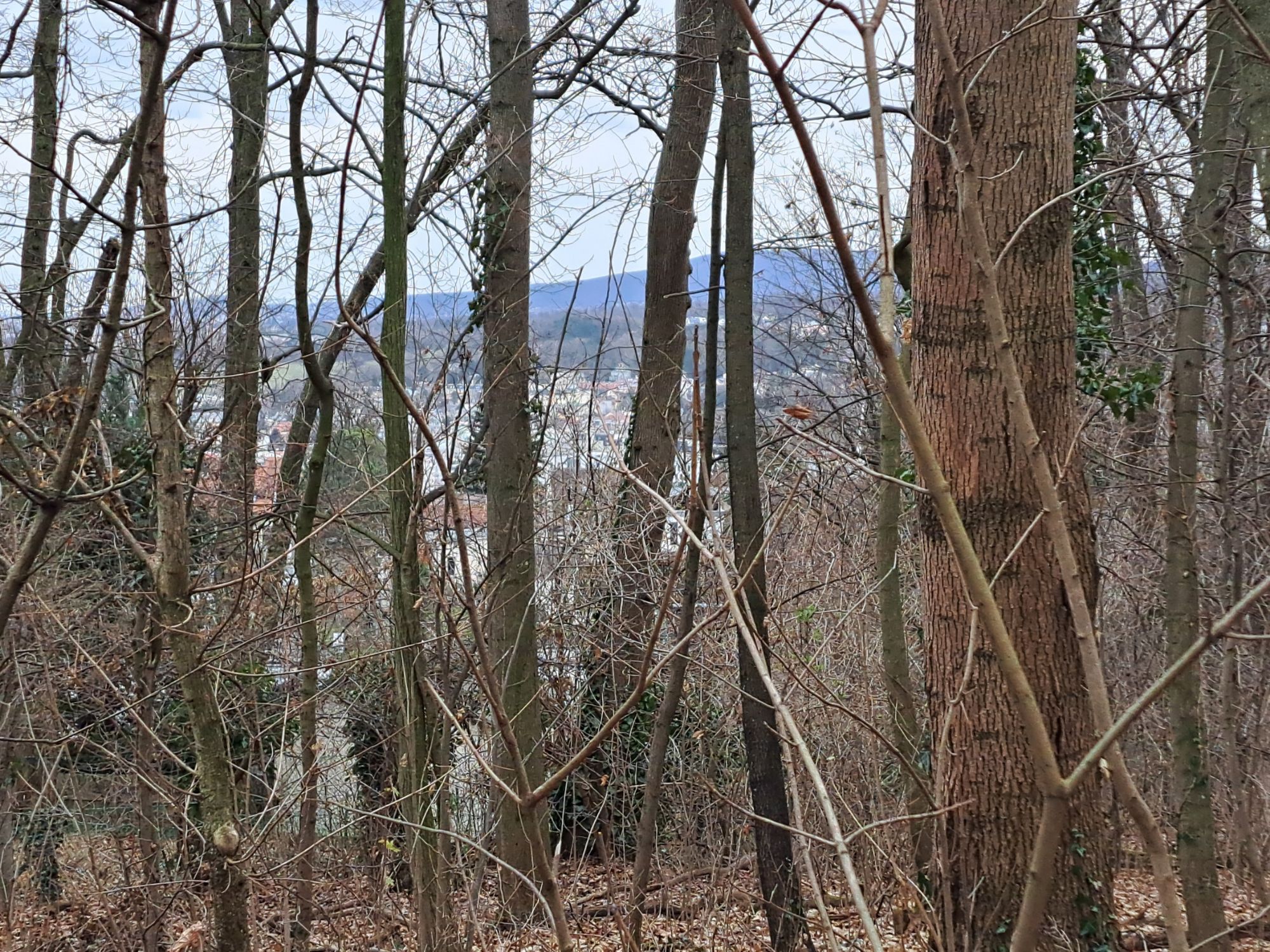
Here are a few more photos.
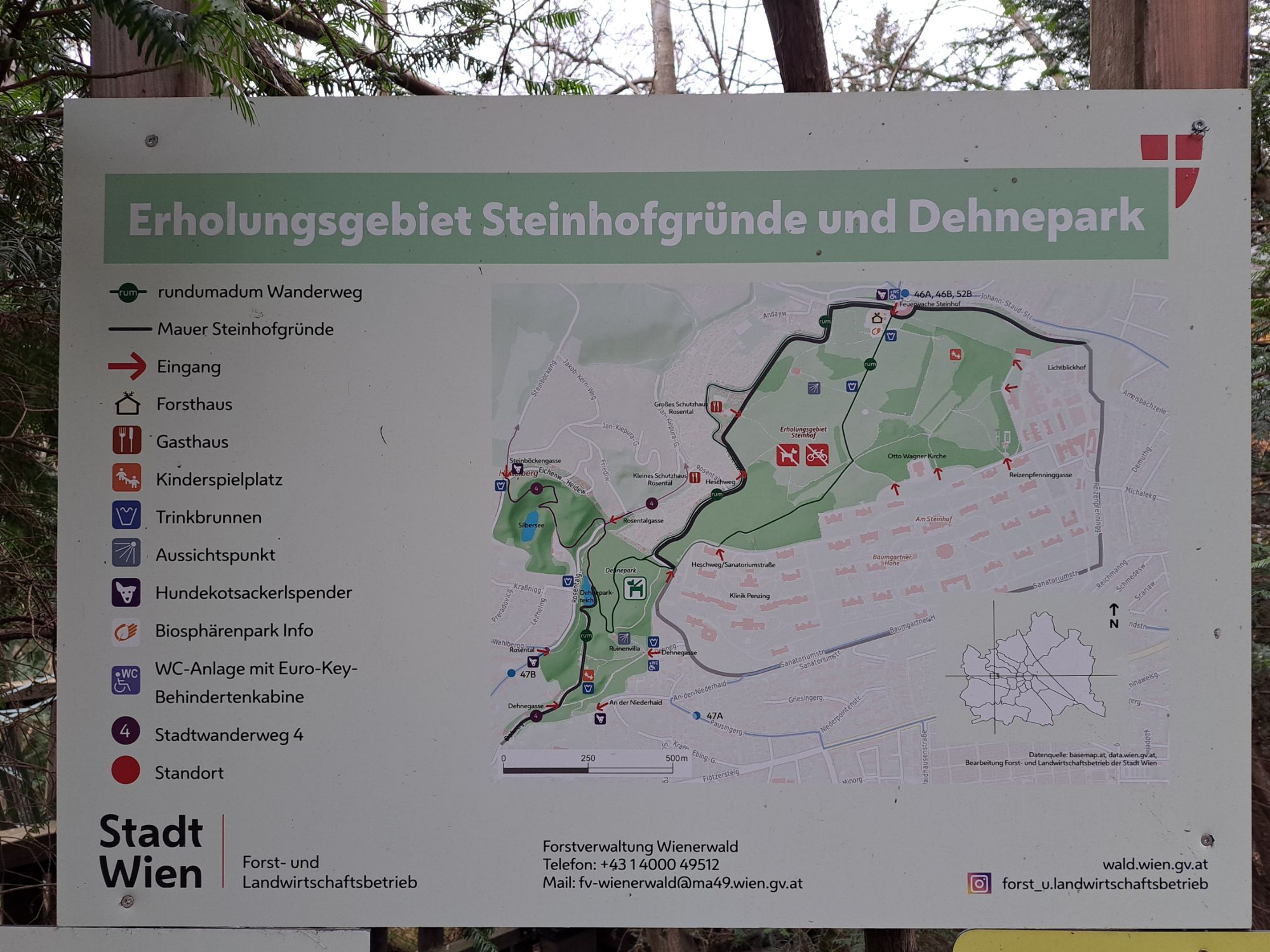
Walking time from Feuerwache am Steinhof to Hütteldorferstraße this time around (I got a little lost) was probably about an hour and a half. Below you can see the map.
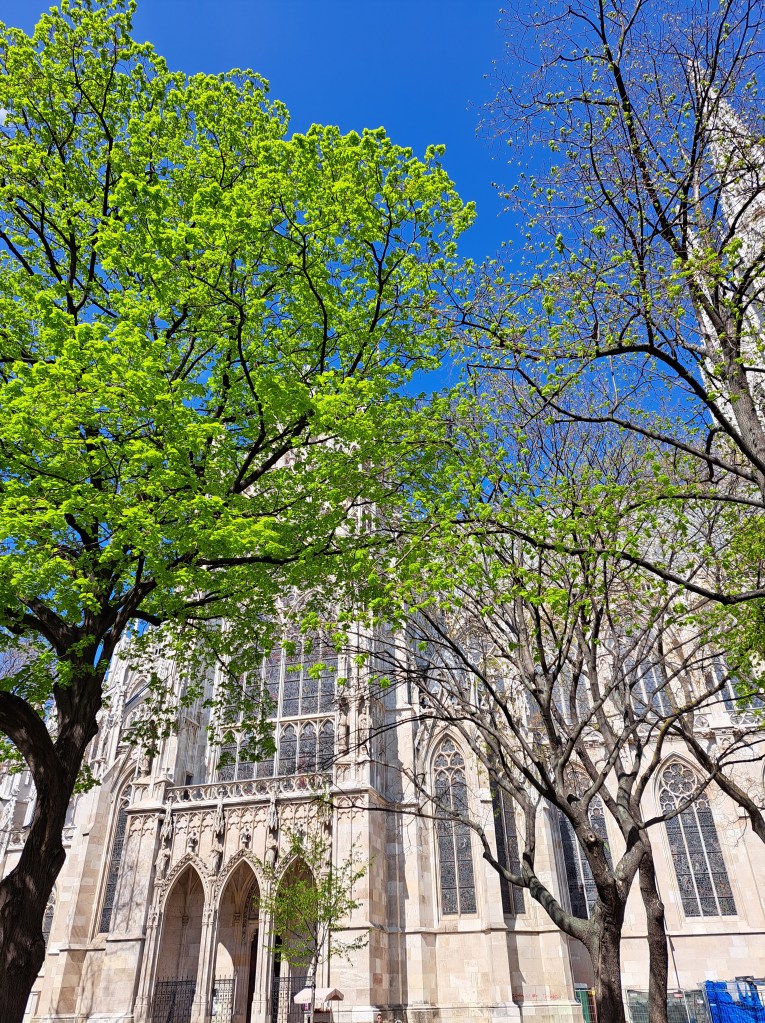
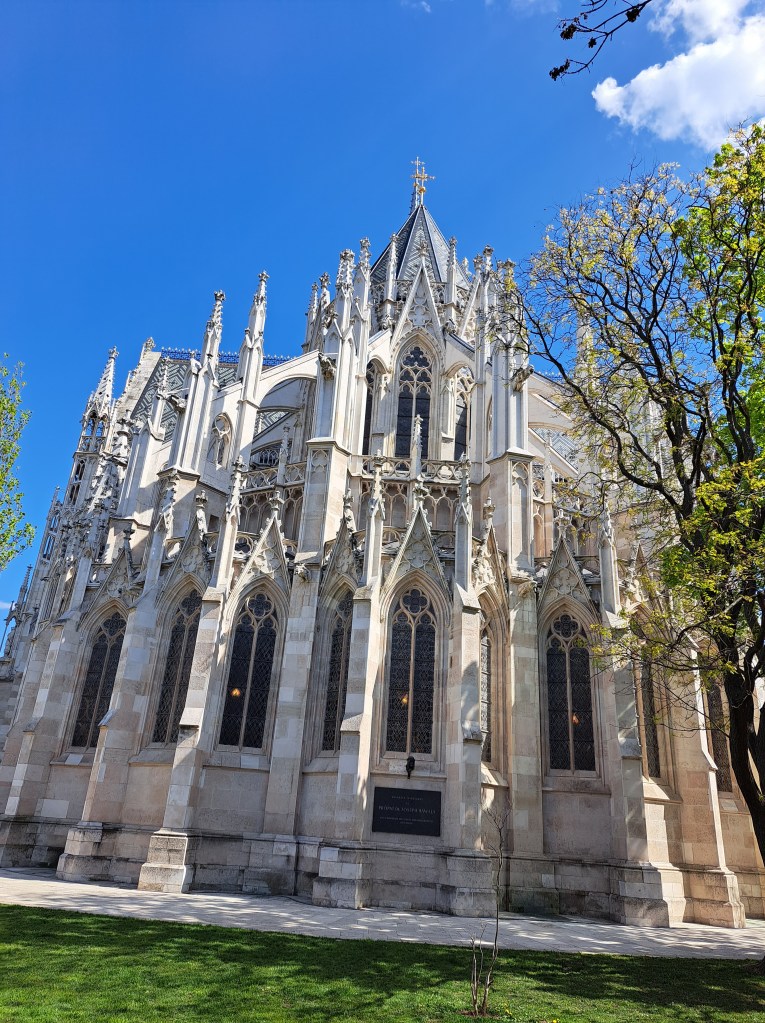
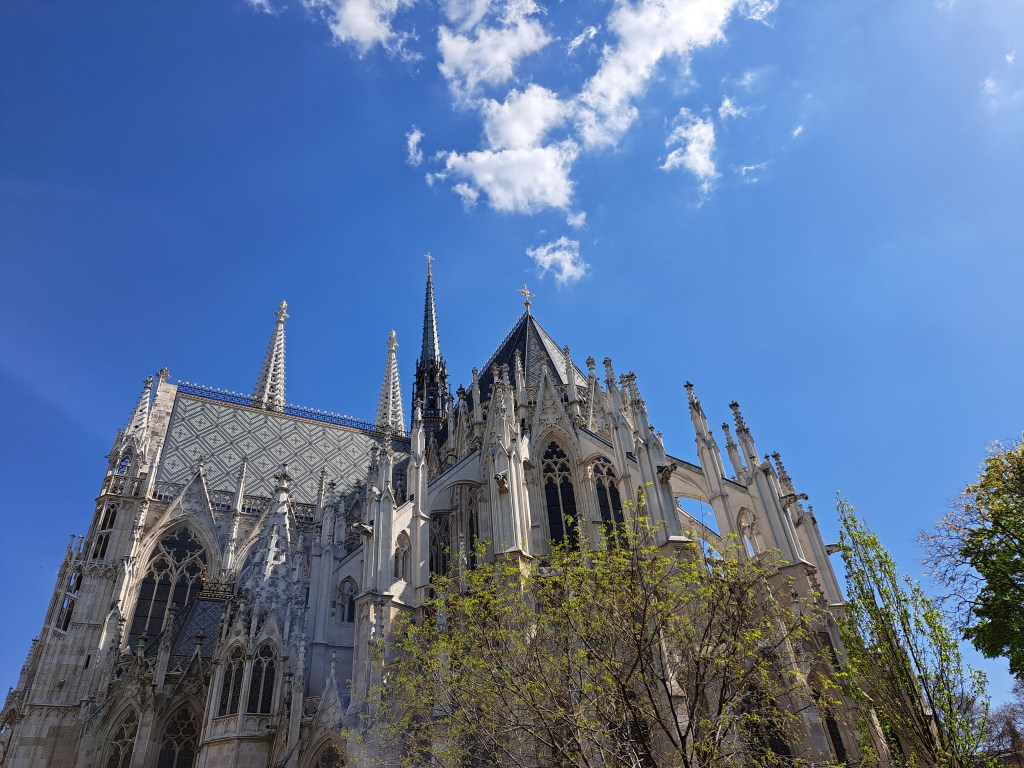
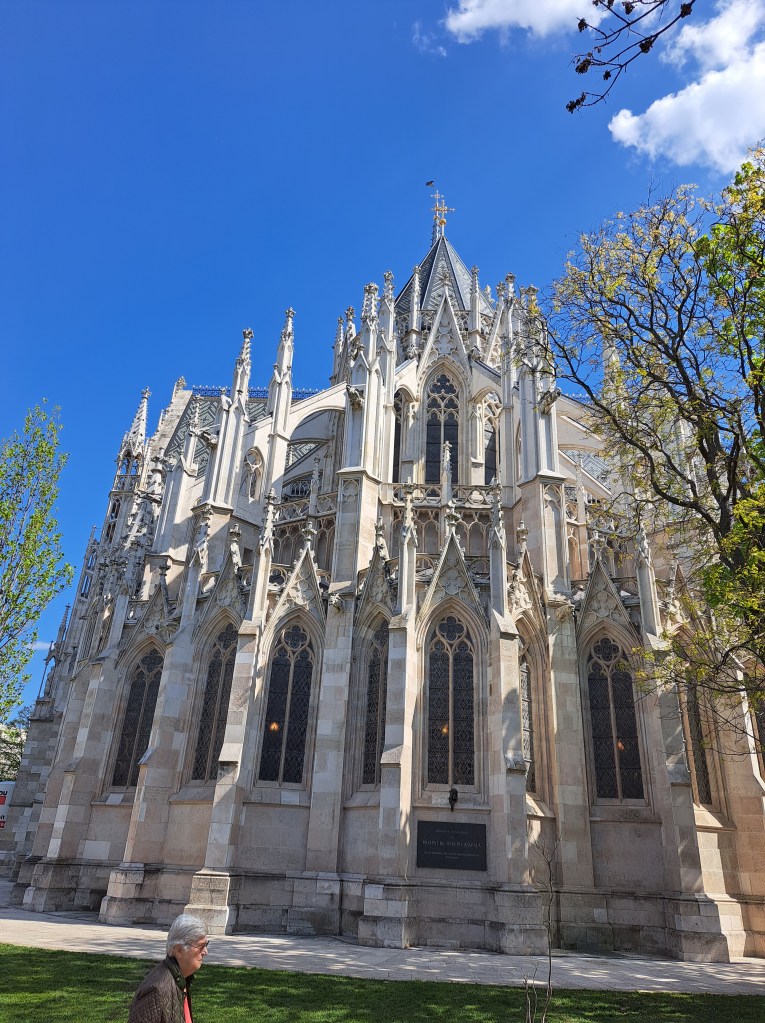
The Votivkirche was officially re-opened today with a celebratory mass. The extensive renovations, inside and out, have been going on for a quarter of a century.
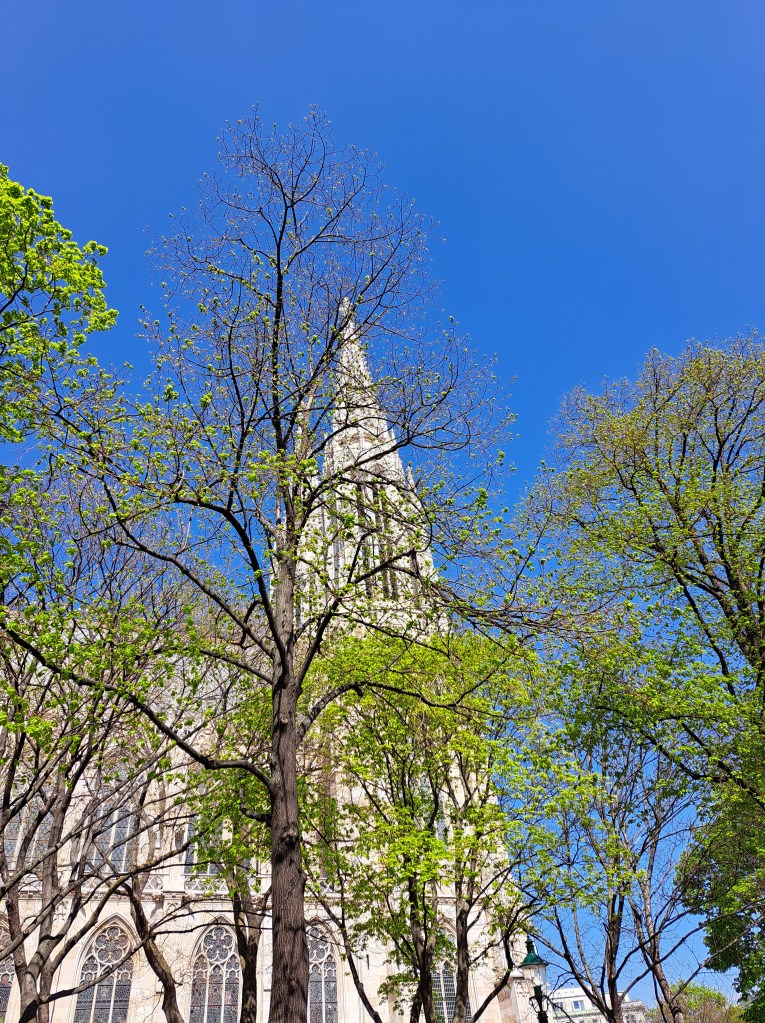
I was just standing at Schottentor and realized that for the first time in many years (10? 15? More?) we can see both towers (spires?) of the Votiv Church. They’ve been encased in scaffolding and swathed in advertising while they were being cleaned, which, as you can tell, took a very long time. Beautiful!!! 😊
My father, who spoke very little German, used to get great pleasure out of the way German allowed the stringing together of nouns into one enormously long, often difficult-to-pronounce word. He would have loved this one: Gummischuhsohlenfabrikantenfamilie.
The family, who manufactured rubber soles for shoes, is named Beer and owned a villa in Hietzing that, Christian Seiler reports in today’s Kurier, is finally going to be renovated and opened to the public. Worth going to see apparently and not just for its designation.
P.S. I can’t help thinking that Mark Twain, too, would have delighted in this example of the awful German language.
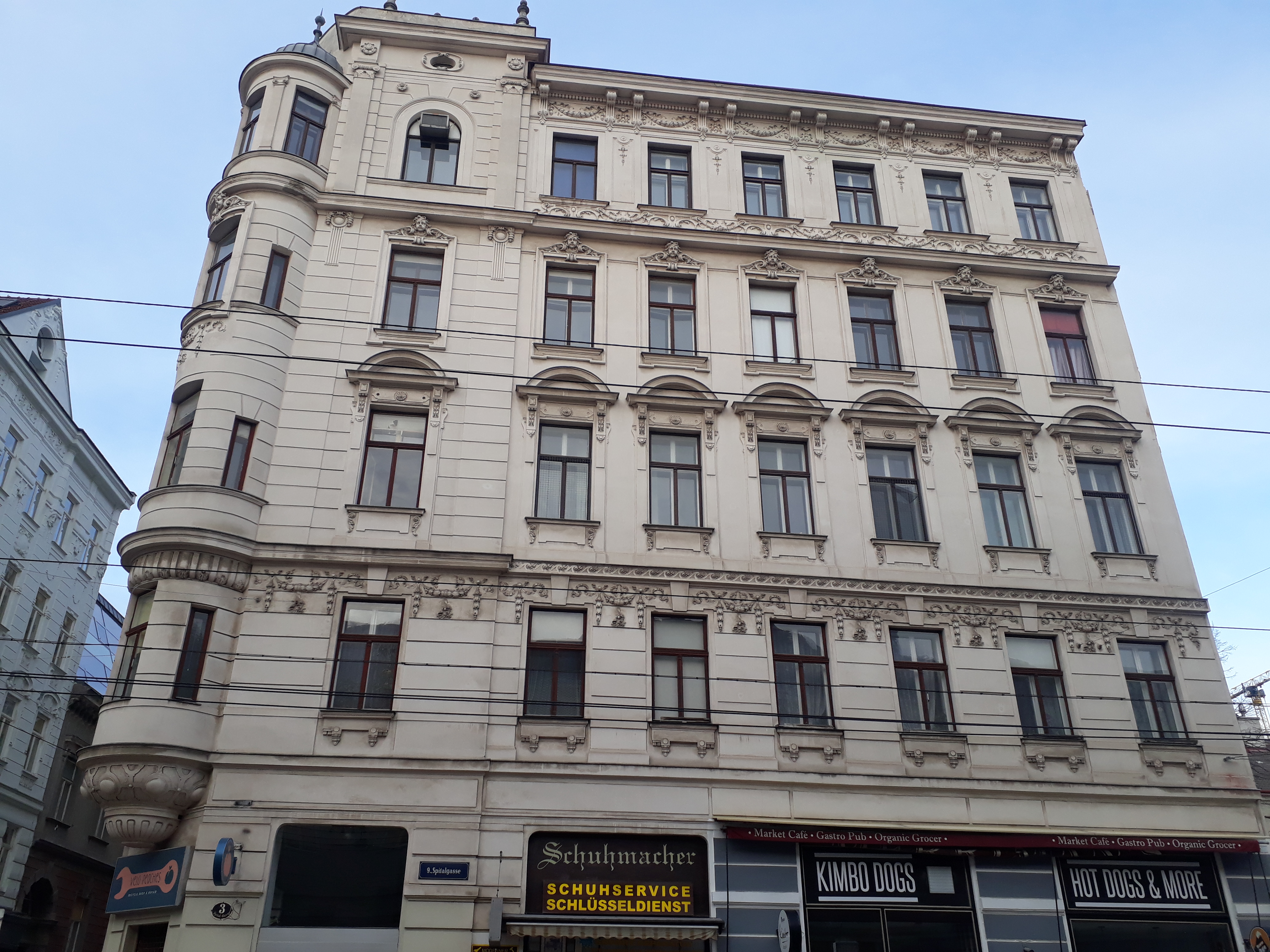
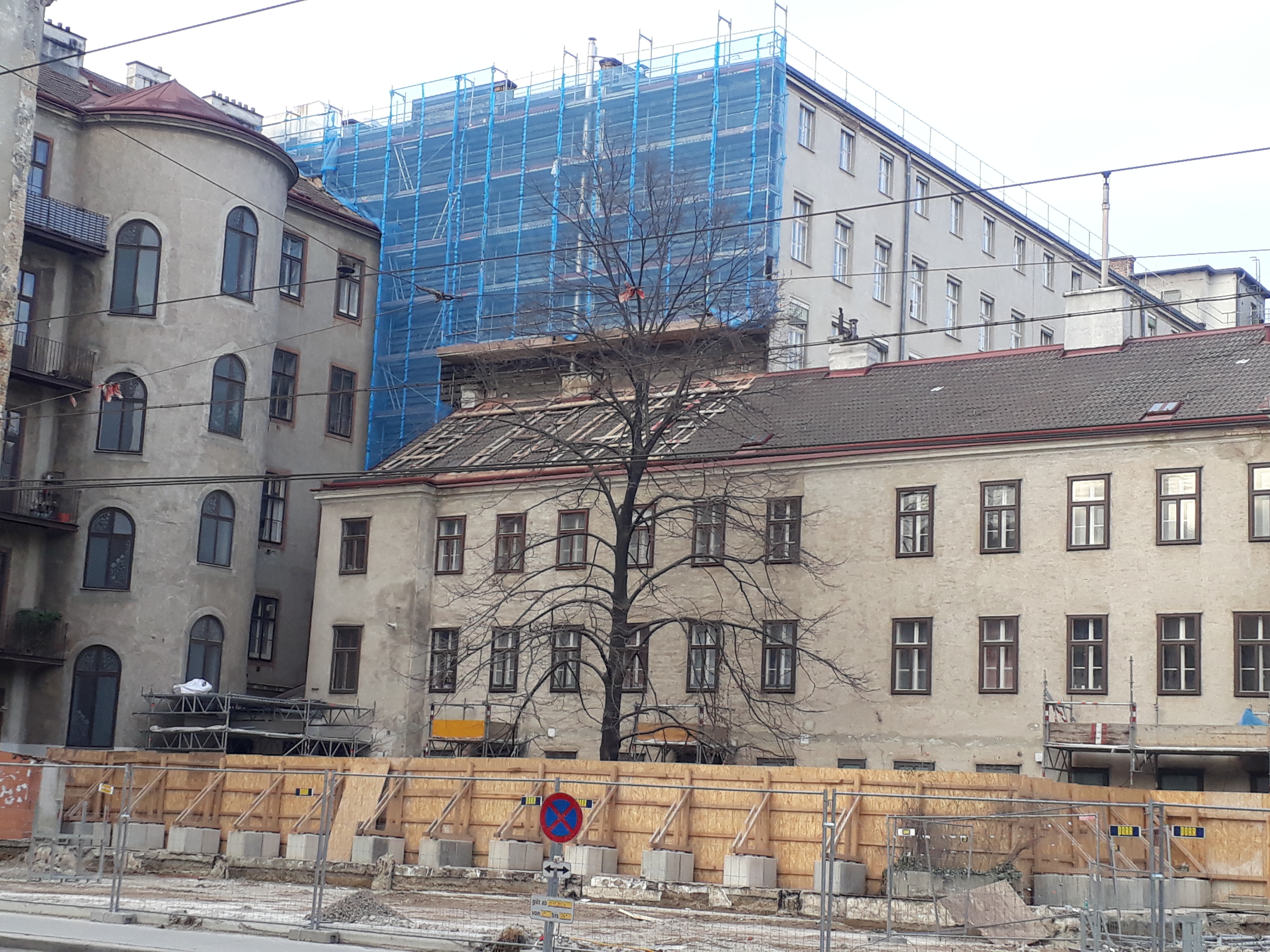
The old (1970s) WienEnergie building on Spitalgasse has been torn down to make room for a new “campus” for the medical school of the University of Vienna. This makes perfect sense–the general hospital is nearby, the old general hospital was turned into a proper campus for the University of Vienna a little over 20 years ago, and one semi-public building (the utilities provider was municipally owned at one time and then hived off) will remain in public hands. (The University of Vienna is a public university.) In addition, not even this defender of older buildings is sorry to see the olive green and orange structure go. I’ll be curious to see what comes.
In the meantime, the clearing of the site has laid the neighboring house open to scrutiny and shows some interesting things about Viennese buildings and, in fact, culture. Appearances are quite important in Vienna. (A friend of mine who has lived in Boston, London, Paris, Amsterdam, and Washington D.C. as well as in Vienna said that Vienna is the only city she has lived in where you got better service at the deli counter in the supermarket if you had put your make-up on.) For me, this focus on appearances is reflected in the relatively ornate facade of the house (the photo on the left) compared to the plainness of back of the house, with wing (the photo on the right). At the same time, it is often said that the imposing facades of the turn-of-the-century houses in Vienna hide some of the nicest aspects. These are for house residents only. This I see in what appears to be a small garden with a tree. That is probably quite a nice place to sit out–or will be again once the building project is complete!
An example of what is called a cultural artifact in the intercultural world …
Over 30 years ago, I spent my first two months in Vienna in student housing (a “Hochschülerinnenheim”) on Servitengasse. Today I was in the neighborhood again to pick up some fresh pasta for New Year’s Eve dinner and saw that two floors have been added to the building and it has been turned into luxury flats. Things are changing …
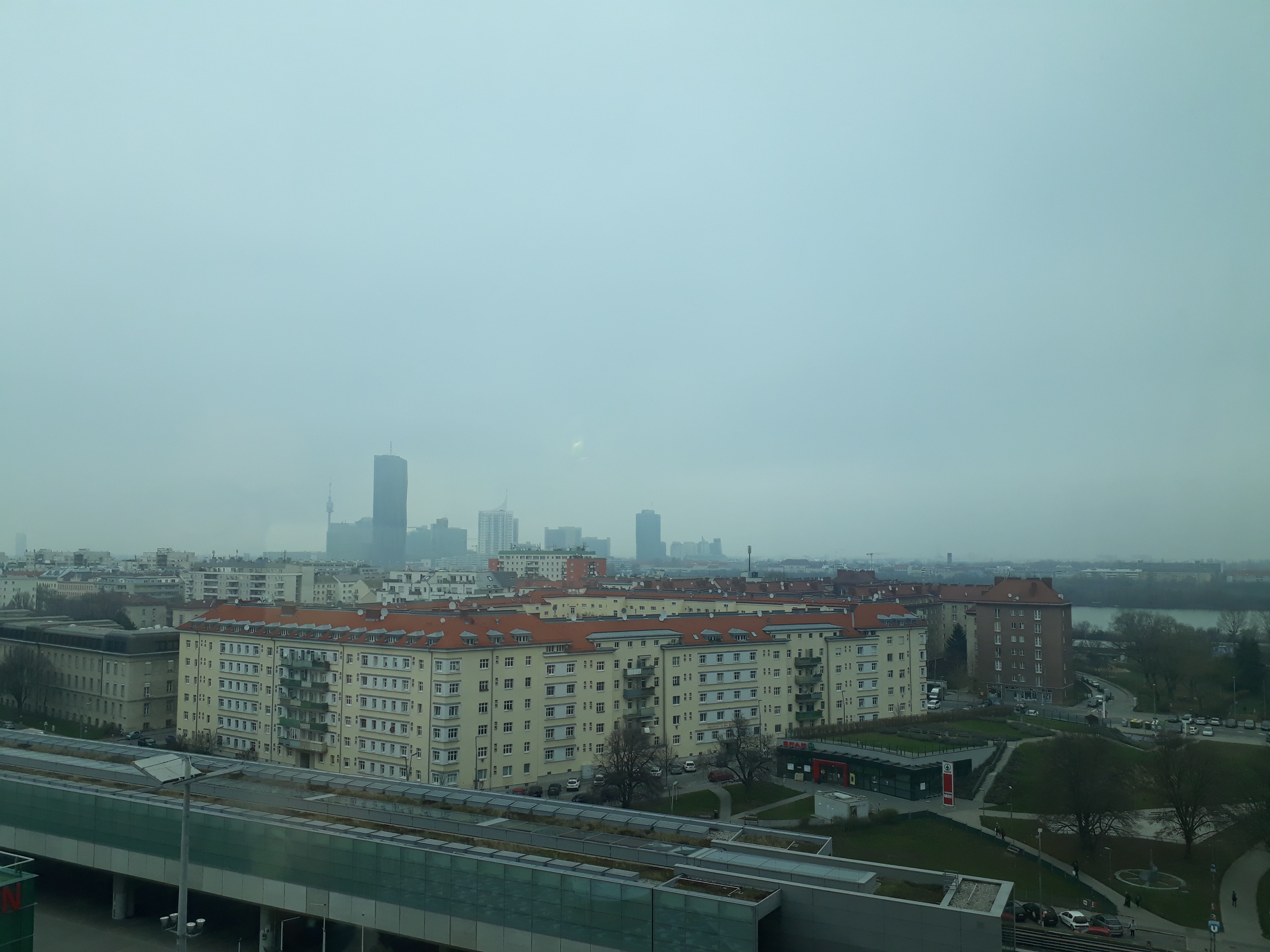
The photo didn’t quite turn out the way I wanted, but I found the view an interesting representation of some of the major changes in Vienna over the last 100 years or so with one of the original Gemeindebauten on the other side of the U2 tracks and the UN and everything that has grown up around it in the background. On the right you can catch a glimpse of the Danube.
 ecbinvienna