Another reason I live in Vienna – the Austrian mentality

13 Jan

This is perhaps not the most understandable statement for any U.S. American who has spent any time especially in Vienna. The Viennese in particular can be quite grumpy and rather closed. Yet there are parts of the Austrian mentality I treasure and can identify with.

In my early years (about 20 years ago) there was a referendum about (a) should Austria build a hydroelectric plant and (b) should Vienna co-host the World Fair together with Budapest. The Austrians voted yes to the hydroelectric plant (green, modern thinking) and no to the World Fair, which, apparently, they felt would bring too much crime into the country. The money it would have brought wasn’t important enough to them to balance what they saw as the disadvantages. In general, the Austrians are willing to put their money where their mouths are. (Take a look at the tax rate and, on the other hand, the social services some day.)

In a similar vein, I saw today in the free newspaper “Heute” that in an opinion poll 42% of Austrians said yes to the higher taxes and the austerity package the government is proposing. They understand that you can’t go on spending money you don’t have and that you need to get money somewhere (e.g., from taxes) if you have a deficit. I can really respect such pragmatism and only wish my country were willing to let some of this rub off on them.

The Viennese dialect

26 Nov

I am working in Slovakia this weekend and have discovered the root of  a word in Viennese dialect (not so surprising given that Bratislava is only 60 km from Vienna and was part of the Austrian empire off and on for centuries). I knew about some of the food terms that have slipped into Viennese, like “Golatsche” (what we call a Danish pastry in U.S. American English). In this case it was not a food term, and I discovered the connection completely by chance.

Yesterday evening I was working with a group of Slovak managers and had them drawing pictures to illustrate a certain point we had been talking about. As one group was presenting their picture one participant broke into Slovak and asked a question about what was on the dog’s head. I don’t speak Slovak but when I heard the word “Mascherl” I jumped. Then I repeated it and said “You’re talking about the bows in the dog’s hair, right?” They were much less surprised than I was and said calmly, “Yes, is it the same in German?” and I said, “Only in Austrian German. In Germany a bow tie, for example, is a ‘Fliege’.”

Linguistic fun!

“We are the champions”

7 Nov

This was the title last Friday of an article in the free city newspaper Heute (Today). The subject of the article? The recent WorldSkills fair in London (http://www.worldskillslondon2011.com/), where people between the ages of 17 and 25 compete to see who is best at his or her job. Austrians won three Gold, one Silver, and two Bronze medals. One of Gold medals went to a fine pastries chef, Stefan Lubinger, so you may think that Austria simply used its natural advantages to good effect. 😉 In fact, what probably helped this small country (only 8 million inhabitants) to do so well is the ongoing belief and investment in vocational education (I’m consciously not using the word “training” because it is, in fact, an education).

The apprenticeship system–where students spend a certain part of every school week in the classroom learning the theoretical part of their trade and what they need to one day run their own small business and the rest of the time practicing in a work environment under masters–is alive and still relatively well in Austria and serves a real purpose. It makes sure that pupils who do not want to go on with academic subjects have a viable alternative in the educational system and also that the population has a pool of extremely well-qualified stone masons, plumbers, electricians, waiters, chimney sweeps, office admin staff, pastry chefs, and so on.  Truly seems like a win-win situation to me!

After the storm

28 Aug

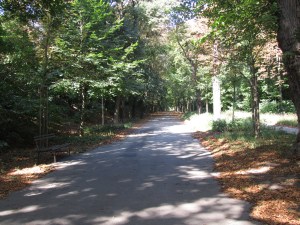
As forecast we had heavy rains last night and some impressive displays of thunder and lightning. Also as forecast, we woke up this morning to cloudless blue skies and much cooler temperatures (15°C in the shade at 8 a.m.)–perfect weather, in other words, for a long walk in the Vienna Woods. This turned out to be a bit disorienting because after the heatwave of the last week or so there were distinct signs of autumn out along Schwarzenbergallee and on Schafberg, some of which I captured with my new (at least to me) digital camera.

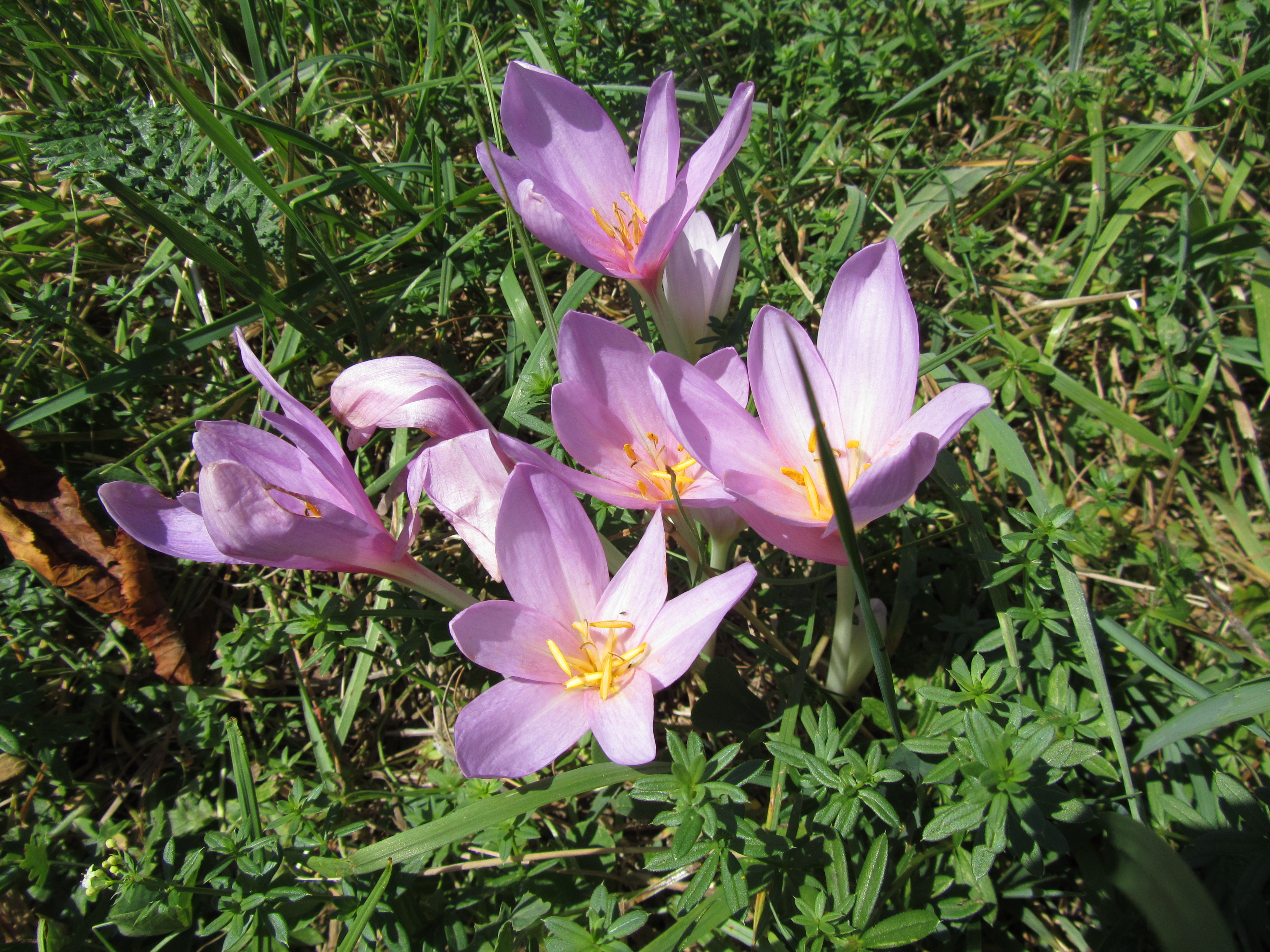
This time I finally remembered to take the manual with me and managed to figure out how to take close-ups like this one of  Herbstzeitlosen or autumn crocuses.

And it occurred to me that when I was listing the booty that people bring home from a hike in the Vienna Woods (“Another Reason I Live in Vienna,” 13 June 2011) I forgot to mention apples, as shown below. (Fully organic more because of neglect than intent, I believe.)

For some reason, though, I take comfort in the fact that they aren’t quite ripe yet!

“Midnight in …”

27 Aug

Finally made it to “Midnight in Paris” this evening with two friends. We went into the cinema on the tail end of a heatwave and came out into, well, rain. We smiled and said “Vienna looks its most beautiful in the rain” and walked off to Café Central*  for supper.

* http://www.palaisevents.at/en/cafecentral.html

The Hare with Amber Eyes

15 Jun

It was last fall that a friend recommended I read Edmund de Waal’s The Hare with Amber Eyes. How right he was! I didn’t get around to buying it until March, but from the moment I started reading it I only put it down for the most urgent of professional obligations and bodily requirements. It isn’t precisely a book about Vienna, but there is a lot about Vienna in it nonetheless. And it is riveting.

Most of all it is the story of a family and of the author’s search for his family history, set off when he inherited a collection of small Japanese figurines called netsuke. This search takes the author–a world-renowned ceramic artist who, unfairly, also writes exquisitely–from his home in England to Japan, where he gets to know one of his great-uncles better, to Paris of the late 19th century, to Vienna, and finally to the starting point of the family saga, Odessa. In the course of the book one realizes that de Waal knows how to do original research and that he was probably doing his research in the original languages–Japanese, French, and German–at least until he got to Odessa, where he mentions hiring a translator. This gives the book an immediacy and a weight rarely achieved in people’s explorations of their own family histories.

The whole book is wonderful but living in Vienna as I do the long section on the branch of the family in Vienna was most alive for me. The cafés, schools, and streets mentioned, the Opera, the Palais Ephrussi at Schottentor, the pace of life, the food, the people described … they are all familiar to me, even though de Waal is writing about the first half of the 20th century. It was a tour through the city I love, offering me new perspectives for better or worse.

In the preface de Waal plainly states that he doesn’t want to write “… some elegiac Mitteleuropa narrative of loss” and he doesn’t. When the family’s life in Vienna ends abruptly with the Anschluss in 1938, however, and he portrays Viennese anti-Semitism in the details of its viciousness it moves me more than all the accounts I have ever read about Hitler’s march into Vienna and the waves of violence and pillaging it unleashed against Jewish families. It made me accept what I never could before–that many Viennese, in fact probably the majority, welcomed Hitler and Nazism not just because Austria was in such political chaos that they were relieved to have “a strong leader” (a point de Waal, in a striking spirit of fairness, mentions) but because Hitler spoke a message of hatred and envy toward the Jews that resonated so thoroughly with so many of them.

But it is doing injustice to the book to focus too much on that one point  and to turn the story, against the author’s explicit will, into a narrative of loss. A quick re-visit of its pages reminds me of how he brings everything–the various backdrops to the story, the people, who in spite of follies are never censured, and above all the netsuke themselves–alive through his descriptions that are carefully detailed but never too heavy. The netsuke could just have been a clever jumping off point to his family story but they remain, in fact, the focus and thread throughout, giving insight into the people who touched them, representing the very essence of craftmanship, and providing joy to the reader as they must in real life.

A journey for which de Waal allowed himself one year ended up taking closer to two years, and we are the beneficiaries. I recommend the book now, in my turn, most highly.

Another reason I live in Vienna

13 Jun

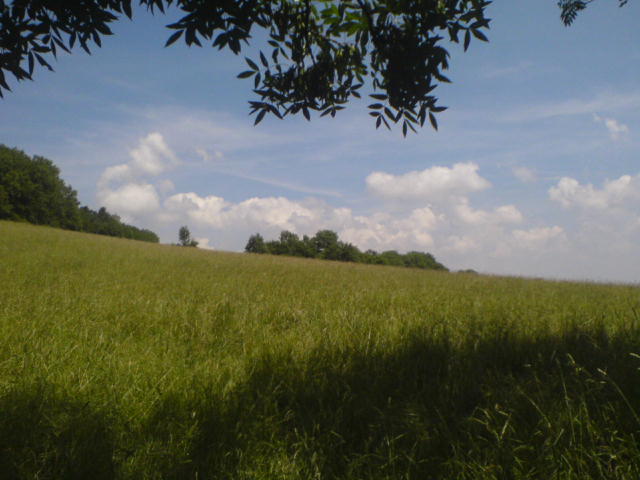
Perhaps even more than the music (which one can find in other livable cities, although rarely in the quantity and quality one has here) I love the Vienna Woods. It is possible, even easy, to get on a tram or bus, ride out to the last stop, and take a three- to four-hour walk through woods and meadows, rambling up and down hills as you go. The photo above was taken this afternoon along the Stadtwanderweg Number 2, as an illustration of what you can see even within the city limits. A “Stadwanderweg” is a “city hiking path”–or perhaps “municipal hiking path” as they are almost certainly maintained by the city of Vienna–and there are over ten of them, depending on how you count them (link to official site below).

What was I doing in the Vienna Woods on a Monday? Enjoying the perfect hiking weather and the Pentecost Monday holiday, along with the Viennese who didn’t skip town on Friday afternoon. (Austria, as most will know, is a Catholic country which means many lovely holidays in May and June.)

I had never done the whole Stadtwanderweg 2 before, although I’ve done bits in connection with other hikes. It starts and ends in Sievering, one of the most beautiful outer districts of Vienna. Like Neustift am Walde and the even better-known Grinzing, Sievering is an old vineyard and Heuriger or wine tavern neighborhood. Unlike Neustift and, above all, Grinzing, Sievering has retained most of its old charm. Perhaps the streets are too narrow for tourist busses? Or perhaps property prices are too high for riff-raff. The hiking path itself is 10 km, well sign-posted for the most part, gentle in incline, and lined with beautiful views. It also has more than its fair share of Gasthäuser, all with impossibly Viennese names like the Grüß Di Gott Wirtshaus (loose translation: the May God Greet You Tavern).

I didn’t find anything to pick this time of year, but from experience I know that come late summer and early fall there will be mushroom seekers and walnut and berry pickers. This will not be my last post on the Vienna Woods so I’ll leave this here for now and return to the topic another day.

(http://www.wien.gv.at/umwelt/wald/freizeit/wandern/wege.html)

Blaming the others

8 Jun

For those who haven’t been following current events in Europe, at this writing 22 people in nothern Europe, almost all of them in Germany, have died of a new strain of E.Coli. What was the first reaction in the media? “It’s probably the Spanish cucumbers.” When this statement could not be backed up by any evidence, the suspicion was switched to German soya sprouts, although there is currently no proof that it was the sprouts either.

This first assumption was made easier by the reputation Spanish veg has in northern Europe–dangerous because it contains high levels of pesticides and other chemicals. But the reaction–“They did it. They are responsible.” –is a very common reaction when something goes wrong. We don’t want to believe that our compatriots could be careless, incompetent, or dirty so we blame others, even if we have little evidence.

Blaming others is a natural reaction but not always a helpful one. That the vegetable industry has suffered as a result of the outbreaks (vegetable sales in Europe are down about 35% according to the International Herald Tribune) is perhaps inevitable, as people will try to protect themselves until there is some clarity. The fact that the Spanish farmers suffered disproprotionately shows one of the costs of this knee-jerk response, especially for Germany who may be required to pay compensation for that.

“Ich atmet’ einen Lindenduft” (I breathe in the scent of the linden tree)

30 May

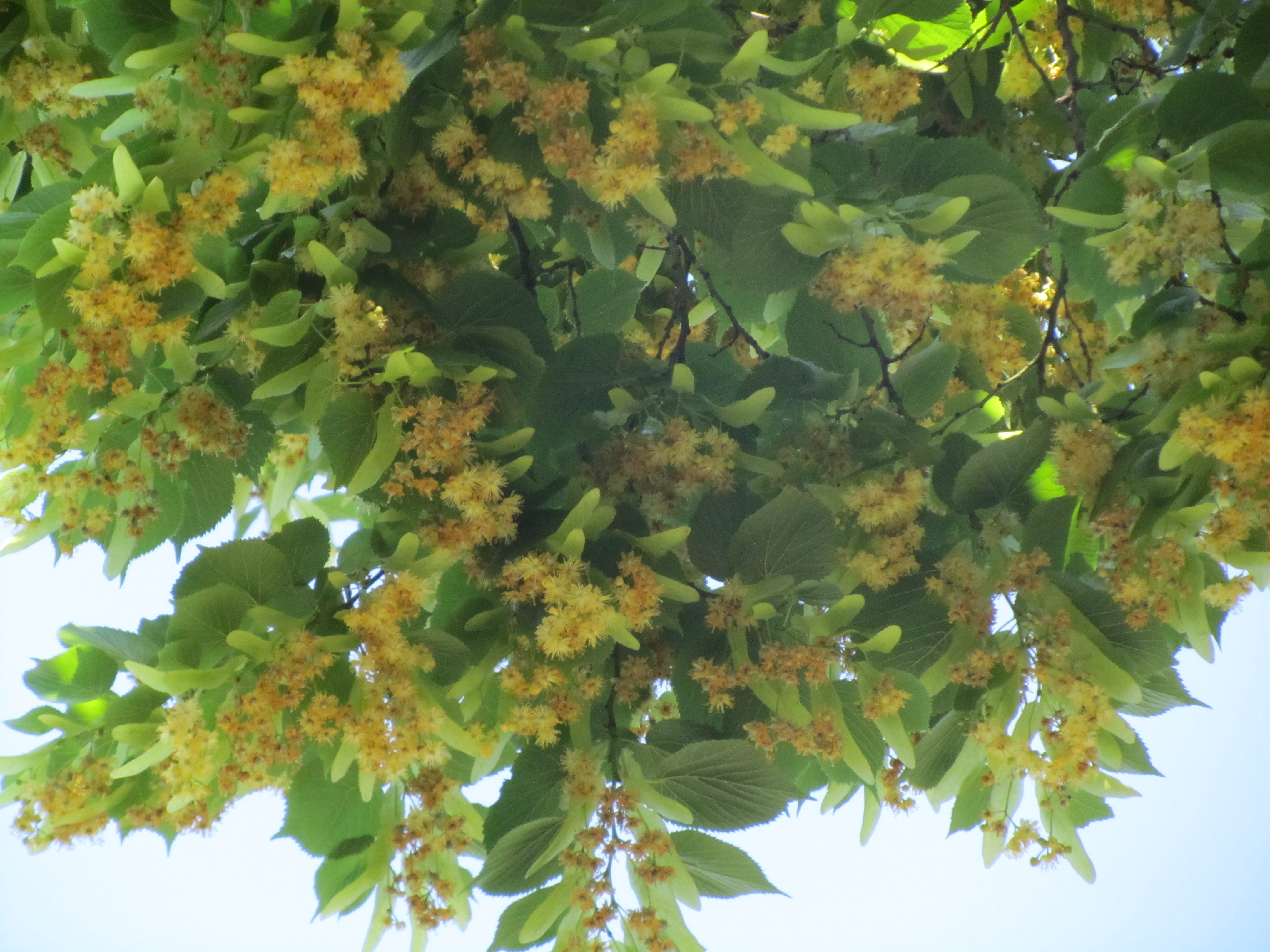
Linden blossoms

Schubert’s song about linden trees may be more famous, but it is the 100th anniversary of Mahler’s death this year so I quote Mahler (or, more precisely, Friedrich Rückert, but Mahler set the poem to music).

The linden trees are in blossom in Vienna already, their distinctive fragrance sweetening the air. They’re early this year, but then it’s been that kind of spring. At the end of March suddenly everything came out at the same time so that forsythia and lilacs, chestnut trees and daffodils were all jostling for attention at once. Now it’s the elderflowers, cherries (not the blossoms, the fruit!), and the linden trees all out together in slightly disorienting array.

Musical addenda

Thomas Hampson singing Mahler’s “Ich atmet’ einen Lindenduft”. Hampson has been singing a lot in Vienna the last few weeks so his name is rather hanging in the air.

Hermann Prey singing Schubert’s “Der Lindenbaum”. I’ve never been that much of a Fischer-Dieskau fan. I’ve always had a soft spot for Prey’s human vulnerability. And I had the great, great privilege of hearing him sing “Die Winterreise”  in the Golden Hall of the Musikverein in Vienna, a year or so before his death. He stood and sang the cycle as if it were an old, intimate friend, which I suppose it was. Absolutely extraordinary.

One reason I live in Vienna …

29 May

… is the music. I was just (evening of Sunday, May 29) at a song recital with Florian Boesch and Malcolm Martineau (http://konzerthaus.at/programm/), a Liederabend in the grand old tradition of Liederabende. The program was almost exclusively Austrian (Schubert, Zemlinsky, and Krenek, with Schumann the only German) with some very Austrian / Viennese points, like the wanderer in Krenek’s “Reisebuch aus den österreichischen Alpen” (Travel Book from the Austrian Alps) fascinated by how the farmers in a barren mountain village are buried (half standing to save room) and only a few songs later lauding the wine from “Wien, Gumpoldskirchen, Krems, the Wachau, Baden, Soos, and Pfaffstätten”.

But it isn’t just the program and the quality of music-making on stage. It is also the audience. Although there were a number of foreigners in the audience it felt very much like an evening of Viennese “unter sich”–among themselves. The responses to the humor or pathos in the songs were immediate, the response of a knowledgeable, experienced audience. And when it came time for the encores the interaction had a certain intimacy, like the elderly gentleman in the front row who, after Boesch had finished a beautifully nuanced rendition of Schumann’s “Die Lotosblume,” breathed in reverence “Sehr schön” to which Boesch responded by looking pleased and saying, “Danke.”

A very Viennese evening.